








![[Add - on] Jackery Manual Transfer Switch for Explorer 5000 Plus - Jackery](http://www.jackery.com/cdn/shop/files/add-on-jackery-manual-transfer-switch-for-explorer-5000-plus-9017324.png?v=1754016782&width=350)


![[Add - on] Jackery Battery Pack 5000 Plus - Jackery](http://www.jackery.com/cdn/shop/files/add-on-jackery-battery-pack-5000-plus-6078351.png?v=1754016791&width=324)
![[Add - on] Jackery Car Charging Cable - Jackery](http://www.jackery.com/cdn/shop/files/add-on-jackery-car-charging-cable-3882421.png?v=1754016863&width=324)






![[Add - on] Jackery Smart Transfer Switch - Jackery](http://www.jackery.com/cdn/shop/files/add-on-jackery-smart-transfer-switch-5842915.png?v=1754016784&width=324)
![[Add - on]Jackery 102W GaN 3 - Port Fast Charger - Jackery](http://www.jackery.com/cdn/shop/files/add-onjackery-102w-gan-3-port-fast-charger-6377742.png?v=1754016790&width=324)


![[Add - on] SolarSaga 200W - Jackery](http://www.jackery.com/cdn/shop/files/add-on-solarsaga-200w-4834329.png?v=1754016915&width=324)
![[Add - on] Jackery Manual Transfer Switch for Explorer 5000 Plus - Jackery](http://www.jackery.com/cdn/shop/files/add-on-jackery-manual-transfer-switch-for-explorer-5000-plus-9017324.png?v=1754016782&width=324)


Choosing the right battery chemistry determines whether your off-grid system runs for hours or days. Lithium (LiFePO4) batteries offer superior lifespan (10+ years), significant weight savings, and 100% usable capacity, while AGM batteries provide a lower upfront cost and excellent cold-weather cranking power. Your decision rests on balancing your specific budget against long-term power needs.
This guide cuts through the technical confusion to help you match the right battery chemistry to your specific requirements.
Understanding the Basics: AGM Battery Meaning and Function
AGM refers to Absorbed Glass Mat, a specific type of sealed lead-acid battery design where the electrolyte is suspended in fiberglass mats rather than sloshing freely.
AGM Technology Explained
AGM batteries differ from traditional flooded lead-acid batteries in their internal construction. Instead of liquid acid moving inside the case, the electrolyte is absorbed into thin fiberglass mats sandwiched between lead plates. This construction allows the battery to be sealed with special pressure relief valves to prevent gas from escaping under normal conditions.
Key Benefits of AGM
- Maintenance-Free: Owners never need to add water or check specific gravity.
- Vibration Resistance: The tight packing of mats and plates makes AGM units ideal for vehicles and boats that endure constant movement.
- Spill-Proof: Because the acid is absorbed, these batteries can be mounted in various orientations (though upside down is generally discouraged) without leaking.
- High Burst Power: AGM excels at delivering the high Cold Cranking Amps (CCA) needed to start internal combustion engines.
Safety Risks and Drawbacks
Despite improvements over flooded batteries, AGM units are heavy. Lead is dense, and an AGM battery will weigh approximately 3 times more than a lithium equivalent for the same energy storage.
Safety Note: While sealed, AGM batteries can still vent hydrogen gas if overcharged. Never install lead-acid units in a completely sealed container without ventilation, as hydrogen buildup is explosive.
Optimal Use Cases
AGM remains the top choice for engine starting batteries, budget-conscious marine setups, and applications in extreme cold (below 32°F / 0°C) where lithium charging becomes difficult.
Lithium-Ion and LiFePO4: The Modern Alternative
Lithium technology has shifted the standard for deep-cycle energy storage. Specifically, Lithium Iron Phosphate (LiFePO4) has emerged as the preferred chemistry for solar generators and RV house banks due to its high safety profile and chemical stability.
Battery Management System (BMS) Function
Every safe lithium battery includes a Battery Management System (BMS). This internal computer monitors cell voltage, temperature, and current to prevent damage. The BMS protects the battery by automatically shutting it down if it detects overcharging, overheating, or short circuits. Lead-acid batteries generally lack this intelligence, leaving them vulnerable to user error.
Efficiency and Weight Comparison
LiFePO4 batteries offer 90–100% usable capacity compared to the 50% limit of lead-acid. If you buy a 100Ah lithium battery, you get nearly 100Ah of power. In contrast, lead-acid chemistry suffers from the Peukert Effect, where efficiency drops dramatically under heavy loads.
Lithium is also significantly lighter. A lithium setup is typically 1/3 the weight of an AGM bank with equivalent usable energy. This weight reduction improves fuel economy in RVs and makes portable power stations truly portable.
Cold Weather Performance
Lithium batteries have a critical limitation: they cannot be charged below freezing (32°F / 0°C) without damaging the cells. High-quality BMS units will block charging at these temperatures. If you camp in winter, you must keep lithium batteries in a heated space or use batteries with internal heating elements.
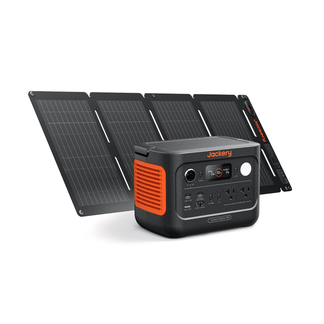
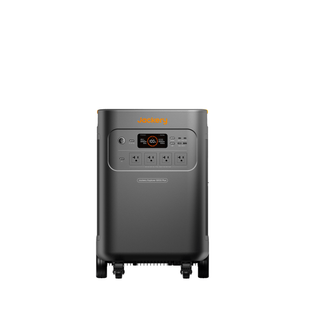
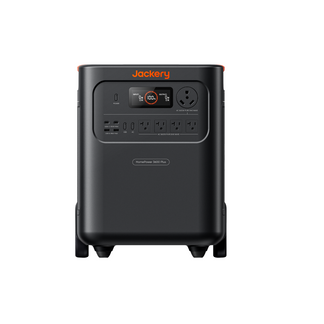
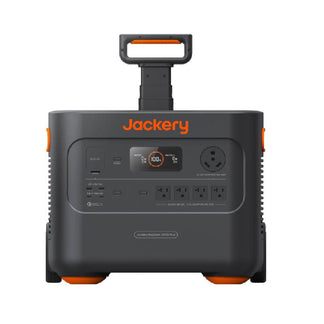
Modern Example: Jackery Solar Generator HomePower 3600 Plus
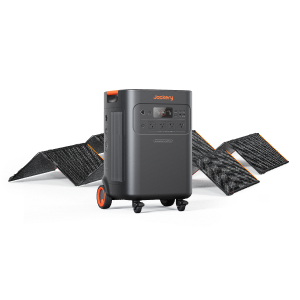
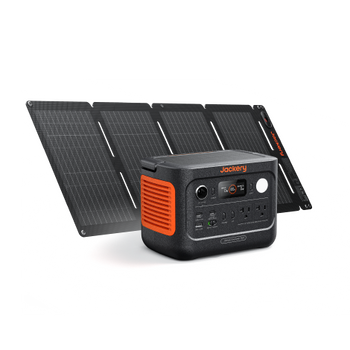
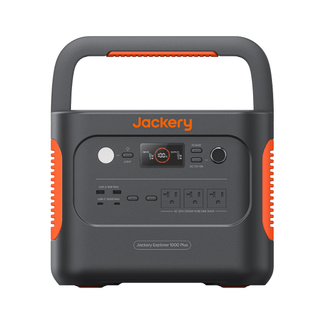
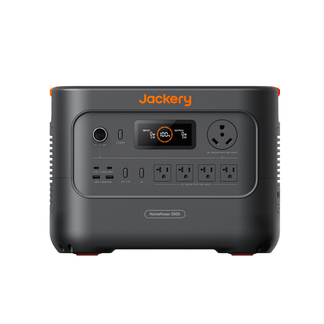
The Jackery Solar Generator HomePower 3600 Plus exemplifies the advantages of modern LiFePO4 technology. It features a scalable capacity from 3.6kWh to 21kWh and utilizes LiFePO4 cells rated for 6,000+ charge cycles. This system integrates the BMS, inverter, and MPPT controller into a single unit, eliminating the complexity of building a DIY lithium bank.
Performance Showdown: Capacity, DoD, and Energy Density
When comparing performance, specifications on paper often differ from real-world results.
Usable Capacity and Discharge Depth
The most significant difference lies in Depth of Discharge (DoD).
- AGM: You should generally limit discharge to 50% of the rated capacity. Discharging an AGM battery below 50% significantly shortens its lifespan. A 100Ah AGM battery effectively provides only 50Ah of usable power.
- LiFePO4: These are safe to discharge to 90–100%. A 100Ah lithium battery provides nearly double the usable energy of a 100Ah AGM unit.
Energy Density Differences
Lithium systems are approximately 3–4 times lighter for equivalent usable energy. To get 200Ah of usable power, you would need four 100Ah AGM batteries (weighing ~260 lbs total). You could achieve the same usable power with two 100Ah lithium batteries (weighing ~60 lbs total).
Voltage Stability Under Load
Voltage sag is a common issue with lead-acid chemistry. As you draw power from an AGM battery, the voltage drops steadily. Under heavy load (like running a microwave), the voltage may dip low enough to trip your inverter's low-voltage cutoff, even if the battery still has capacity remaining.
Lithium maintains a flat voltage curve. It stays above 12.8V (for a 12V system) until the battery is nearly empty. This improves the efficiency of your electrical appliances and ensures you can use the full capacity of the battery without early cutoffs.

Longevity and Cost Analysis: Upfront vs. Lifetime Value
Sticker shock is the primary barrier to lithium adoption, but a long-term cost analysis reveals a different story regarding total ownership costs.
Cycle Life Expectancy
- AGM: Typically rated for 300–500 cycles at 50% Depth of Discharge. If you cycle it daily, it may need replacement in 1–2 years.
- LiFePO4: Modern units like the Jackery Solar Generator HomePower 3600 Plus offer 6,000+ cycles. Even after 6,000 cycles, the battery is still functional; it just holds slightly less charge (typically 70-80% of original capacity).
Total Cost of Ownership (TCO)
You must calculate the cost per usable cycle to understand the true value.
|
Metric |
AGM Battery |
Lithium (LiFePO4) Battery |
|---|---|---|
|
Estimated Cost |
~$200 |
~$800 |
|
Rated Cycles |
500 |
6,000 |
|
Cost Per Cycle |
$0.40 |
$0.13 |
|
Lifespan (Daily Use) |
1.5 Years |
10+ Years |
Over a 5–10 year horizon, lithium is significantly cheaper. You would likely buy 3 to 5 sets of AGM batteries in the time one lithium bank lasts.
Disposal and Warranty Terms
AGM batteries contain lead and sulfuric acid. While highly recyclable, they are toxic and require careful disposal. LiFePO4 is chemically stable and less hazardous.
Warranty terms reflect this reality. Lithium batteries often carry 5–10 year warranties. AGM batteries typically offer 1–2 years.
Charging, System Compatibility, and Safety Considerations
You cannot simply drop a lithium battery into a system designed for lead-acid without checking compatibility.
Charging Speeds
Lithium batteries accept charge current much faster than lead-acid. Lead-acid batteries require a slow absorption phase to reach 100% full, which can take hours. Lithium can accept high current right up to 99% capacity. This allows you to recharge RV batteries significantly faster via solar or generator.
Alternator Protection
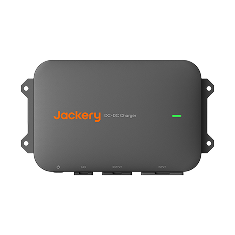
Because lithium batteries have very low internal resistance, they can pull massive amounts of current from a vehicle alternator. This can overheat and destroy a standard alternator. If you install lithium in a vehicle, you must use a DC-DC charger to regulate the current and protect your alternator.
Risks of Mixing Chemistries
Never mix AGM and lithium batteries in the same bank. Their voltage profiles and charging requirements are completely incompatible. Mixing them will result in undercharged lithium batteries, overcharged AGM batteries, and potential safety hazards.
Temperature Management Requirements
- Cold: AGM wins for engine cranking in freezing temps. Lithium requires insulation or heating pads to accept a charge below 32°F / 0°C.
- Heat: High heat degrades all batteries. Avoid storing any battery in temperatures exceeding 100°F / 37.7°C for long periods.
Installation Safety Protocols
AGM batteries require ventilation to prevent hydrogen buildup. Lithium batteries are sealed and do not vent gas during normal operation, making them safer for installation inside living spaces (like under a van bed), provided the BMS is high quality.
System Monitoring
Lead-acid voltage charts are inaccurate for lithium due to the flat voltage curve. You cannot rely on a simple voltmeter to know if your lithium battery is 20% or 80% full. You need a smart shunt or an app-based monitoring system. The Jackery App provides real-time data on State of Charge (SoC), input/output, and remaining runtime for Jackery devices, ensuring you always know your power status.
Choosing the Right Battery (Decision Checklist)
Use this checklist to determine which chemistry fits your specific situation.
|
Decision Factor |
Choose Lithium (LiFePO4) If... |
Choose AGM (Lead-Acid) If... |
|---|---|---|
|
Weight & Space |
You have strict limits (RVs, boats, or portable setups). |
You have a stationary setup (home backup) where weight isn't a factor. |
|
Budget & Value |
You want the best long-term value over 5+ years. |
You have a strict upfront budget limit (under $300). |
|
Primary Application |
You need deep cycling for solar, off-grid use, or trolling motors. |
You need a battery for starting a vehicle engine (high cold-cranking amps). |
|
Operating Temperature |
You are in a climate-controlled environment or moderate weather. |
You require reliable engine cranking in extreme cold conditions. |
|
Installation Location |
You are installing inside an occupied space (under a bed or seat). |
You are installing in a traditional battery bay or exterior compartment. |
|
System Compatibility |
You are able to upgrade your charger/converter to a lithium-compatible profile. |
You are using a standard charging system without adjustable profiles. |
Integrating Advice from Experienced Users
Experienced off-grid enthusiasts emphasize that specifications don't tell the whole story. Here is practical advice from the field.
|
Action Item |
Key Recommendation |
Why It Matters |
|---|---|---|
|
Calculate TCO |
Look beyond the initial sticker shock. |
Lithium provides nearly double the usable energy of AGM; when factoring in lifespan, the long-term price gap disappears. |
|
Upgrade Charging |
Install a DC-DC charger when upgrading. |
This is a mandatory safety device for vehicles/trailers to protect the alternator from the high current draw of lithium batteries. |
|
Don't Mix |
Replace the entire battery bank at once. |
Mixing old/new batteries or different brands creates electrical imbalances that can quickly destroy your new investment. |
|
Plan for Cold |
Use insulation or 12V heating pads in winter. |
Lithium batteries cannot be safely charged below freezing; proper insulation ensures your system remains functional during winter. |
|
Weight Matters |
Consider the impact on vehicle handling. |
Removing 200+ lbs of lead-acid weight from a trailer or van improves fuel economy, braking, and overall towing stability. |
Practical FAQs
Is lithium worth the cost?
Yes, for deep-cycle applications. The lower cost-per-cycle ($0.13 vs $0.40) and extended lifespan save significant money over the battery's life compared to replacing AGM units repeatedly.
Can I swap AGM for lithium?
es, but you must verify that your charger and solar controller have a lithium setting. In vehicles, you must add a DC-DC charger to protect the alternator.
Do lithium batteries need maintenance?
No watering is required. However, checking firmware updates via an app (like with Jackery products) ensures the BMS operates efficiently.
Which is better for cold weather?
AGM is better for starting engines in freezing temps. Lithium is better for energy storage but requires heating elements to charge when temperatures drop below freezing.
Are LiFePO4 batteries safe?
Yes. LiFePO4 is thermally stable and does not carry the same fire risk as other lithium chemistries (like Lithium Cobalt) or the explosive gas risk of lead-acid.