




![[Add - on] Jackery Manual Transfer Switch for Explorer 5000 Plus - Jackery](http://www.jackery.com/cdn/shop/files/add-on-jackery-manual-transfer-switch-for-explorer-5000-plus-9017324.png?v=1754016782&width=350)


![[Add - on] Jackery Battery Pack 5000 Plus - Jackery](http://www.jackery.com/cdn/shop/files/add-on-jackery-battery-pack-5000-plus-6078351.png?v=1754016791&width=324)
![[Add - on] Jackery Car Charging Cable - Jackery](http://www.jackery.com/cdn/shop/files/add-on-jackery-car-charging-cable-3882421.png?v=1754016863&width=324)



![[Add - on] Jackery Smart Transfer Switch - Jackery](http://www.jackery.com/cdn/shop/files/add-on-jackery-smart-transfer-switch-5842915.png?v=1754016784&width=324)
![[Add - on]Jackery 102W GaN 3 - Port Fast Charger - Jackery](http://www.jackery.com/cdn/shop/files/add-onjackery-102w-gan-3-port-fast-charger-6377742.png?v=1754016790&width=324)


![[Add - on] SolarSaga 200W - Jackery](http://www.jackery.com/cdn/shop/files/add-on-solarsaga-200w-4834329.png?v=1754016915&width=324)
![[Add - on] Jackery Manual Transfer Switch for Explorer 5000 Plus - Jackery](http://www.jackery.com/cdn/shop/files/add-on-jackery-manual-transfer-switch-for-explorer-5000-plus-9017324.png?v=1754016782&width=324)


If the power goes out tonight, your refrigerator stays cold for only 4 hours. After that, the USDA says perishable food enters the danger zone. For a household with a full fridge, that's a $200–$400 loss, and for anyone storing insulin or temperature-sensitive medication, it is far more serious than spoiled groceries. A battery backup for a refrigerator is the cleanest, safest solution. Unlike gas generators, solar battery backup solutions are silent, fume-free, and safe to run indoors or even right next to your kitchen appliances.
Jackery Solar Generators are home battery backup solutions that can keep your refrigerator and other household appliances powered for hours or even days. These essential home backup solutions ensure your critical devices stay on during outages caused by heatwaves, storms, etc. This guide covers everything you need to know: how many watts your fridge actually uses, how to size the right battery, how long it will run, and which Jackery Solar Generators work best for each situation.
Key Takeaways
- Refrigerators need 100–800W to run, plus a startup surge of up to 300-2,400W. Hence, the battery generator for the off-grid refrigerator must handle both.
- You can use the EnergyGuide label on your fridge to calculate the exact daily Wh needs, then add a 15% buffer for inverter losses.
- A standard home fridge needs at least 1,500–2,000Wh of battery capacity for overnight protection.
- Battery backups are safer than gas generators and do not emit fumes or noise, and are safe for indoor use.
- Pairing your backup with solar panels can extend runtime indefinitely during multi-day outages.
- The USDA's 4-hour rule means you should connect backup power immediately and not after the fridge warms up.
U.S. Financial Incentives: The Post-2025 Landscape
Previously, the Residential Clean Energy Credit covered 30% of the cost for qualifying home battery systems. However, following the passage of the "One Big Beautiful Bill" in July 2025, this 30% federal tax credit officially expired on December 31, 2025. Because there is no phase-down period in 2026, systems installed today no longer qualify for these federal subsidies.
Despite the end of this credit, investing in high-capacity backup power remains a vital financial decision. The upfront cost of a battery generator is often quickly offset by the thousands of dollars saved by preventing food spoilage, protecting expensive medications, and avoiding emergency hotel stays during multi-day grid failures.
The USDA Food Safety Countdown: Why Backup is Critical
Time is your biggest enemy during a power outage. According to USDA and FDA guidelines, perishable food stays safe for exactly 4 hours in an unopened, unpowered refrigerator.
Freezers offer slightly more grace. A half-full freezer protects food for 24 hours. A fully packed freezer extends that safety window to 48 hours, provided the door remains shut.
To prevent rapid bacterial growth, your backup power must maintain the fridge at ≤40°F and the freezer at 0°F. Rely on a dedicated appliance thermometer rather than guessing. If you store temperature-sensitive medical supplies like insulin, a battery generator ensures these critical items never breach safe temperature zones.
Decoding Refrigerator Power: Marketing Claims vs. Reality
Buying a generator based on a refrigerator's "average wattage" is a guaranteed way to fail during an outage. You must account for surge watts, hidden draws, and duty cycles.
The Startup Surge Killer
Refrigerators require a massive power spike for 1 to 2 seconds when the compressor kicks on. A standard fridge may only need 150W to 200W to run, but requires 1,200W to 2,400W of surge power to start. Your generator must have a Pure Sine Wave inverter rated for at least 1,500W to 2,000W peak output to handle this surge and protect the fridge's smart microprocessors.
The Hidden 800W Draw
Many users ignore auto-defrost heaters. Modern frost-free refrigerators periodically activate a heating element to melt ice off the coils. This process can silently pull up to 800 watts, easily tripping an undersized generator.
The 40% Duty Cycle Secret
Compressors do not run constantly. A typical refrigerator only runs about 40% of the day. For example, a modern LG French Door fridge draws 207W running, but with a 0.40 duty cycle, the average continuous draw is only 83W. Over 24 hours, this results in a daily energy consumption of roughly 1,992 Watt-hours (Wh), not the 5,000+ Wh many assume.
For more information, you can check out How Many Watts Does a Refrigerator Use? [and Mini-Fridge, Freezer].
How to Size a Battery Generator for Refrigerator Backup
The right battery size depends on your specific fridge and how long you need backup power. Here's the most accurate method.
Step 1: Find Your Fridge's Daily Wh Consumption (EnergyGuide Method)
Look for the yellow EnergyGuide label inside your refrigerator door. Find the estimated yearly electricity use (kWh/year). Then use this formula:
Daily Wh = (kWh/year ÷ 365) × 1,000
Example: 600 kWh/year ÷ 365 = 1.64 kWh/day × 1,000 = 1,640 Wh/day
Step 2: Add a 15% Buffer for Inverter Efficiency Loss
Batteries store DC power. Your fridge runs on AC. Converting DC to AC through an inverter loses 10–15% of energy. Always add a 15% buffer to your calculated daily Wh to account for this.
So for the example above: 1,640 Wh × 1.15 = ~1,890 Wh of actual battery capacity needed for 24 hours.
Quick Sizing Reference: How Much Battery Do I Need?
|
Fridge Type |
Backup Goal |
Min. Capacity Needed |
Recommended Jackery |
|
Mini / top-freezer |
8–12 hours |
800–1,200 Wh |
Jackery Solar Generator HomePower 3000 |
|
Standard full-size |
12–24 hours |
1,500–2,000 Wh |
Jackery Solar Generator HomePower 3000 |
|
Bottom-freezer / side-by-side |
24 hours |
2,000–2,500 Wh |
Jackery Solar Generator HomePower 3000 |
|
Large French door + freezer |
24–48 hours |
3,000+ Wh |
Jackery Solar Generator HomePower 3600 Plus |
|
Fridge + freezer + other essentials |
Multi-day |
5,000+ Wh |
Jackery Solar Generator 5000 Plus |
How Long Will a Battery Backup Run My Refrigerator?
Runtime depends on three variables: your battery's usable capacity (Wh), your fridge's average power draw accounting for its duty cycle, and your ambient room temperature. If you want to understand how long a Jackery Solar Generator will power your refrigerator, you can use the Running Time Calculator available on the Jackery Buying Guide page. In the calculator, choose the Jackery model, enter the refrigerator’s power consumption, and click Enter to get an estimated runtime.
|
Battery Capacity |
Mini Fridge (80W avg) |
Top-Freezer (100W avg) |
Std. Fridge (150W avg) |
Large French Door (250W avg) |
|
1,000 Wh |
~10 hrs |
~8 hrs |
~5.5 hrs |
~3.5 hrs |
|
2,000 Wh |
~20 hrs |
~16 hrs |
~11 hrs |
~7 hrs |
|
3,000 Wh |
~30 hrs |
~24 hrs |
~16.5 hrs |
~11 hrs |
|
3,584 Wh (HP3600+) |
~36 hrs |
~29 hrs |
~20 hrs |
~13 hrs |
|
5,040 Wh (5000 Plus) |
~51 hrs |
~41 hrs |
~28 hrs |
~17 hrs |
Estimates assume an 85% inverter efficiency and a 40% compressor duty cycle, which is typical for modern Energy Star-rated refrigerators. Older fridges or hot kitchens will reduce runtime.
Proven Strategies to Double Your Generator's Runtime
You do not need a massive battery to survive a multi-day outage if you manage your power smartly.
The Intermittent Cooling Trick
You do not need continuous power. Run the generator for 1 to 2 hours every 4 to 6 hours. This is enough to bring the internal temperature back down to safe levels while preserving massive amounts of battery life.
Thermal Mass Stabilization
Empty space warms up faster than solid objects. Keep the fridge fully stocked. Fill empty freezer space with frozen water jugs to retain cold air during the generator's off-cycles.
The Infinite Fridge Strategy
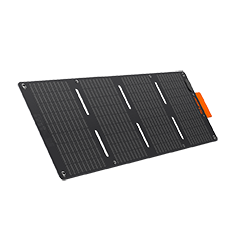
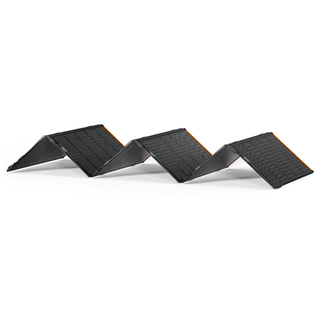
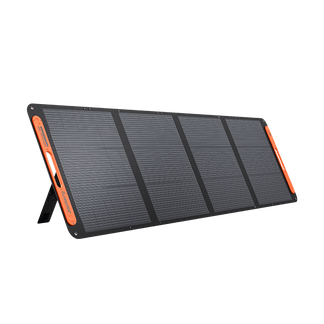
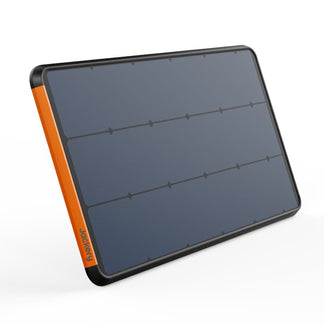
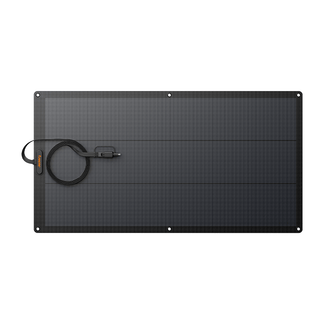
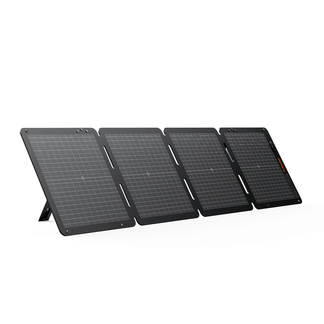
Connect 200W to 400W of solar panels to your battery generator. In good sunlight, solar pass-through charging will refill the battery bank faster than the refrigerator drains it, creating a self-sustaining loop.
Eliminate Phantom Loads
Unplug all non-essential devices from the generator. Even a microwave clock or a glowing LED indicator drains valuable Watt-hours from your fridge's runtime.
Portable Power Stations vs. DIY LiFePO4 Battery Banks
When building a backup system, you have two main choices: DIY battery banks or pre-built portable power stations. Both should utilize Lithium Iron Phosphate (LiFePO4) chemistry for superior safety, thermal stability, and a 10+ year lifespan.
Lithium batteries safely allow up to 80-100% Depth of Discharge (DoD). Older lead-acid batteries max out at 50%, requiring you to buy double the capacity just to get the same usable power.
Building a custom DIY bank yields high capacity for less money, but requires complex wiring, standalone inverters, and resistors to limit inrush current. Pre-built portable power stations eliminate this friction. They offer plug-and-play convenience and built-in pure sine wave inverters, making them invaluable for zero-setup emergency home backup.
Best Battery Generator for Refrigerator Backup
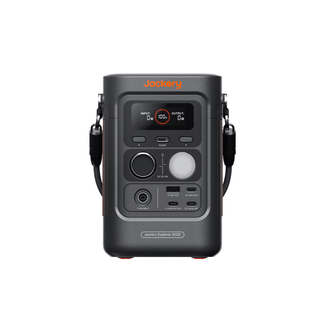
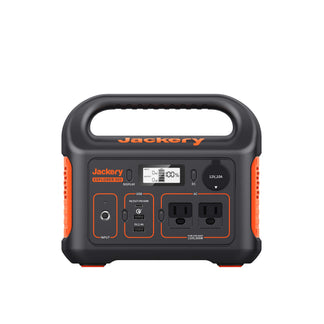
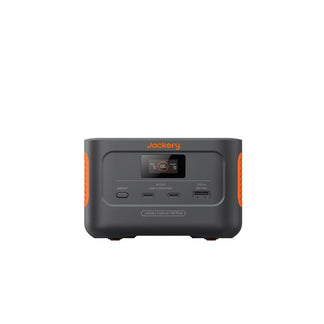
Jackery offers premium battery backups for refrigerators and freezers that keep appliances powered during blackouts. All recommended Jackery Solar Generators feature ultra-safe LiFePO4 batteries, pass-through charging, and rapid UPS switchover times.
Here are the best solar generators for refrigerators from Jackery:
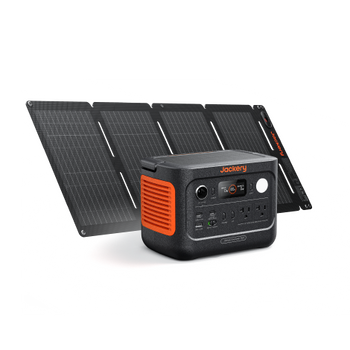
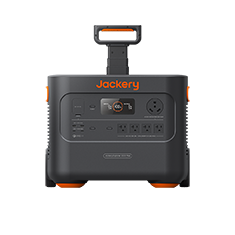
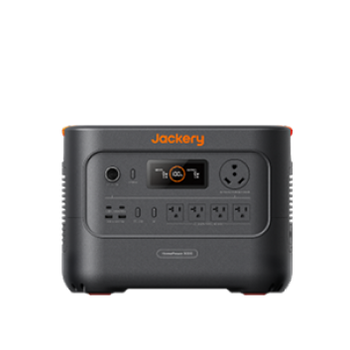
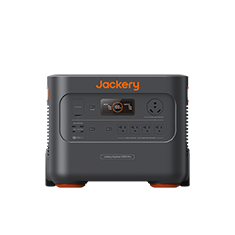
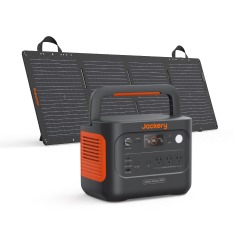
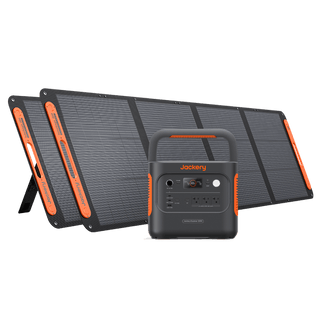
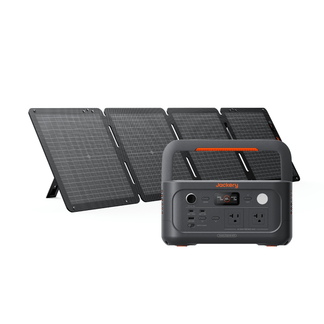
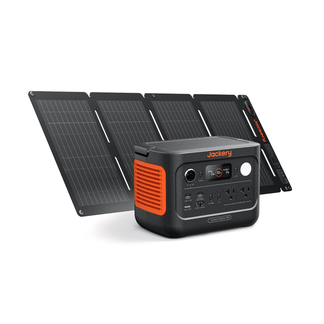
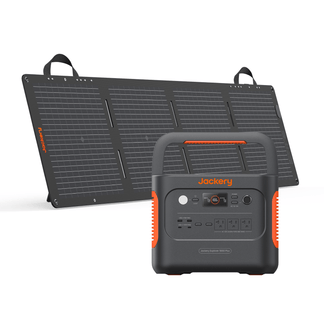
Jackery Solar Generator HomePower 3000
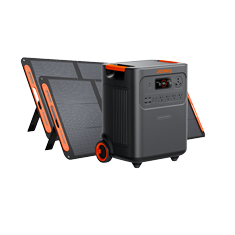
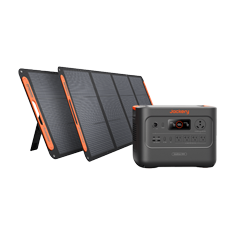
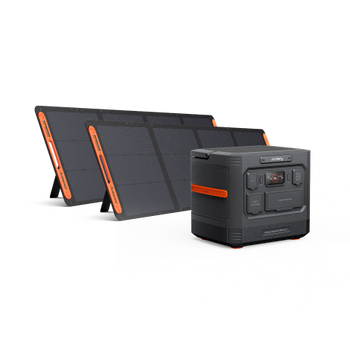
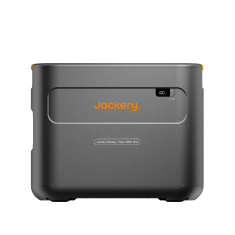
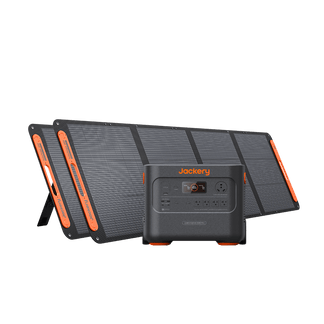
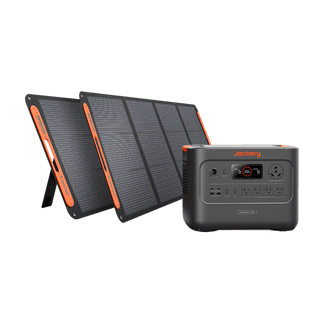
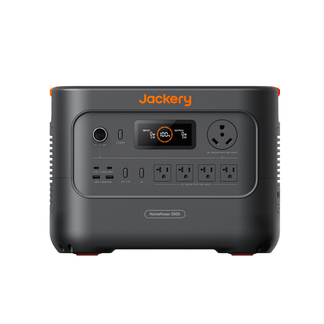
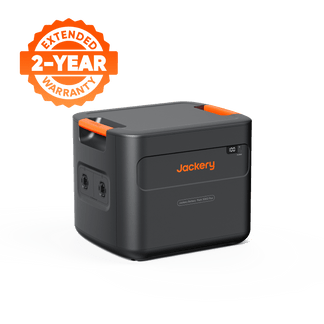
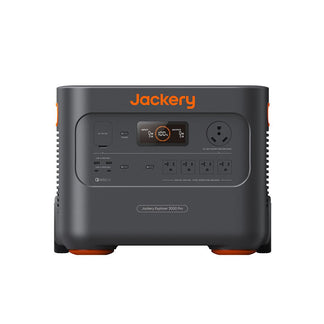
The Jackery Solar Generator HomePower 3000 is an essential home backup solution that can run fridge and other critical household loads for long hours. It is the lightest 3kWh LiFePO4 power station that can easily be transported from one place to another. It delivers large continuous output to handle lighting, router, refrigeration, and other small appliances without circuit overloads. When paired with a manual transfer switch, you can power up to six essential home circuits when the grid goes down.
Appliances Running Time
- Top Freezer Refrigerator (800W): 3.2H (Continuous)
- Bottom Freezer Refrigerator (500W): 5.0H (Continuous)
- Average Refrigerator (250W): 9.6H (Continuous)
- Small Refrigerator (150W): 15.2H (Continuous)
Who Should Buy This: If you have a standard full-size or bottom-freezer refrigerator and want reliable 8–16 hour backup without overspending, the Jackery Solar Generator HomePower 3000 hits the sweet spot.

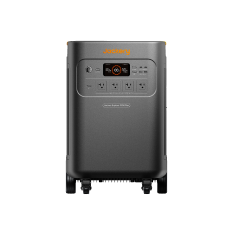
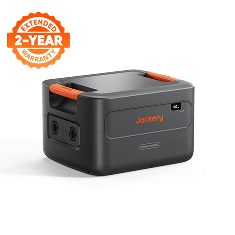
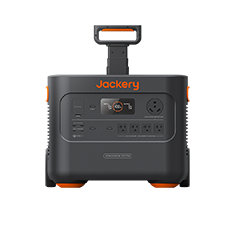
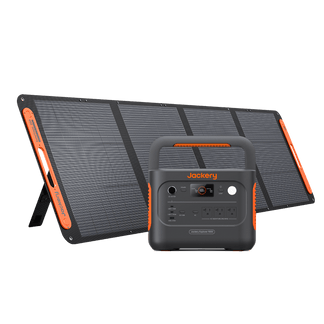
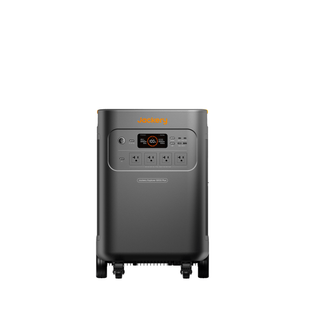
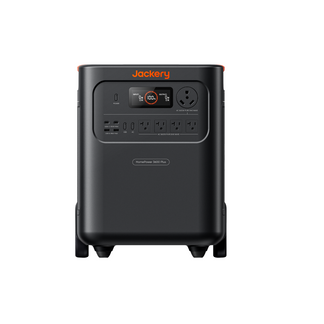
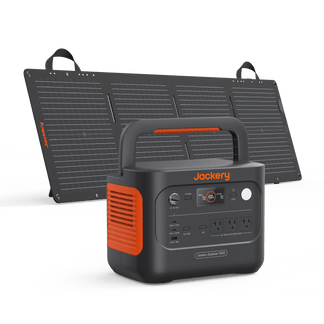
Jackery Solar Generator HomePower 3600 Plus
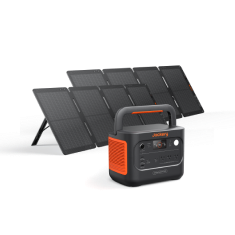
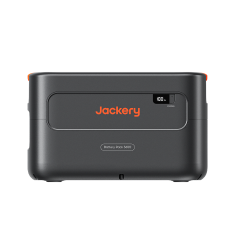
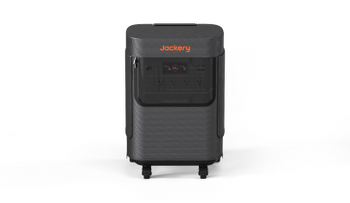
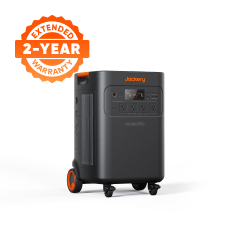
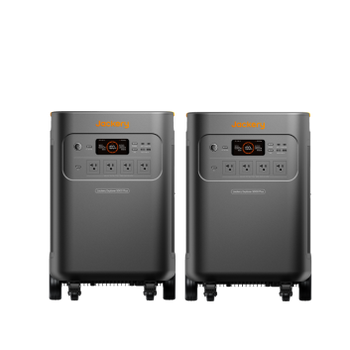
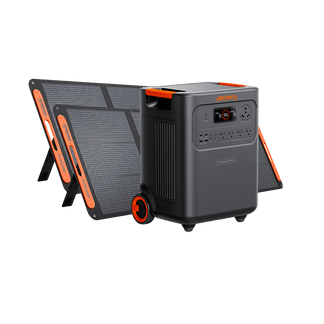
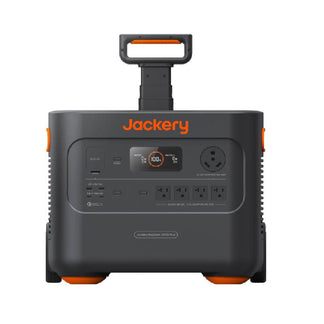
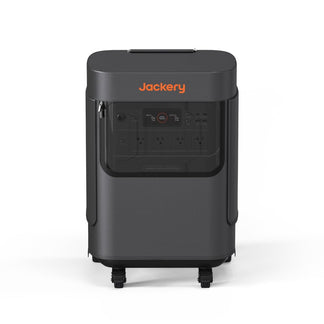
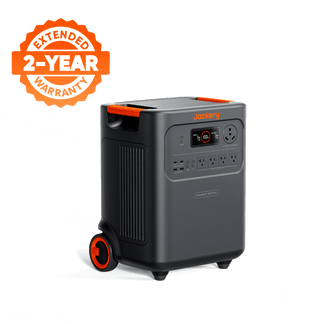
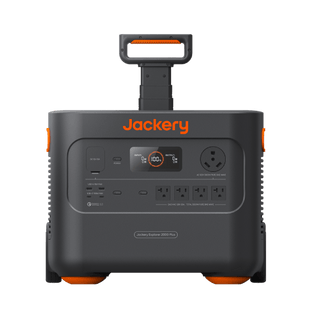
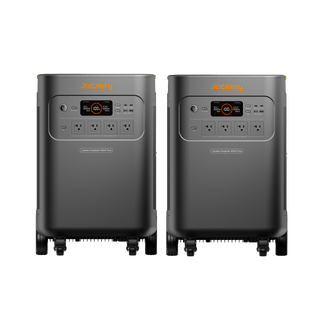
The Jackery Solar Generator HomePower 3600 Plus is a heavy-duty home backup solution capable of keeping fridges powered for days. It features double wheels, allowing you to roll the battery backup effortlessly from the garage to the kitchen.
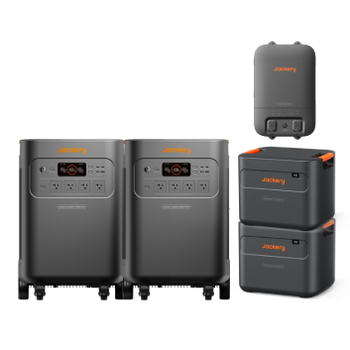
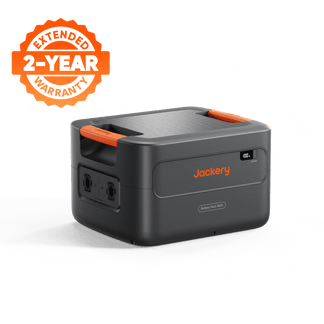
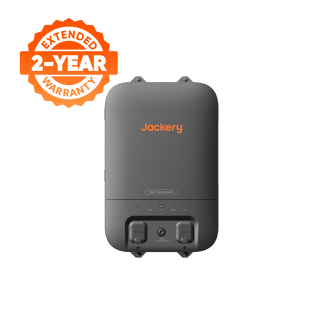
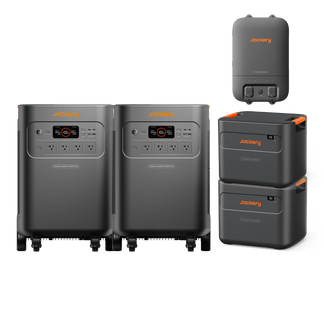
Capacity is entirely expandable. You can scale up to 21kWh per unit, or an immense 43kWh when two batteries are connected in parallel. It is also compatible with the Jackery Manual Transfer Switch, ensuring your essential kitchen circuits activate in just 10 milliseconds after a grid failure.
Appliances Running Time
- Top Freezer Refrigerator (800W): 3.7H (Continuous)
- Bottom Freezer Refrigerator (500W): 5.8H (Continuous)
- Average Refrigerator (250W): 11.2H (Continuous)
- Small Refrigerator (150W): 17.7H (Continuous)
Who Should Buy This: If your area faces frequent, multi-day grid failures that lead to spoiled food, the Jackery Solar Generator HomePower 3600 Plus is your ultimate insurance policy.

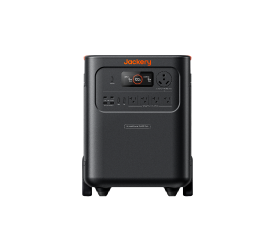
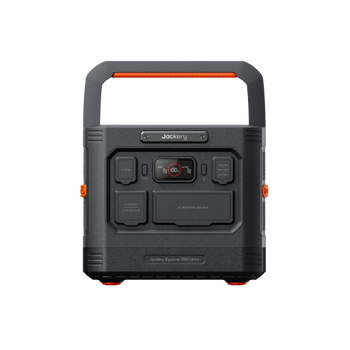
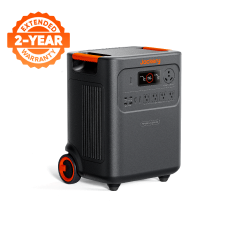
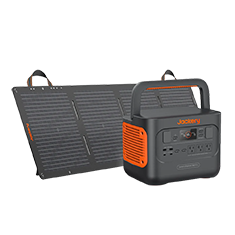
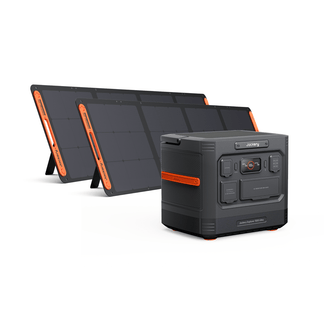
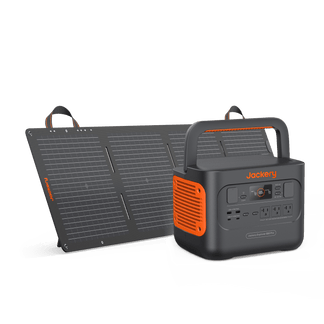
Jackery Solar Generator 5000 Plus
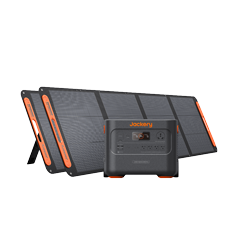
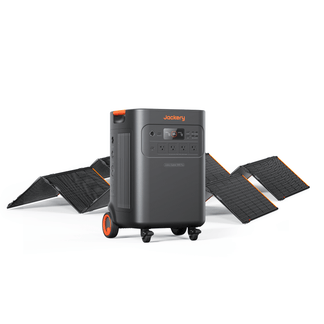
For essential home power that handles the most demanding appliances, the Jackery Solar Generator 5000 Plus delivers unmatched performance. With a massive 7200W continuous output (14,400W surge) and a 5040Wh capacity, it easily absorbs the heavy startup surge of large French-door refrigerators and deep freezers simultaneously.
It features dual-voltage (120V/240V) output built directly into the unit. This means it can run your heavy-duty well pumps or electric dryers alongside your kitchen appliances.
Appliances Running Time
- Large Refrigerator/Freezer Combo (800W): 5.3H (Continuous)
- Bottom Freezer Refrigerator (500W): 8.5H (Continuous)
- Average Refrigerator (250W): 17.1H (Continuous)
- Small Refrigerator (150W): 28.5H (Continuous)
Who Should Buy This: If you need to power multiple high-draw appliances simultaneously—like a large refrigerator, a deep freezer, and a well pump—the Jackery Solar Generator 5000 Plus provides the raw wattage and capacity required.

Customer Story: For Joseph Schentrup, a Florida software engineer and new father of twins, power outages stopped being an inconvenience and became a real disruption. With the Jackery Solar Generator 5000 Plus and a smart transfer switch, Joseph kept his kitchen refrigerators, office, and the kids’ rooms fully powered. Read more Jackery Stories to see how people are using their battery backup generators at home and outdoors.
How To Choose The Best Battery Backup For Refrigerator?
Investing in the best battery backup for a refrigerator requires matching the generator's specs to your appliance's demands. Focus on these vital factors.
Battery Capacity (Wh): Capacity dictates runtime. Choose a 1000Wh battery for 6-10 hours of backup, or 2000Wh to 3000Wh+ for full 24-hour autonomy.
Inverter Output (W): Your generator must have a continuous AC output high enough to handle the compressor's starting surge. Look for a pure sine wave inverter rated for at least 2000W to 3600W to prevent system overloads.
Recharging Options: Grid charging is useless during a blackout. Ensure your system supports rapid solar charging. Jackery Portable Power Stations support solar panels, car outlets, and wall outlets.
Battery Chemistry: Always choose Lithium Iron Phosphate (LiFePO4) batteries. They offer a significantly longer lifespan (3,000+ cycles) and higher thermal safety compared to older lithium-ion chemistries.
Silent Operation: Gas generators are noisy and emit deadly carbon monoxide. Solar battery backup systems produce zero emissions and operate quieter than a whisper. You can safely place a Jackery Portable Power Station directly in your kitchen.
Battery Backup for Refrigerator FAQs
When should I hook up the battery to the refrigerator?
Hook up the battery immediately when the power goes out. Do not wait for the refrigerator to warm up. The USDA states food is only safe for 4 hours without power. Immediate connection preserves the internal temperature and reduces the workload on the generator.
Can a battery backup run a fridge?
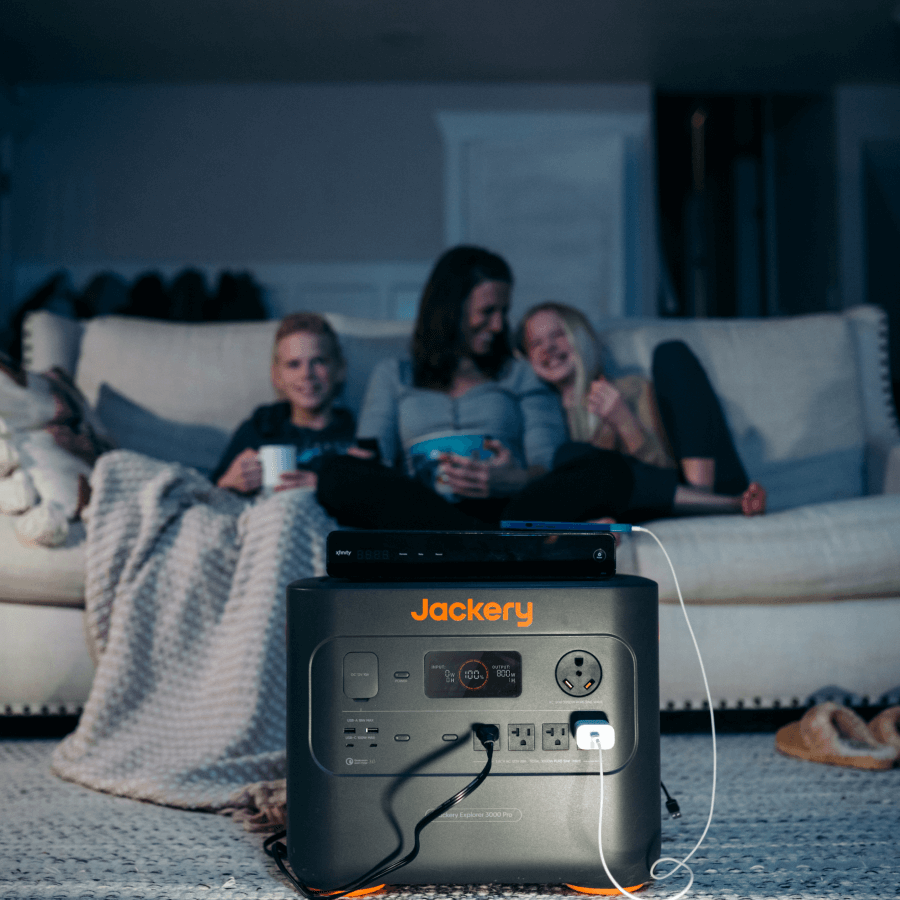
Yes. You can plug the refrigerator directly into a portable power station's AC outlet. Jackery Solar Generators combine high-capacity power stations with pure sine wave inverters to safely run sensitive modern refrigerators.
What size battery is needed to run a fridge?
Use the EnergyGuide label to calculate your daily Watt-hour (Wh) needs. A standard home fridge typically requires a generator with at least 1,500Wh to 2,000Wh of capacity for overnight backup, and an inverter capable of handling a 1,500W+ startup surge.
How do I prepare my refrigerator for a power outage?
Keep the doors closed. Every time you open the door, you let cold air escape and force the compressor to work harder. Fill empty space with frozen water jugs to create thermal mass.
Can a generator damage a refrigerator?
No, provided you use a battery generator with a pure sine wave inverter. Jackery Solar Generators output clean, stable electricity identical to your wall outlet. They feature advanced BMS (Battery Management System) technology that protects against over-voltage and short circuits.
Final Thoughts
A battery generator for refrigerator backup eliminates the panic of a power outage. It reduces your dependence on the fragile electric grid, protects expensive groceries, and secures critical medical supplies.
Jackery Solar Generators offer reliable, eco-friendly energy to power your most essential appliances. Whether you choose the Jackery Solar Generator HomePower 3600 Plus for standard home backup, or the heavy-duty Jackery Solar Generator 5000 Plus for essential home resilience, you guarantee your kitchen stays running when the neighborhood goes dark.
If you want to stay updated with the latest product news, exclusive offers, and emergency preparedness tips, subscribe to the Jackery newsletter today.