















![[Add - on] Jackery Manual Transfer Switch for Explorer 5000 Plus - Jackery](http://www.jackery.com/cdn/shop/files/add-on-jackery-manual-transfer-switch-for-explorer-5000-plus-9017324.png?v=1754016782&width=350)


![[Add - on] Jackery Battery Pack 5000 Plus - Jackery](http://www.jackery.com/cdn/shop/files/add-on-jackery-battery-pack-5000-plus-6078351.png?v=1754016791&width=324)


![[Add - on] Jackery Car Charging Cable - Jackery](http://www.jackery.com/cdn/shop/files/add-on-jackery-car-charging-cable-3882421.png?v=1754016863&width=324)










![[Add - on] Jackery Smart Transfer Switch - Jackery](http://www.jackery.com/cdn/shop/files/add-on-jackery-smart-transfer-switch-5842915.png?v=1754016784&width=324)
![[Add - on]Jackery 102W GaN 3 - Port Fast Charger - Jackery](http://www.jackery.com/cdn/shop/files/add-onjackery-102w-gan-3-port-fast-charger-6377742.png?v=1754016790&width=324)


![[Add - on] SolarSaga 200W - Jackery](http://www.jackery.com/cdn/shop/files/add-on-solarsaga-200w-4834329.png?v=1754016915&width=324)
![[Add - on] Jackery Manual Transfer Switch for Explorer 5000 Plus - Jackery](http://www.jackery.com/cdn/shop/files/add-on-jackery-manual-transfer-switch-for-explorer-5000-plus-9017324.png?v=1754016782&width=324)


High electricity bills drive homeowners to solar, but guessing system size leads to costly, irreversible mistakes. Two identical homes require completely different solar setups based on specific usage habits and local climate.
This guide explains exactly how to calculate solar power needs using real-world efficiency metrics and US data. Whether you want to reduce electricity bills or prepare for emergencies, you must understand your home's exact power requirements to invest wisely.
The Core Math: Why Square Footage Doesn't Matter
Sizing a system based on home square footage instead of actual energy consumption is the biggest mistake homeowners make.
Two identical 2,000-square-foot homes have drastically different energy needs based on heating types, insulation, and appliance usage. Panel count is driven entirely by two factors: your annual electricity usage and your local sunlight availability.
The average US home requires 15 to 25 solar panels to offset 100% of its electricity use.
Step 1: Find Your True Daily Energy Usage (kWh)
Start by determining exactly how much electricity your home consumes. Avoid sizing your system based on a single month's bill, as seasonal heating and cooling drastically skew averages.
Pull your last 12 months of utility bills to find your total annual kilowatt-hours (kWh). Divide that annual total by 365 to find your average daily kWh consumption.
The average US home consumes approximately 11,000 kWh annually. This translates to roughly 30 kWh per day.
Account for phantom loads and appliance cycling. Devices plugged in but turned off still draw power and impact your daily average. Refrigerators cycle on and off, meaning their actual operating hours are roughly one-third of the time they are plugged in.
Step 2: Factor in Future-Proofing and Utility Caps
Adding 20% to 30% extra capacity during initial installation is significantly cheaper than expanding the system later. Anticipate your future energy needs before finalizing your design.
Factor in an additional 3,000 to 4,000 kWh annually if you plan to purchase an Electric Vehicle (EV). Add 2,000 to 5,000 kWh to your calculation if you plan on upgrading to an electric heat pump.
Check your local regulations before over-sizing. Most US utilities allow grid-connected systems to offset a maximum of 120% of your past historical consumption.
Step 3: Determine Your Local Peak Sun Hours
Peak sun hours measure when sunlight intensity averages 1,000 W/m², not total daylight hours. Identical homes need 50% to 100% different system sizes depending entirely on geographic location.
The Southwest US averages 6.0 to 7.0 peak hours, while the Pacific Northwest averages only 3.0 to 4.0 hours. Always use the government-run NREL PVWatts Calculator with your zip code to pull exact local irradiance data.
If you are sizing an off-grid system, always use your winter's lowest sun hours as your baseline. This guarantees reliable year-round power even during the darkest months.
Step 4: The 80% Reality Check (System Losses)
Real-world solar systems operate at only 75% to 85% of their theoretical maximum capacity. Solar panels never produce their full "nameplate" wattage in real-world conditions.
You must factor in an 80% system efficiency rate (a 0.80 multiplier) to account for unavoidable energy losses. This accounts for inverter inefficiency, wiring resistance, high roof temperatures, and dust.
Skipping this 20% loss buffer is a critical mistake that leads to undersized systems and lingering electric bills. This dynamic is often reflected in a production ratio, which typically ranges from 1.4 to 1.8 depending on your location and system design.
Step 5: The Master Formula to Calculate Solar Power Needs
To properly size a solar system, use this proven equation to determine your exact panel requirements:
Number of Panels = Daily kWh / (Sun Hours x Panel kW x 0.80)
For example, if you use 30 kWh daily, get 5 peak sun hours, and buy standard 400W (0.400 kW) panels, the math is: 30 / (5 x 0.400 x 0.80) = 18.75 panels.
Always round up to the nearest whole panel. In this case, you need 19 panels to ensure adequate coverage. Most modern residential solar panels are rated between 350W and 450W each.
Roof Constraints: When Math Meets Reality
Perfect calculations fail if your roof lacks space or structural integrity. Each standard residential solar panel requires approximately 17 to 21 square feet of usable roof space.
A standard 2,000 sq. ft. home typically requires 15 to 20 panels to offset daily energy usage. You must also account for mandatory 3-foot structural setbacks required by local fire codes, which reduces usable roof space.
Physical constraints dictate your installation. Average panels weigh about 40 pounds each. Always get a professional roof inspection to ensure your roof's age, material, and pitch can support the system.
If your roof space is heavily limited by shading or setbacks, you must invest in higher-efficiency panels. This maximizes your energy output per square foot, even if the upfront cost per panel is higher.
Financial Sizing: ROI, US Tax Incentives, and Alternatives
Cost is a primary driver for solar adoption. The national average cost for a residential solar installation ranges from $2.50 to $3.50 per watt. A standard 10 kW system requires a $25,000 to $35,000 upfront investment before incentives are applied.
Cost is a primary driver for solar adoption. The national average cost for a residential solar installation ranges from $2.50 to $3.50 per watt. A standard 10 kW system requires a $25,000 to $35,000 upfront investment. Note that the 30% federal solar tax credit (Section 25D) officially expired at the end of 2025, meaning homeowners must now account for the full out-of-pocket cost.
If your state lacks favorable net metering, you must calculate additional capacity for a battery bank to store excess daytime power. If your roof cannot support panels or the upfront cost is too high, community solar is a viable financial alternative that allows you to buy into a shared local solar farm to lower your utility bills.
Off-Grid Sizing: Batteries and Inverters
When you calculate solar power needs for off-grid use, battery bank and inverter sizing are equally critical. You need to store the energy you generate for nighttime use and cloudy days.
Calculate your Days of Autonomy (how many backup days you need without sun) and your Depth of Discharge (DoD). Lead-acid batteries shouldn't be discharged past 50%, while LiFePO4 batteries can safely discharge to 80-90% without damage.
Size your inverter to handle the maximum peak wattage and surge power of all simultaneous appliances. An undersized inverter will trip and shut down if a refrigerator compressor and a microwave start at the same time.
Here is a breakdown of critical loads and the daily power required during an outage:
|
System |
Power |
Daily usage (hours) |
Power per day |
|---|---|---|---|
|
Refrigerator |
300 Watts |
8 |
2.4 kWh |
|
CPAP |
200 Watts |
8 |
1.6 kWh |
|
Lights |
200 Watts |
5 |
1.0 kWh |
|
WiFi |
50 Watts |
24 |
1.2 kWh |
|
TV |
100 Watts |
5 |
0.5 kWh |
|
Coffee Maker |
800 Watts |
1 |
0.8 kWh |
|
Microwave |
1500 Watts |
1 |
1.5 kWh |
|
Electric Oven |
2000 Watts |
1 |
2.0 kWh |
|
Water Heater |
1000 Watts |
2 |
2.0 kWh |
|
Total |
13.0 kWh |
(Note: These figures are averages. Always check the specific power rating on your devices when creating a load list.)
Types of Solar Power Solutions for Homes
There are two basic types of solar power solutions available for homeowners: grid-tied and off-grid power systems.
- Grid-Tied Solar Power Systems: Grid-tied systems are cost-effective because they do not require expensive battery banks. These systems send generated energy to the utility grid, and under net metering, you receive credit for excess generation. However, without batteries, these systems shut down during grid power outages to protect utility workers.
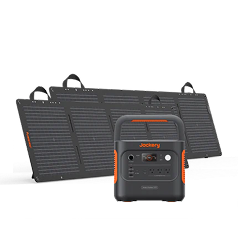
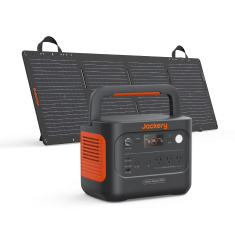
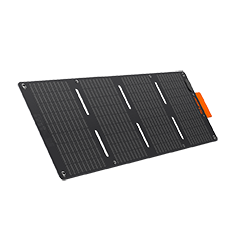
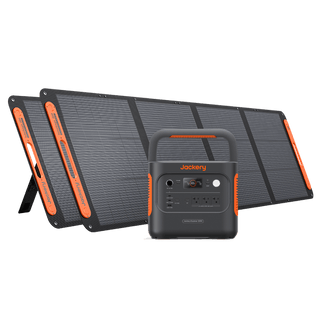
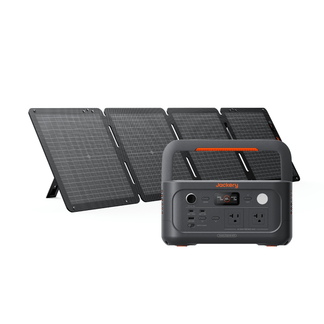
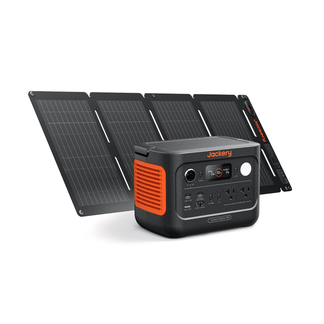
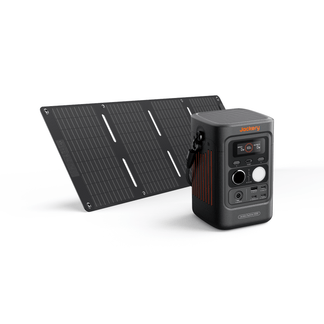
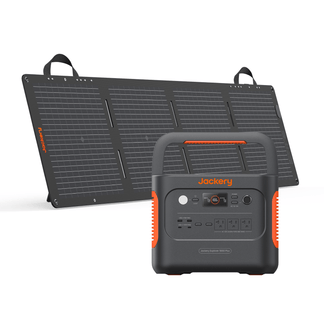
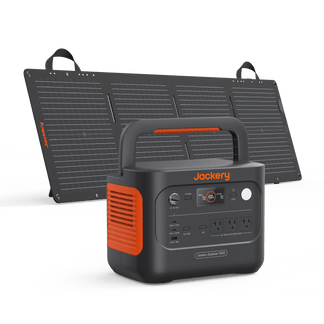
- Off-Grid Solar Power Systems: Off-grid solutions deliver electricity directly to the home and store excess power in battery banks. They operate completely independently of the utility grid. Portable off-grid generators are gaining massive popularity for homeowners who want plug-and-play backup power without complex roof installations.
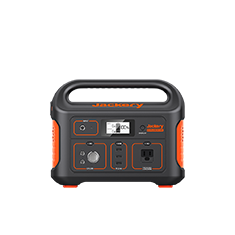
Portable Off-Grid Solutions: Jackery Solar Generators
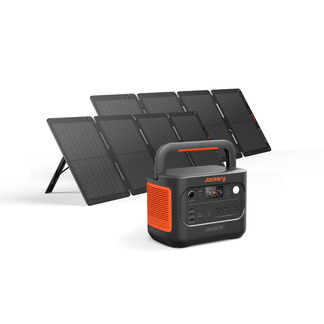
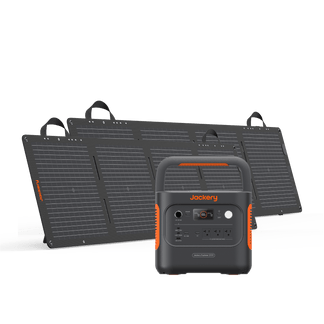
If you don't have enough roof space or want to avoid expensive permanent installations, portable solar generators offer immediate energy independence. Choosing the right system depends entirely on your home's size and backup power needs.
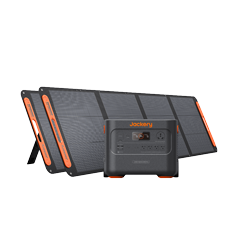
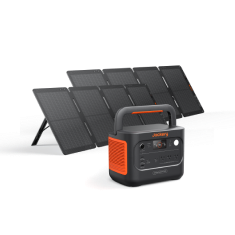
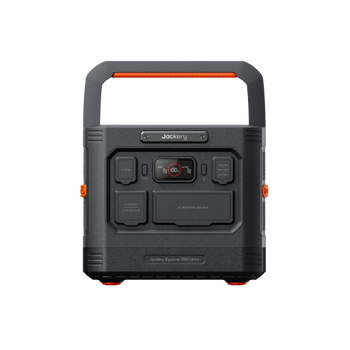
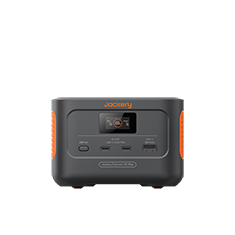
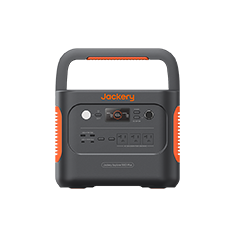
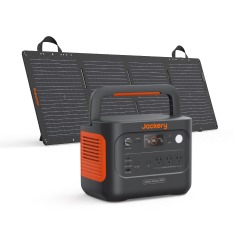
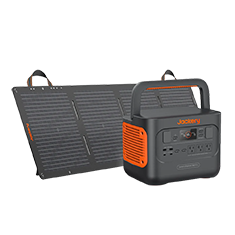
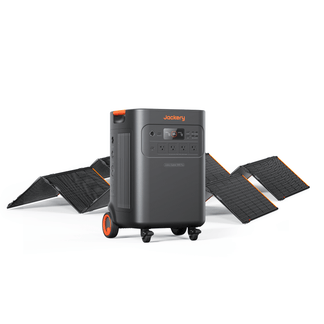
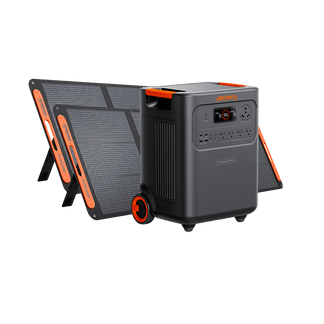
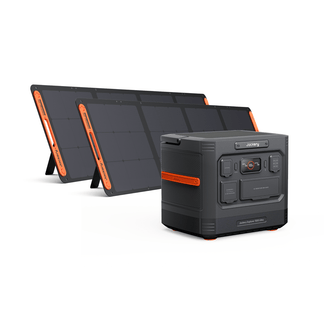
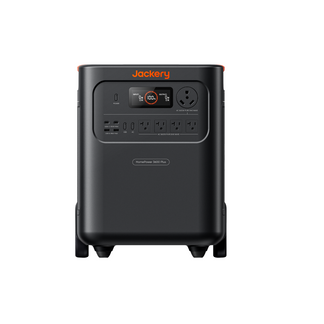
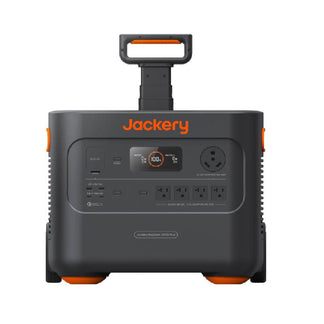
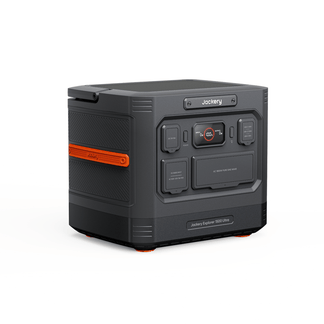
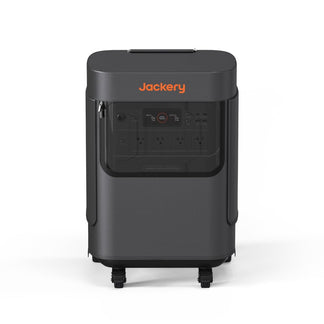
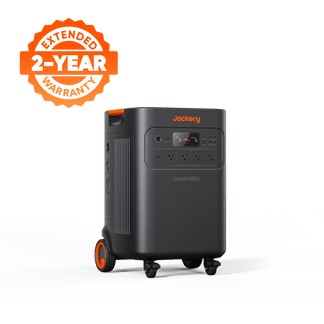
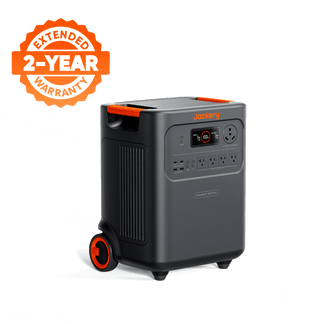
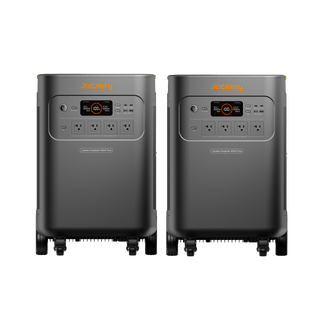
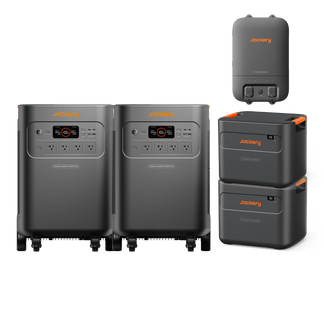
Jackery Solar Generator 5000 Plus
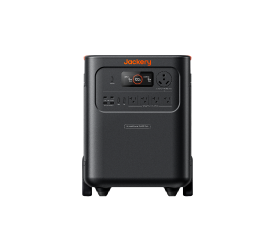
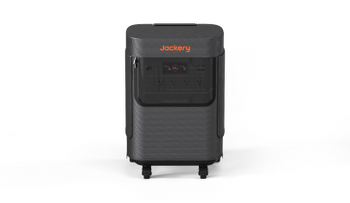
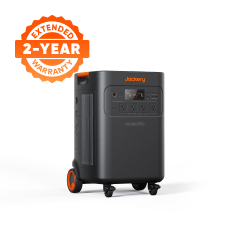
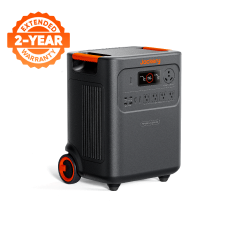
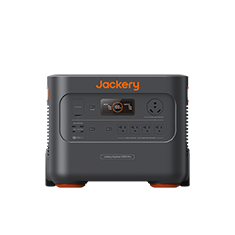
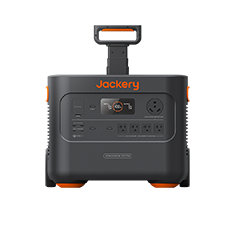
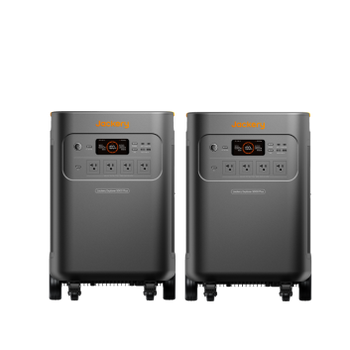
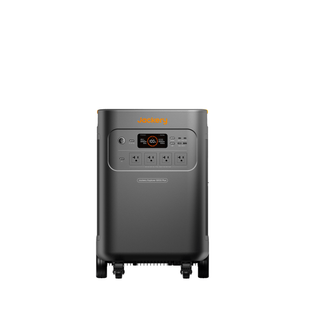
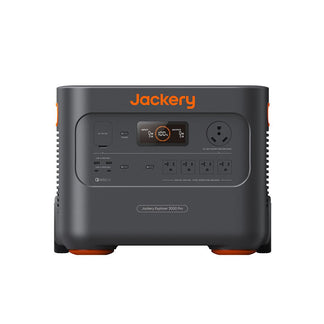
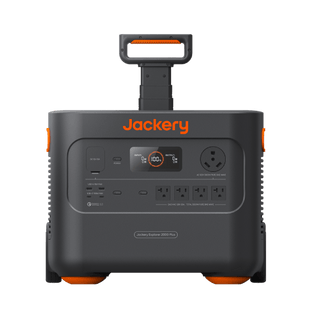
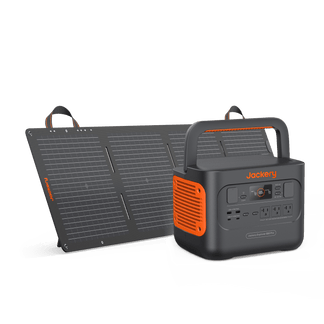
The Jackery Solar Generator 5000 Plus is built for large homes requiring serious backup power. It easily runs high-energy appliances like air conditioners, electric stoves, and well pumps.
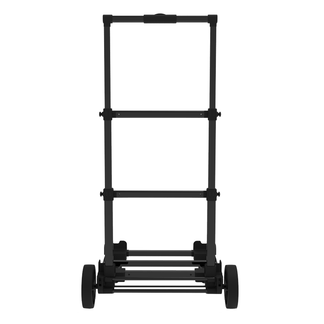
It is the ultimate solution for families in off-grid locations or areas with frequent, prolonged blackouts. With powerful output and massive expandable capacity, it ensures long-term energy security without the noise or fumes of a gas generator. The compact design features pull rods and double wheels for easy mobility.
Appliance Running Times:
- Large Refrigerator (2000W) = 2.0H
- Washing Machine (3000W) = 1.3H
- Garment Steamer (2500W) = 1.6H
- Air Conditioner (2000W) = 2.0H
- Microwave (1500W) = 2.6H

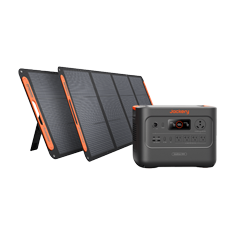
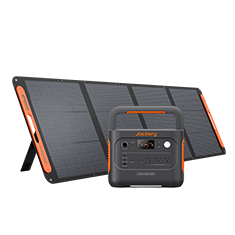
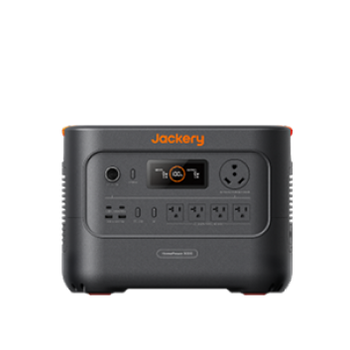
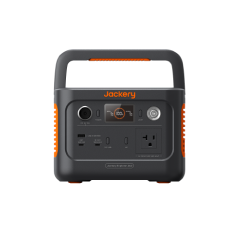
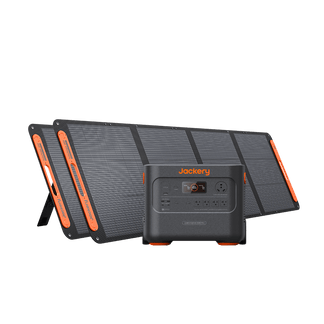
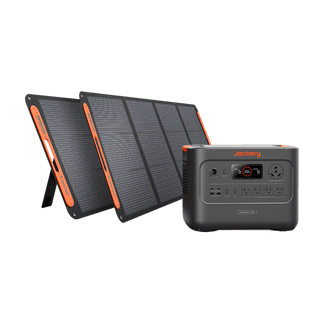
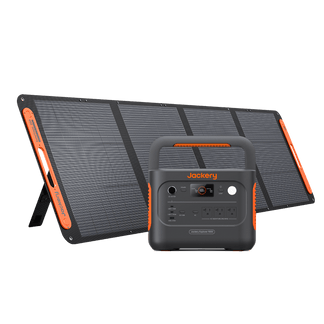
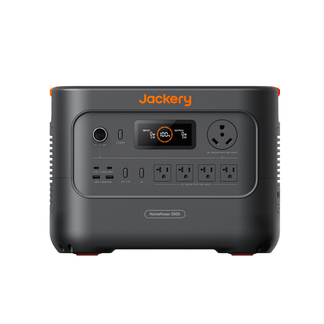
Jackery Solar Generator HomePower 3600 Plus
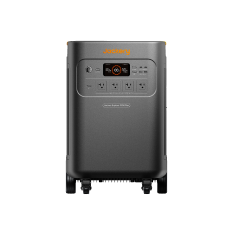
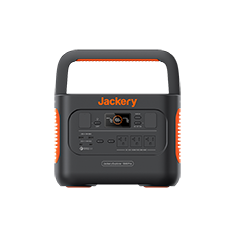
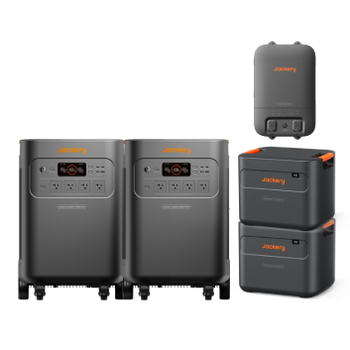
The Jackery Solar Generator HomePower 3600 Plus provides reliable, heavy-duty power for essential appliances in mid-sized homes. It effortlessly powers refrigerators, home office setups, and medical devices during unexpected grid failures.
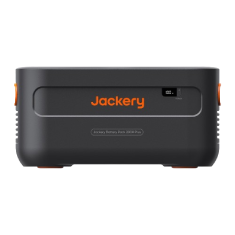
It is ideal for households looking for robust backup during short outages or scalable power for long-term blackouts. With its expandable battery ecosystem, it is a smart choice for anyone wanting a portable, eco-friendly power solution that grows with their needs.
Appliance Running Times:
- Microwave (1500W) = 2.0H
- Refrigerator (900W) = 3.5H
- Portable Air Conditioner (1000W) = 3.0H
- Coffee Maker (800W) = 3.8H
- Electric Grill (1500W) = 2.0H
Solar Power for Home FAQs
How many solar panels do I need for a 2000 sq ft home?
A 2,000 sq ft home typically requires 15 to 20 solar panels. However, system size is based entirely on your historical energy consumption (kWh) and local sun hours, not your home's square footage.
How much solar power is required to run a house?
A 5kW to 7kW solar system meets the needs of an average US home consuming 11,000 kWh annually. Larger families or homes running electric heat pumps and multiple air conditioners may require a 10kW system or larger.
Is 7kW enough to run a house?
Yes. A 7kW solar power system is generally enough to run a moderate-sized home with average energy consumption. However, homes with electric vehicles or high-draw electric heating will likely need a larger array.
Which type of solar is best for home?
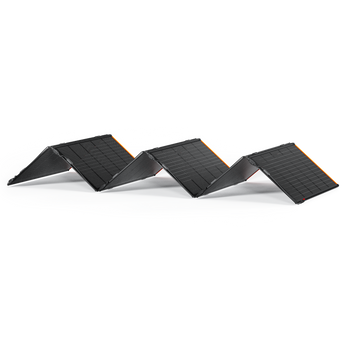
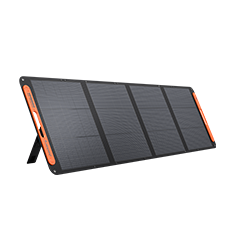
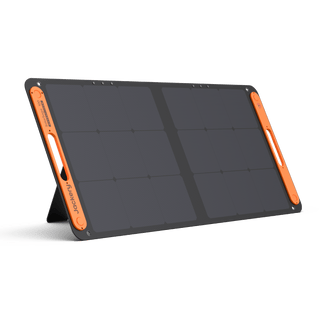
Monocrystalline solar panels are the best choice for residential systems due to their high efficiency and space-saving design. Jackery solar panels utilize highly efficient monocrystalline silicon cells to maximize energy capture in a portable format.
How much kW is required for a house with a 4-ton AC?
A 4-ton AC typically consumes 4,000 to 5,000 watts (4-5 kW) of electricity per hour while running. You must size your inverter to handle the massive surge wattage required when the compressor first kicks on, which can temporarily double the power draw.
Conclusion
Choosing the right solar power for your home starts with hard data, not guesswork. Calculating exact wattage requirements, accounting for real-world efficiency losses, and properly sizing battery storage ensures a consistent power supply year-round.
Whether installing a full rooftop system or opting for a portable battery backup, solar energy permanently reduces your reliance on the aging utility grid. For those seeking a convenient, off-grid option without installation headaches, Jackery Solar Generators offer a practical, powerful way to harness renewable energy anytime, anywhere.