





















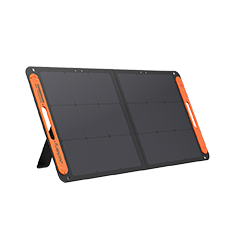
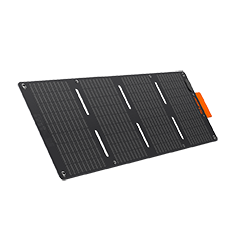
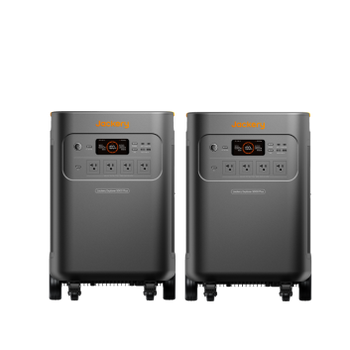



![[Add-on] Jackery SolarSaga 500 X - Jackery](http://www.jackery.com/cdn/shop/files/add-on-jackery-solarsaga-500-x-1493607.webp?v=1786503068&width=324)
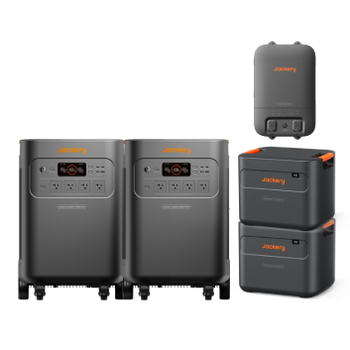
![[Add-on] Jackery Battery Pack 5000 Plus - Jackery](http://www.jackery.com/cdn/shop/files/add-on-jackery-battery-pack-5000-plus-6713401.webp?v=1786503068&width=324)




















How Should Source Priority Be Set When Grid, Solar, EV, and Battery Power Are All Available?
Set backup power source priority based on your goal and operating mode—not a permanent ranking of grid, solar, EV, and battery power. First decide which available source should serve active loads. Then decide separately which source should charge the battery. This backup power source priority can change between routine use, solar-surplus conditions, outage continuity, low reserve, and off-grid operation.
Each sequence below is a planning example, not a universal setting. Omit any source when the equipment does not support the intended power direction or control.
Set Backup Power Source Priority for Each Operating Goal
Use the operating goal to create one sample sequence for serving loads and a separate sequence or branch for charging storage. During an outage, identify critical loads and estimate the expected duration before choosing a sequence, as recommended in NREL's resilience planning guidance.
| Operating condition | Example load-serving sequence | Example charging sequence or branch | What changes the sequence |
|---|---|---|---|
| Normal grid-connected use | Solar → grid → battery; add EV only as a documented branch | Solar surplus → a specified charging source; choose grid or EV only when the controls support that path | Choose among routine cost, self-consumption, and battery preservation. |
| Solar-surplus period | Solar → battery or grid for remaining demand, according to the controls | Solar surplus → storage; use another charging source only as a documented branch | Solar must produce enough power for both the active load and the charging path. |
| Grid outage with reserve | Battery for selected critical loads → outage-capable solar → EV fallback only when the complete path is available | Solar surplus → another supported charging path; preserve battery reserve when continuity matters | Critical-load needs and expected outage duration determine whether stored energy is used now or held for later. |
| Low battery reserve | Supported grid or solar source → selected loads; EV is a separate conditional branch, not a default priority | A supported charging source → storage; no fixed ranking can be set without a source map | Protect essential loads and change the plan when the reserve boundary is reached. |
| Off-grid shed or small system | Solar → battery; defer loads when generation falls | Solar surplus → storage; no second source unless the system provides one | Limited generation and storage make load deferral and reserve protection more important than routine grid cost. |
The supplied NREL/USFS Incident Energy Systems model provides a background illustration of a hybrid energy source order: solar can serve current demand, excess solar can charge storage, and stored energy can cover remaining demand when the equipment supports that path. It is not a required residential setting and does not establish EV or automatic-transfer capability.

Separate Load Priority From Battery-Charging Priority
Load-serving priority asks what can power the equipment in use now. Battery-charging priority asks what can replenish stored energy. Treat them as separate control directions: a source that is available or producing power is not automatically capable of both.
Grid power is generally the predictable connected source when the grid is available. Solar is variable generation. A battery is stored energy that may serve loads when the system provides that output path. An EV is a conditional external source when the vehicle, charging equipment, connection, and controls support discharge. Each source's role comes from the equipment specifications—not from a port shape or product category.

Routine cost and outage readiness can point in opposite directions. A cost-focused plan may use available solar for current demand and preserve or charge storage according to the controls. An outage-focused plan may reserve battery energy for critical loads during a longer interruption. Those goals can produce different orders even when the same four sources are present.
Do not assume that sunlight alone provides outage power. The Department of Energy's solar resilience guidance explains that solar panels alone generally do not keep a home powered during an outage. Continued operation requires an outage-capable configuration, and storage may be needed when production changes or stops at night.
For every source, answer two questions separately: can it serve the present load, and can the equipment use it to charge storage? If either answer is no, leave that role out of the relevant sequence. If the answer depends on a transfer, inverter, reserve, or control setting, include that condition in the source map in the next section.
Verify Every Source Path Before Enabling Automatic Priority
Create a source map for the grid, solar, EV, and battery paths before enabling automatic priority. Record each path's role and operating limits so the load-serving and charging sequences reflect the same equipment configuration.
For each source, record:
- whether it can serve the intended loads;
- whether it can charge storage or accept charging in the intended direction;
- whether power can transfer to the selected loads;
- continuous and surge limits, where the equipment specifies them;
- reserve controls, changeover behavior, and available manual or automatic controls.
Check the input and output direction, charging direction, operating mode, limits, reserve settings, and changeover behavior in the relevant equipment documentation. Keep each source path separate until you establish the complete route. If the route or control behavior is not confirmed, leave that source out of the fallback sequence.
Keep EV power out of the plan unless the vehicle and compatible EVSE support external discharge and the intended load connection. The Department of Energy's bidirectional charging guidance identifies both a bidirectional vehicle and suitably capable EVSE as requirements for this type of external power path. Ordinary one-way EV charging shows that the vehicle can receive energy, not that it can send energy to a home or selected load.
For an EV-related home installation, account for electrical capacity, applicable local or state requirements, permits where required, and manufacturer guidance. DOE's home-charging guidance provides US context for these installation considerations, which vary by site and equipment.
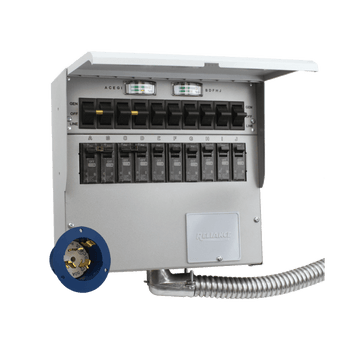
Do not turn a priority plan into fixed-wiring instructions. A connection to building wiring requires properly designed and installed transfer or isolation equipment to prevent an unsafe energization path. OSHA's generator safety guidance covers the general transfer and backfeed boundary; it does not establish that every battery or EV system works like a portable generator. Before enabling automatic source order or connecting an EV, stop and confirm the intended input, output, transfer, and control path in the specific vehicle, battery, inverter, transfer equipment, and control documentation. Never connect sources based on port shape alone.
Write, Configure, and Test the Fallback Sequence
Turn the source map into a short operating plan, then test one transition at a time. Start by writing what should happen and which essential loads should remain supported so you have a clear basis for comparing the result.
- Inventory the source paths. Use the source map to list the inputs, outputs, charging directions, transfer behavior, limits, and controls that apply to the system.
- Identify essential loads and mode goals. Define what must remain powered and whether each plan prioritizes routine cost, solar use, battery reserve, outage continuity, or off-grid operation. Include critical-load needs and expected outage duration in the outage plan.
- Write two sequences for each mode. Record one line for serving active loads and another for charging storage. Mark unavailable paths as excluded rather than placing them last.
- Configure only the controls the equipment provides. Enter the available settings. If changeover is manual, write the manual action into the plan instead of implying automatic switching.
- Test one transition at a time. Compare expected and observed behavior for the relevant mode change, including which selected loads remain supported and whether the intended charging path responds. Do not make a fixed electrical connection as a DIY test.
- Record and revise the result. Update the sequence after changes to essential loads, solar generation, storage, reserve needs, EV equipment, or control settings. If the observed result differs from the plan, pause that automation and resolve the discrepancy through the equipment documentation or qualified support.
Your next step is to place the source map beside the equipment documentation, write separate load-serving and charging sequences for each mode, and test only the transitions the system provides.
FAQ
These questions cover the practical distinctions that can change a source-priority plan between operating modes.
What power source should usually have priority for home backup?
There is no universal first source. For home backup, start with essential loads and expected outage duration, then choose the mode-specific sequence that best protects those loads. A normal-use sequence may not suit an outage or low-reserve condition.
How is solar priority different from battery priority?
Solar is variable generation, while a battery is stored energy. Solar priority determines whether current generation serves loads or replenishes storage; battery priority determines whether stored energy is used now or preserved for later. Set those decisions on separate lines.
When should EV power be included in a home backup source order?
Include it only when the EV system can send power outward through the intended connection. If the vehicle and EVSE provide one-way charging only, omit EV power from the backup order rather than treating the charging connection as an output.
What should change when the battery reaches its reserve level?
Treat low reserve as a new operating mode. Protect essential loads, defer nonessential demand, and use the available charging branch if the system provides one. Record the new setting or manual action for the next low-solar period or outage.
Disclaimer:
The runtime mentioned for appliances powered by Jackery is for reference only. Actual runtime may vary under different conditions. Please refer to real-world performance for accurate results.