

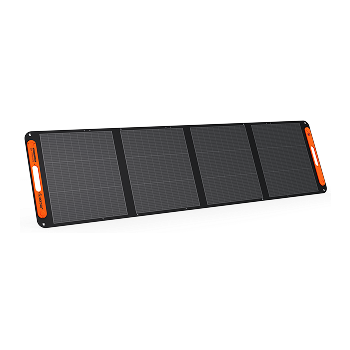





















![[Add-on] Jackery SolarSaga 500 X - Jackery](http://www.jackery.com/cdn/shop/files/add-on-jackery-solarsaga-500-x-1493607.webp?v=1786503068&width=324)


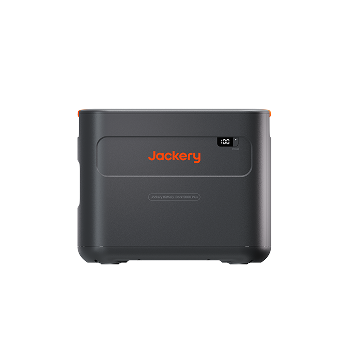
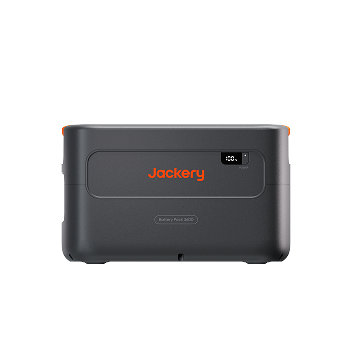
![[Add-on] Jackery Battery Pack 5000 Plus - Jackery](http://www.jackery.com/cdn/shop/files/add-on-jackery-battery-pack-5000-plus-6713401.webp?v=1786503068&width=324)















What Does Fail-Open vs. Fail-Closed Mean for Backup Battery Output Relays?
The fail-open vs. fail-closed relay distinction answers one specific question: when the defined failure occurs, does the relevant backup battery output path open and interrupt power, or does it remain closed and keep the path available? A fail-open response opens the path under that condition; a fail-closed response leaves it closed or attempts to do so. Neither mode is universally safer. The relay or contactor design, the exact failure, and the complete application determine the result.
Fail-open vs. fail-closed relay: what happens to backup battery output?
For a specified control or operating failure, fail-open generally interrupts output through the relevant path, while fail-closed generally keeps that path closed or attempts to do so. The first emphasizes isolation; the second emphasizes continuity. This describes the intended response to a defined condition—not what happens during every possible battery, inverter, relay, or contact failure.
| Mode | Output-path result under the specified failure | Design tradeoff or question |
|---|---|---|
| Fail-open | The relevant contacts open, so output through that path is interrupted. | Does the application need to remove the path to limit continued energization or support isolation? |
| Fail-closed | The relevant contacts remain closed or attempt to do so, so output may remain available through that path. | Does the application need continuity through the defined control failure? |

The phrase “specified failure” matters. Loss of relay control power, a communication or command failure, a mechanical contact failure, and loss of battery or inverter source power are different events. A label that describes one event does not automatically predict the response to the others.
A UPS manual shows why device documentation matters. Schneider’s Galaxy VS operation manual describes configured output-relay events and an energized-check setting in which loss of relay power can indicate assigned events. This is a product-specific example of configured relay behavior, not a universal rule for backup batteries or portable power stations.
Read the relay state before you read the failure label
Read a relay specification as separate information about the reference or release state, control-power state, contact state, and named failure state. Keeping these states separate prevents a normal contact label from being mistaken for a complete backup battery relay failure mode.
In a monostable relay, normally open, or NO, describes a contact that is open in the release or unenergized position and closes in the operate position. Normally closed, or NC, describes a contact that is closed in release and opens in operate. These are contact relationships, as defined in normally open and normally closed contact states, not automatic descriptions of what happens during every fault.
“Energized” and “de-energized” refer to the relay or control circuit, while “open” and “closed” refer to the contacts or circuit path. The energized and de-energized distinction therefore does not, by itself, tell you whether the relevant output contacts are open or closed. A complete interpretation requires both the control state and the contact state.
When reading a specification, first identify what “normal,” “release,” or “rest” means. Then determine whether the relay or control circuit is energized, de-energized, commanded, or unpowered, and find the resulting open or closed contact position. Finally, identify the named failure and confirm that the claimed fail-open or fail-closed response applies to that exact failure and circuit. This is why NO or NC is not a complete failure specification: normally open does not automatically mean fail-open, and normally closed does not automatically mean fail-closed.
Choose continuity or isolation based on what failure must prevent
The fail-open vs. fail-closed relay choice depends on the consequence the complete application must prevent or preserve. A fail-open response generally favors isolation of the relevant output path, while a fail-closed response generally favors continuity through it. This is an application-fit comparison, not a universal safety ranking.
Maintaining a closed path may keep a load supplied during a control failure. That can matter when the system is designed to avoid interruption. It can also leave the connected circuit energized, so continuity is not automatically the right outcome for every load, source, or connected device.
Opening the path may remove the relevant output connection and support isolation. The tradeoff is that the load may lose backup power through that path. The question is not simply which relay mode sounds safer. Consider what the load, source, and connected equipment must avoid or preserve when the named failure occurs.
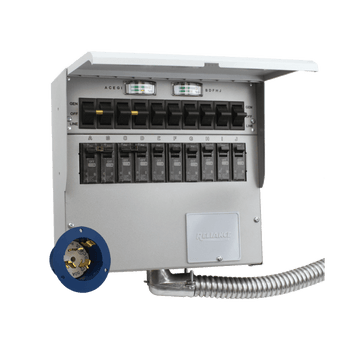
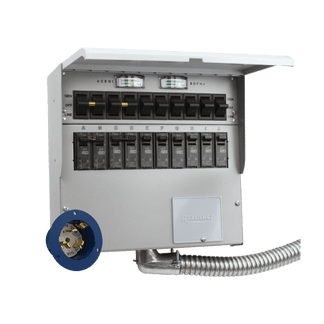
A backup battery output relay may not perform every system function. A transfer path, an output contactor, and a separate isolation device can have different roles. Some backup-power installations specify an external isolation device for backfeed protection, as shown in this documented external-isolation example. Do not assume that an output relay alone provides backfeed protection or whole-system isolation.
For temporary portable-backup research, the immediate question is whether the documented output remains available during the stated control event. For a custom or permanently integrated power system, the consequences can extend beyond ordinary user operation. If it is unclear what happens when the path opens or stays closed, do not choose a mode based on the label alone.
Verify the exact failure behavior before relying on a backup output
Before relying on a backup battery output relay or contactor, document one controlled circuit, one exact failure condition, and one resulting contact state. Then compare that documented consequence with what the application must preserve or prevent.
- Identify the controlled circuit. Write down whether “output” means an inverter output, transfer path, charger path, control connection, or another circuit. Do not assume that a relay label applies to every output in the system.
- Define the exact failure condition. State whether you are asking about loss of control power, a command or communication failure, a mechanical contact fault, welded contacts, or loss of source power. These conditions are not interchangeable.
- Check the product or system documentation. Look for the energized or de-energized control state, the open or closed contact state, the assigned event, and any documented reset or restart behavior. A backup-power system may change relay behavior when relay power or configured events change, so the applicable manual controls the device-specific answer.
- Obtain technical confirmation when the result is unclear or integrated. Ask the manufacturer, installer, or qualified technical professional to confirm the controlled circuit and failure response.
- Record the consequence and compare it with the application. Note whether the documented path opens or remains closed under the named failure, then decide whether that consequence preserves the required continuity or isolation. If the documentation does not state the result, treat the answer as unresolved rather than inferring it from NO, NC, energized, or de-energized wording.
Do not connect, modify, or rely on a custom or permanently integrated power system until its failure behavior is documented and a qualified technical review confirms that the application is appropriate. For a specific Jackery model, classify its internal output-relay mode as fail-open or fail-closed only when the model-specific manual or technical confirmation states that behavior.
Frequently asked questions
These answers apply to the defined failure condition and focus on the terminology and application distinction.
What does fail-open mean on a backup battery output relay?
It means the relevant contacts or output path open under the specified failure, so supply through that path is interrupted. The documentation must identify which failure triggers that response.
What is the difference between fail-open and fail-closed for a battery output contactor?
Fail-open interrupts the relevant path under the defined condition. Fail-closed leaves it available or attempts to do so. Choose between those consequences based on whether the application must remove the path or preserve continuity, not on a universal safety ranking.
How can I tell whether a specific backup battery system is fail-open or fail-closed?
Use the model-specific documentation to identify the controlled circuit and named failure. If it does not state the resulting contact behavior, obtain confirmation from the manufacturer or a qualified technical professional, especially for an integrated system.
Does normally open mean a backup battery relay is fail-open?
No. Normally open describes a defined release or rest relationship, while fail-open describes the response to a specified fault or control condition. Loss of control power, mechanical failure, and source loss may require separate answers.
Disclaimer:
The runtime mentioned for appliances powered by Jackery is for reference only. Actual runtime may vary under different conditions. Please refer to real-world performance for accurate results.