









![[Add - on] Jackery Manual Transfer Switch for Explorer 5000 Plus - Jackery](http://www.jackery.com/cdn/shop/files/add-on-jackery-manual-transfer-switch-for-explorer-5000-plus-9017324.png?v=1754016782&width=350)








![[Add - on] Jackery Manual Transfer Switch for Explorer 5000 Plus - Jackery](http://www.jackery.com/cdn/shop/files/add-on-jackery-manual-transfer-switch-for-explorer-5000-plus-9017324.png?v=1754016782&width=324)


The right solar generator capacity for your household is determined by three things: your total daily energy consumption (watt-hours), your peak simultaneous appliance load (watts), and how long you want backup power to last. Most households fall between 1,000Wh and 5,000Wh for essential backup, but the exact number depends on how many appliances you need running at the same time and for how many hours.
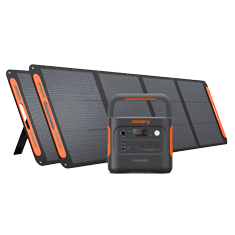
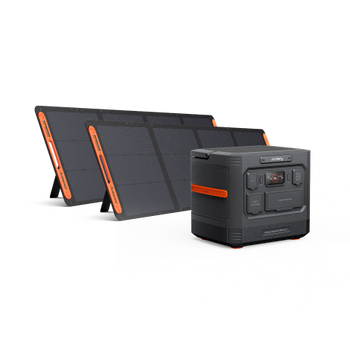
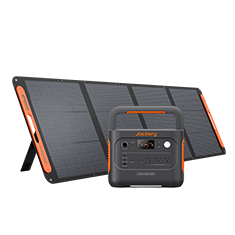
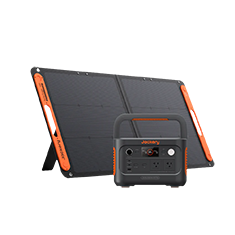
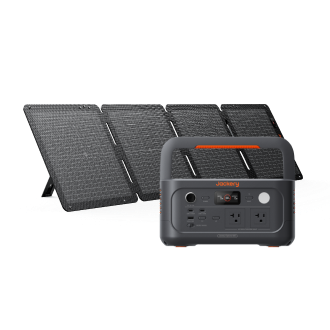
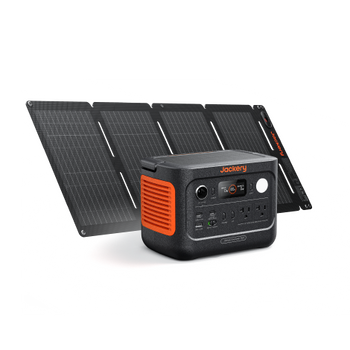
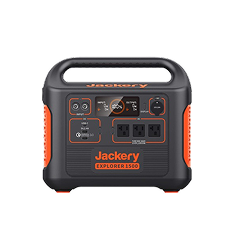
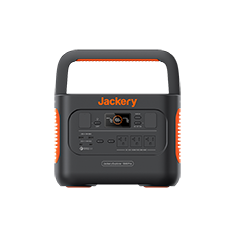
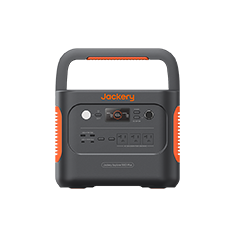
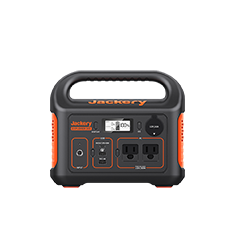
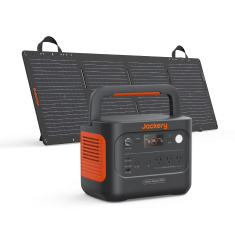
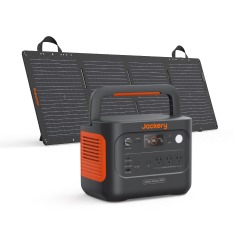
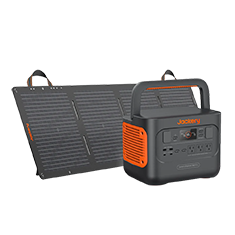
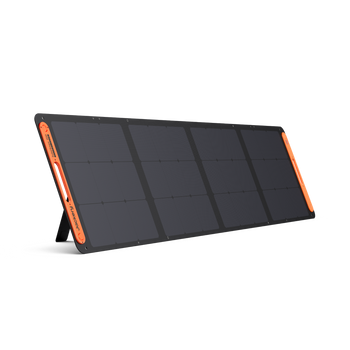
Jackery Solar Generators are available in different sizes, and choosing the right size depends on your power needs. Each battery backup solution clearly defines usable capacity (Wh/kWh), continuous output, surge handling, and expansion options. Depending on how much power you need for your home, you can choose the right capacity solution from compact battery backup to essential home backup options.
Takeaways
- Solar generator capacity must be based on daily watt-hour consumption.
- Peak output rating determines whether appliances with motors will start without tripping the solar generator.
- Household size influences the simultaneous load and total storage needs of the solar generator.
- Choosing a battery backup with expandable capacity reduces the risk of outgrowing your system within a few years.
How Do You Calculate Your Household’s Power Needs?
To determine the right solar generator capacity, you must calculate the energy usage step by step. Start by identifying appliance wattage, estimating daily runtime, converting everything into watt-hours, and cross-checking it against your monthly electricity consumption. Here how to calculate what size generator you need:
Step 1: Identify Appliance Wattage
Start by listing the appliances you actually need during an outage. You should focus on essentials such as the refrigerator, WiFi router, lighting, fans, laptops, microwave, sump pump, or medical equipment.
Look at the appliance label or manual for running wattage. For devices with motors (refrigerators, pumps, air conditioners), also check startup or surge wattage, which is usually 2–3 times higher than running watts.
Use a plug-in watt meter if you want accurate readings instead of manufacturer estimates. Alternatively, you can refer to the appliance wattage chart to get an estimation of how much power an appliance uses.
Step 2: Estimate Daily Usage Hours
Next, determine how many hours each appliance runs per day. A refrigerator does not run continuously for 24 hours. Instead, a refrigerator cycles and works for around 8 hours a day.
Lighting may run 4 - 6 hours. A laptop may run 5 - 8 hours, and WiFi typically runs for 24 hours. Overestimating hours inflates required capacity, whereas underestimating causes battery shortages.
Step 3: Calculate Daily Consumption
Now convert everything into watt-hours using this formula:
Watts × Hours = Watt-hours (Wh)
Example:
- Refrigerator (200W × 8H) = 1,600Wh
- Router (15W × 24H) = 360Wh
- Lights (50W × 5H) = 250Wh
- Laptop (80W × 6H) = 480Wh
Total daily consumption = 2,690Wh (2.69kWh)
According to the example, you would need at least 2,690Wh of usable capacity for one full day of essential backup, and realistically, 15–25% extra to account for inverter losses and battery health margin.
Step 4: Calculate Total Monthly Consumption
Multiply your daily watt-hours by 30 to understand the monthly consumption.
2,690Wh × 30 = 80,700Wh (80.7kWh per month)
Step 5: Review Utility Bill
Check your electricity bill for total monthly kWh usage. If your home uses 900kWh per month, that confirms you cannot expect a 2 - 3kWh battery backup solution to power most of the appliances.
For more information, you can check the blog: What Size Generator to Run a House (with Chart).
What Capacity Range Fits Different Types of Households?
The right capacity range depends on how many people live in the home, how many appliances operate simultaneously, and how long backup power must last. A one-bedroom apartment with two people has very different energy behavior than a five-person household running multiple refrigerators, workstations, and kitchen appliances.
Small Households (1–2 People)
Typical capacity range: 1,000Wh–2,000Wh
Small households usually need essential coverage only:
- One refrigerator
- WiFi router
- Lighting
- Phones and laptops
- Occasional microwave use
Daily essential consumption often falls between 1–2kWh. A properly calculated 1–2kWh generator can comfortably support short-to-medium outages if loads are managed wisely. This category works well for apartments, condos, minimalist homes, and couples or individuals working remotely.
Medium Households (3–4 People)
Typical capacity range: 2,000Wh–4,000Wh
In medium households, the energy demand increases due to:
- Multiple devices charging simultaneously
- Longer lighting hours
- More kitchen appliance usage
- Work-from-home setups
- Children’s electronics and entertainment systems
Daily essential usage can reach 2.5–4kWh quickly. This size generator reduces the need for constant load management and allows more flexibility during outages. This range is practical for suburban homes, families with school-age children, and homes with moderate appliance overlap.
Large & Multi-generational Households (5+ People)
Typical capacity range: 4,000Wh+ (preferably expandable)
Large households often include:
- Multiple refrigerators or freezers
- Medical devices
- Sump pumps
- Several laptops and workstations
- Higher kitchen load frequency
- Longer outage survival expectations
Daily essential usage can easily exceed 4–6kWh and solar generators with expandable capacity are ideal for larger households. The expandable battery backup solution ensures a reliable power supply if the energy demand grows over time, simultaneous appliance usage increases, or there is an extended outage.
Which Jackery Solar Generators Help Match the Right Capacity to Your Household?
Once you have calculated your daily watt-hours and simultaneous load, the next step is matching those numbers to a home battery backup solution that can realistically sustain them. Jackery Solar Generators allow households to align real energy demand with the appropriate solution instead of overspending or undersizing. Here are some of the reliable home battery backup solutions for different household needs:
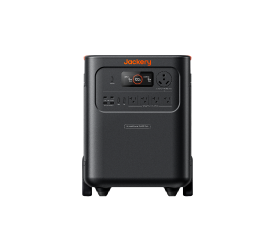
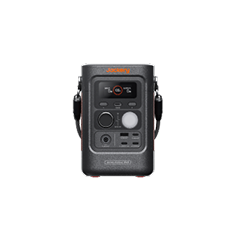
Jackery Solar Generator 5000 Plus
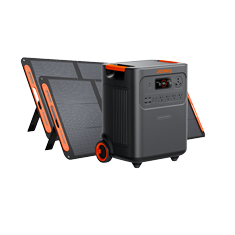
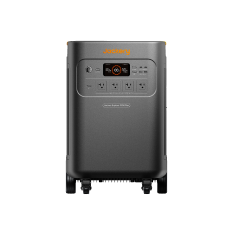
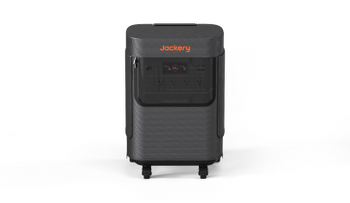
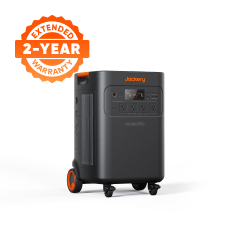
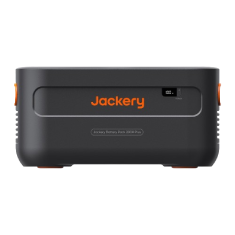
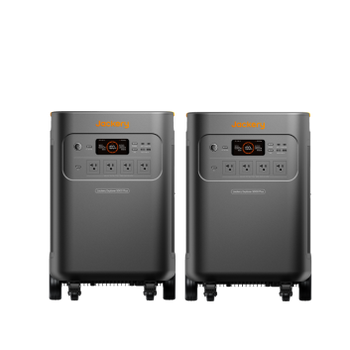
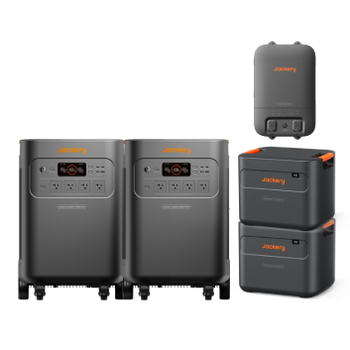
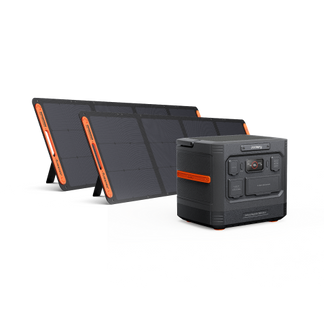
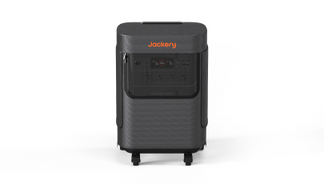
The Jackery Solar Generator 5000 Plus is built for large households or families planning extended outage resilience. With high base capacity and expandable battery support, it handles multi-refrigerator setups, sump pumps, multiple kitchen appliances, medical devices, and overlapping appliance loads. It is appropriate when a multi-day backup is required during outages or blackouts. This essential home backup solution features a pull rod and double wheels, so you can drag it from one room to another.
Appliances Running Time
- Refrigerator (200W) = 17.1H
- Microwave (500W) = 7.8H
- Coffee Maker (1000W) = 4.1H
- WiFi Router (10W) = 71.4H
- TV (50W) = 42.8H
Who Should Buy This
If you need to back up multiple high-demand appliances and want multi-day outage capability, the Jackery Solar Generator 5000 Plus is your ideal solution.

Customer Review
Solid power. The App gives lots of info, and wiring up the smart panel to the house with the Explorer 5000 seamlessly connected gives great confidence that we'll be ready for the next power outage.
— Stephen D.
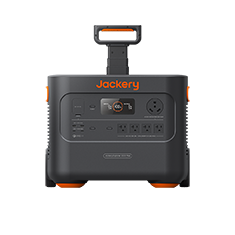
Jackery Solar Generator HomePower 3600 Plus
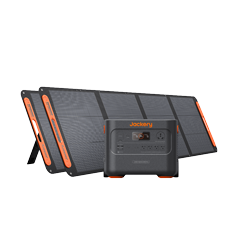
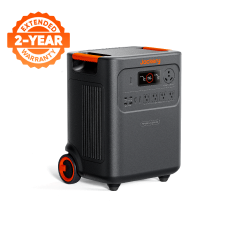
The Jackery Solar Generator HomePower 3600 Plus is ideal for medium-to-large households that need strong, continuous output and meaningful storage. It supports simultaneous operation of refrigerator, microwave, lighting circuits, WiFi, and multiple personal devices. For families whose daily essential usage falls in the 3–4kWh range, it reduces battery anxiety during extended outages. It provides enough surge capacity for motor-driven appliances while maintaining practical portability with wheels and handles.
Appliances Running Time
- Refrigerator (200W) = 13.7H
- Microwave (500W) = 5.8H
- Coffee Maker (1000W) = 3.0H
- WiFi Router (10W) = 95.2H
- TV (50W) = 42.3H
Who Should Buy This
If you want to run several core loads together, such as fridge, microwave, lighting, devices, reliably during outages, you can consider going ahead with the Jackery Solar Generator HomePower 3600 Plus.

Customer Review
I purchased Home Power 3600 Plus. I have a gas generator with an electric start, but at 78 years old, I am less and less interested in going outside in the dark and starting the gas generator, especially in the rain. I now have a Jackery 3600 charged and ready, sitting in the dining room. This is one of those things you probably don't need every day, but when you need it, you need it bad. Customer service has been so, so good. Thank you, Jackery!
— Steve C.
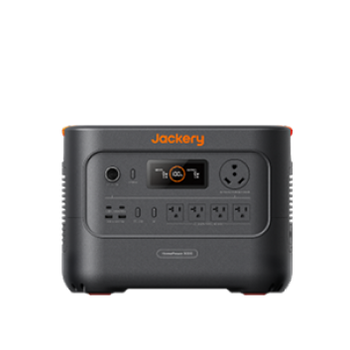
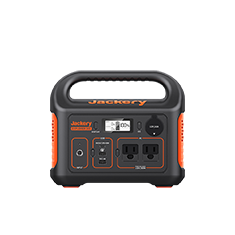
Jackery Solar Generator HomePower 3000
The Jackery Solar Generator HomePower 3000 is an essential home backup solution ideal for small-to-medium households. With roughly 3kWh of capacity, it supports core appliances like refrigeration, lighting, connectivity, and fans, as well as moderate kitchen use. It works well for families that have calculated daily needs around 2–3kWh and want reliable emergency coverage without moving into higher-capacity investment tiers.
Appliances Running Time
- Refrigerator (200W) = 11.8H
- Microwave (500W) = 5.0H
- Coffee Maker (1000W) = 2.6H
- WiFi Router (10W) = 81.6H
- TV (50W) = 36.3H
Who Should Buy This
If your daily energy consumption is near 2.5–3kWh and you want structured energy support for key loads, the Jackery Solar Generator HomePower 3000 is your ideal pick.

Customer Review
I'm using this for lighting and heated water, for my chicken coop, which is too far from the house to have electricity, and for 15 chickens. It works great. I bought the pro3000 so I can run my living quarters horse trailer this summer as well.
— Bonnie B.
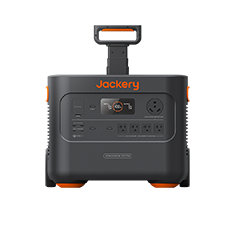
Jackery Solar Generator 2000 Plus
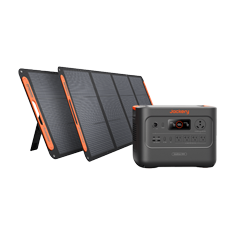
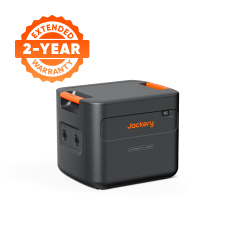
The Jackery Solar Generator 2000 Plus is a home battery backup solution that lets you start with a strong base capacity and expand battery storage as energy needs increase. It is suitable for families whose current daily essential load falls near 2kWh but may grow over time due to additional appliances, children’s devices, or work-from-home setups. With the help of additional battery packs, you can extend the capacity up to 24kWh.
Appliances Running Time
- Refrigerator (200W) = 7.7H
- Microwave (500W) = 3.2H
- Coffee Maker (1000W) = 1.6H
- WiFi Router (10W) = 59.8H
- TV (50W) = 24.6H
Who Should Buy This
If you want a mid-tier battery backup solution that grows with your energy needs over time, you can consider the expandable Jackery Solar Generator 2000 Plus.

Customer Review
Fantastic - easy to use and runs our cabin like a pro! I was expecting the 2000 plus to work well, but the plug and play nature of the system as well as the simple interface exceeded my expectations!!!
— Robert C.
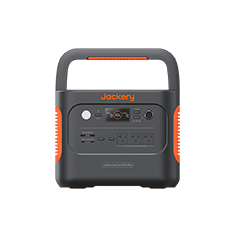
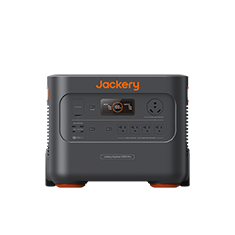
Jackery Solar Generator 2000 v2
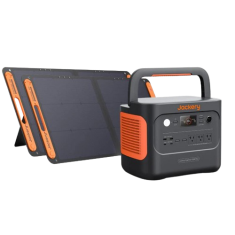
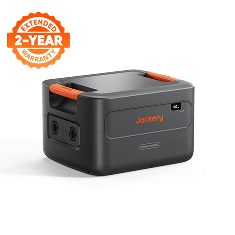
The Jackery Solar Generator 2000 v2 is designed for calculated essential backup in small-to-medium households where daily usage is controlled and clearly defined. It comfortably supports refrigeration, lighting, internet connectivity, laptops, and short-duration microwave use when loads are managed properly. It works well when total daily essential consumption remains near 2kWh. It also features a foldable handle so you can easily carry the solar generator around the home.
Appliances Running Time
- Refrigerator (200W) = 7.7H
- Microwave (500W) = 3.2H
- Coffee Maker (1000W) = 1.6H
- WiFi Router (10W) = 59.8H
- TV (50W) = 24.6H
Who Should Buy This
If you need reliable essential coverage for a small-to-medium household, you can consider the Jackery Solar Generator 2000 v2.

Customer Review
I found this generator to be well-built and extremely reliable, with the power and long-lasting energy it provides…Awesome, simply awesome!!!
— Paul T.
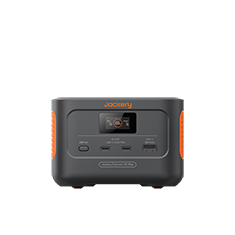
Jackery Solar Generator 1000 v2
The Jackery Solar Generator 1000 v2 is best suited for light emergency coverage, apartment living, or short-duration outages where power needs are limited to connectivity, lighting, charging devices, and possibly a small refrigerator. It is not built for multi-appliance kitchen operation or extended blackout scenarios, but for households with minimal essential demand. It has a compact design with a foldable handle to ensure easy movement around the house.
Appliances Running Time
- Refrigerator (200W) = 4.1H
- Microwave (500W) = 1.7H
- Coffee Maker (1000W) = 0.9H
- WiFi Router (10W) = 35.1H
- TV (50W) = 13.5H
Who Should Buy This
If you want light emergency backup for lights, devices, and connectivity, the Jackery Solar Generator 1000 v2 is the right pick.

Customer Review
The Jackery 1000 v2 is the perfect solution for our needs when we set up at flea markets. Great to have available to light up the MCM lamps that we sell. And being able to play music in our booth always draws a crowd.
— Peter B.
How Can You Avoid Common Battery Capacity Planning Mistakes?
Avoiding battery capacity mistakes requires correcting the assumptions most households make during planning. Here are some common battery capacity planning mistakes you must avoid:
Stop Sizing Based Only on Running Watts
Running watts tell you how much an appliance consumes at a given moment. They do not tell you how long your battery will last. Battery capacity is measured in watt-hours (Wh or kWh), which determines runtime. If your essentials require 2,500Wh per day, a 2,000Wh generator won't be able to run the appliances for the whole day. Hence, it is always better to calculate daily energy consumption first.
Add a Capacity Buffer for Efficiency Loss
No inverter operates at 100% efficiency, and conversion losses typically reduce usable energy by 10–15%. On top of that, repeatedly draining a battery to 0% shortens its lifespan. If your calculated daily need is 3,000Wh, choosing exactly 3,000Wh leaves no margin. Hence, a 15–25% buffer protects runtime and long-term battery health.
Verify Simultaneous Load
Not every device in your home runs at the same time. Identify what must operate together during an outage, such as the refrigerator, lights, WiFi, and microwave, and then calculate that combined load. Then verify surge demand for motor-driven appliances. Oversizing based on the total number of devices wastes money. Undersizing based on unrealistic overlap causes shutdowns.
Plan for Household Growth
Energy demand rarely stays constant. Remote work increases daytime consumption. Additional refrigeration or medical equipment may become necessary. If your calculated usage is already near the system’s limit, choosing a non-expandable battery backup solution increases the likelihood of a later replacement. On the other hand, an expandable solar generator lets you increase capacity without changing the base unit.
Conclusion
Determining the right solar generator capacity does not mean buying the biggest system or the cheapest one. Instead, it is more about matching real household energy data to the correct storage and output range. You should calculate daily watt-hours, verify simultaneous load, account for surge power, and add an efficiency buffer to determine the right size of solar generator. Jackery Solar Generators are available in different battery capacities, so you can choose the one that meets your household's power needs.