

















![[Add - on] Jackery Manual Transfer Switch for Explorer 5000 Plus - Jackery](http://www.jackery.com/cdn/shop/files/add-on-jackery-manual-transfer-switch-for-explorer-5000-plus-9017324.png?v=1754016782&width=350)













![[Add - on] Jackery Manual Transfer Switch for Explorer 5000 Plus - Jackery](http://www.jackery.com/cdn/shop/files/add-on-jackery-manual-transfer-switch-for-explorer-5000-plus-9017324.png?v=1754016782&width=324)


In December 2025, the average residential electricity bill in California is around $170.42 per month. This is based on an average electricity rate of around 34.71 cents per kWh and a monthly consumption of 491 kWh.
California is a great place to relocate and live for many reasons: job opportunities, climate, outdoor beauty, nightlife, etc. However, an average electric bill in California might force people to move or change their decision to relocate. At $170.42 per month and the electric rate of 34.71 cents per kWh, it’s the state with one of the highest electric rates in the US.
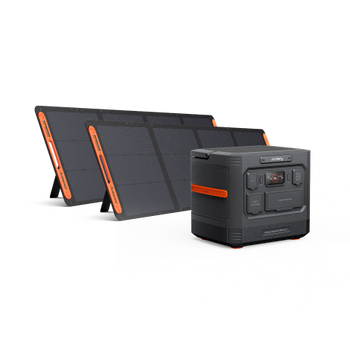
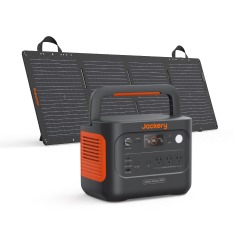
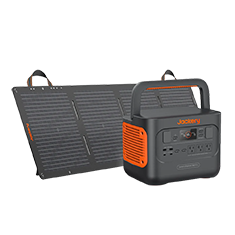
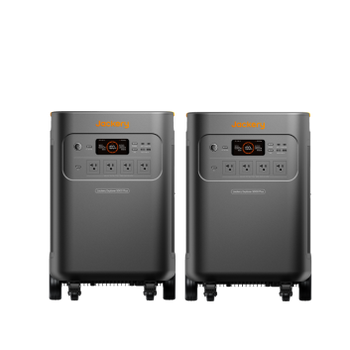
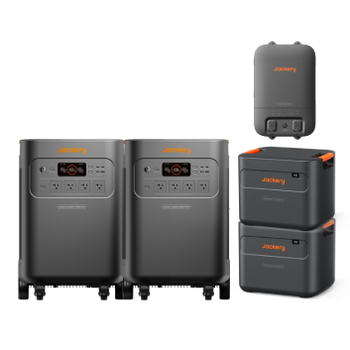
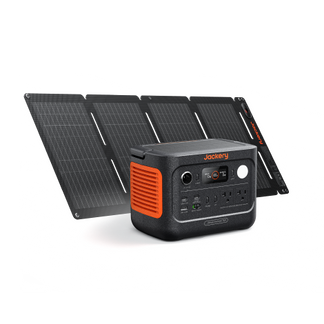
Jackery Solar Generators, with their high battery capacity and portable design, can be a saving grace. The Jackery Solar Generator HomePower 3000 and Jackery Solar Generator 5000 Plus are popular home battery backups for powering appliances and cutting electricity bills.
Takeaways
- In December 2025, California’s average electricity price was around 34.71 cents per kWh, substantially higher than the national average of around 17.24 ¢/kWh.
- Based on average consumption, the average monthly residential bill is estimated to be around $170.42 (34.71 ¢/kWh × 491 kWh) in California.
- Monthly bills vary widely, depending on usage and provider, with typical consumption between 450-750 kWh/month.
- Why is your electricity bill so high in California.
- How solar helps in reducing electric bills in California.
What Is The Average Electric Bill in California?
Californians' electric bills are among the highest in the country. As of December 2025, the average electricity price in the state is 34.71 cents per kWh, which is almost double the nation’s average. This equates to an average monthly electric bill of $170.42 with a power consumption of 491 kWh, compared to the nation’s average, which stands at $154.98 per month with 899 kWh power consumption.
Your bill, however, might vary depending on your electric utility, your dwelling type, where you stay, and the amount and type of energy you use. For example, Pacific Gas & Electric (PG&E) customers pay higher rates per kWh than any other providers in the state.
Also, people staying in a single-bedroom house consume more energy than those living in apartments. That makes sense, given there’s more area to cool and/or heat, which ultimately adds to most of your electric consumption. While apartments with shared ceilings, walls, & floors use around 5000 kWh/year, almost half of a single-home family.
Here’s a table showcasing how your bill varies from provider to provider and house type.
|
Electricity Provider |
Detached Single-Family Home |
Apartment |
Mobile Home |
|
State Average |
$239 |
$124 |
$213 |
|
SCE |
$274 |
$143 |
$244 |
|
PG&E |
$348 |
$181 |
$310 |
|
SDG&E |
$319 |
$166 |
$284 |
Source: CPUC
Please note, that the average electricity bill for each dwelling is derived by multiplying the average area of each by the respective rates per kWh of each utility.
Based on an average energy cost of 34.71 cents per kWh in December 2025, large homes with 3000 or more square feet area pay $520.65 per month as an average electric bill in California, which is more than double to $173.55 per month, the homes with 1000 square feet pay. The numbers are around $260.32 and $347.10 per month for a 1500 and 2000 square feet dwelling, respectively. This mathematical calculation assumes that power consumption is 500 kWh for a 1000 square foot.
However, the square footage doesn’t necessarily ascertain the amount of electricity consumed. For example, a 2500 square feet dwelling with most gas-run appliances consumes less electricity than a 1500 square feet dwelling with electric vehicles and appliances.
California Average Electric Bill VS. Other States
California remains second in the top five states with the highest electricity bills, with Hawaii being the highest at $209.34 (with a power consumption of 503 kWh). Why? Compared to other states, Hawaii has one of the highest electric prices, at 41.62 cents per kWh in December 2025.
|
State |
Average Electric Rate |
Average Electricity Usage |
Average Electric Bill |
|
Hawaii |
41.62 cents per kWh |
503 kWh |
$209.34 |
|
Connecticut |
25.30 cents per kWh |
678 kWh |
$171.53 |
|
California |
34.71 cents per kWh |
491 kWh |
$170.42 |
|
Rhode Island |
31.15 cents per kWh |
554 kWh |
$172.57 |
|
Texas |
15.87 cents per kWh |
1146 kWh |
$181.87 |
Source: EIA
How have California Electric Bills changed in Recent Years?
In December 2024, the electric rate in California was 30.62 cents per kWh, which increased to 34.71 cents per kWh in December 2025. This means even if the power consumption is 491 kWh over the years, the electricity bill increased from $150.34 to $170.42 per month.
Electric bills in a state/country increase over time, primarily due to rising energy costs and more extreme temperatures, which increase electricity consumption for heating and cooling. Unfortunately, Californians have experienced a much more rapid growth at an average of 7.7% yearly.
The reasons for these uproaring rates are plenty. Two major upticks are the cost of natural gas that power plants use and the rising costs of maintaining the electric grid.
Utilities have spent a slew of funds in previous years to strengthen their infrastructure and prevent any damage from wildfires and wind storms. Sadly, the California Public Utilities Commission (CPUC) allows utilities to pass the cost on to billpayers.
California's electricity bills are climbing in March 2026, driven in part by persistently high fuel prices that push up the cost of grid power across the state. Utilities like PG&E, SCE, and SDG&E rely on natural gas to fill gaps when renewable generation falls short, and when fuel costs remain elevated, those expenses flow straight through to customer bills. California already ranks among the most expensive states for residential electricity in the nation, and with fuel markets showing little relief, many residents are looking for ways to take more control over their energy costs.
Charges Based On Income
Regulators are debating a new plan to ease Californians' wallets. Under the plan, agencies will charge fixed rates to consumers based on their respective incomes. For example, the proposal from the largest utilities in the state starts at $15 for the lowest income group and maxes out at a whopping $128 for SDG&E customers.
Here’s what fixed rates the utilities charge for respective income groups:
|
Electricity Provider |
Income |
|||
|
<$28,000 |
$28,000-$69,000 |
$69,000-180,000 |
>$180,000 |
|
|
PG&E |
$15 |
$30 |
$51 |
$92 |
|
SCE |
$15 |
$20 |
$51 |
$85 |
|
SDG&E |
$24 |
$34 |
$73 |
$128 |
Source: CPUC
Until now, the rule has been simple: You pay for how much you use. However, with the new plan, utilities believe low and middle-income customers will save up to $300 per year.
It might seem suitable for some, but some feel the proposed billing changes will concern those trying to conserve electricity by using gas-run appliances or investing in solar or wind power. In other words, the proposed changes might discourage energy conservation & use of renewable energy sources and make living in the state less affordable.
Another major issue in implementing the proposal is categorizing around 14 million households into income brackets. While a third-party administrator needs to verify individual incomes, the procedure is unclear, and people will raise questions regarding data privacy.
Why Is My Electric Bill So High in California?
In January 2024, Californians paid around a 29% higher rate for their electricity consumption than the rest of the country. The reasons are many: inefficient and outdated electricity grid system in the state, climate influence, tiered pricing structures, time-of-use rates, and a complex electricity market. Let’s understand these in detail:
Inefficient and Outdated Electricity Grid System
California produces approximately 70% of the electricity in its in-house grids and imports 30% from nearby Northeast and Southwest states. Unlike other goods, importing electricity is a costly endeavor, especially in late summer when consumption is at peak and hydroelectric generators aren’t at their optimal potential.
To meet the soaring demands, utilities must build or upgrade the grids or continue sourcing electricity. Both of these require a large budget, which ultimately indicates rising rates.
Besides, there’s also an underlying transmission issue. New grids also demand new transmission lines, which is expensive for a large state like California. Not only new lines but utilities must replace the existing ones that are aging or are destroyed by wildfires.
Simply put, making California’s 150-year-old central electric grid system work for millions of Californians costs a lot. As permitted by CPUC, utilities are passing most of the cost to the bills of ratepayers in the form of price hikes.
Tiered Pricing Structures
The tiered pricing structure in California is a major contributor to the increase in customer bills. What it means is the rate per kWh differs with the amount of electricity a dwelling consumes. Simply put, a dwelling that consumes more power moves into high-priced tiers and thereby pays more bills. The tiers vary from one utility to another.
For example, in South California Edison’s tiered plan, you start with each billing period at a Tier 1 rate (33 cents/kWh), the lowest price. If you consume more electricity than the baseline allocation, you move to Tier 2, where you’ll pay 43 cents/kWh. So, your bill automatically soars as you use more electrical appliances.
Time-of-Use Rates
Electric utilities of California must transition all customers to Time-of-Use (TOU) rates based on the time of day and season. It majorly contributes towards your higher or lower electric bills.
Peak pricing is from 4-9 PM, and lower rates are applicable at any time before and after that. The time and rates might vary from one utility to another, but the concept remains the same.
For example, during summer (June-September), SCE charges 63 cents/kWh for electricity between 4 PM and 9 PM, while 26 cents/kWh is charged at other times. So, understanding and adapting to the rates helps manage and reduce the bills, but it doesn’t take much for things to go sideways.
Environment Regulations
California has many stringent environmental regulations that aim to implement and use more sustainable energy sources. Complying with these regulations and establishing new transmission lines and grids can be a costly affair, potentially influencing how much bill you pay.
Climate Influence and Seasonal Variations
This factor isn’t exclusive to California, but it is also true in other states in the US. Changes in climate and increasing demand for cooling and heating throughout extreme summers and winters contribute towards higher electricity consumption and, in turn, skyrocketing bills.
It’s, therefore, important for consumers to anticipate seasonal patterns and manage the use case accordingly.
How Solar Helps in Reducing Electric Bill in California?
Solar power adoption in California is on a spree because of increased community support, high insolation, declining solar costs, and government policies. At the end of 2023, California will complete the installation of 46,874 MW of solar capacity, enough to power 13.9 million homes. In the next five years, the agency expects the state to increase its solar capacity by up to 20,000 MW, which is second highest to Texas at 41,000 MW. Here’s how solar helps reduce the average electric bill in California:
Harnessing Solar Power for Sustainable Energy
Using the sun’s rays to generate clean and sustainable energy and relying less on traditional and costlier alternatives is a great way to reduce electric bills. One way to do that is investing in Jackery Solar Generator 5000 Plus, which can power critical household appliances during power outages or when living off-grid.
Lower Dependency on the Grid
With the installation of solar panels, you’re generating electricity at your home, thereby minimizing dependence on the electrical grid. It is potentially beneficial during the daytime when the sun is at its peak to deliver enough to power your appliances, reduce reliance on natural sources, and cut down your monthly bills.
Long-Term Financial Benefits
Investing in solar panels and generators might feel a bit overbearing at the start, but the amount you save in your monthly electric bill in the long term outweighs the upfront cost.
Based on the intensity and the amount of sunlight received, an average customer needs around a 9 kW solar panel system to eliminate its dependence on traditional sources. So considering what is the average electric bill in California, your savings can rake up to $23,600 in the next ten years and $52,600 in 20 years.
Besides, multiple government incentives and state-level programs are available in an attempt for people to adopt a clean energy source. These incentives and rebates make solar adoption more feasible.
Jackery Solar Generators Explained
Jackery Solar Generators are one of the most effective solutions to deliver a steady and reliable power supply during an event of power outage and are eco-friendly. They take in the sun’s rays to produce solar power and eliminate over-reliance on traditional power sources, saving a chunk of your overbearing electric bills.
Solar panels and power stations comprise these generators, which work together to collect, convert, and supply electricity to the appliances.
So, how do these work? The monocrystalline silicon solar cells of solar panels accumulate the sunlight falling upon them and convert it into DC electricity. Then, a built-in pure sine wave inverter converts DC into AC electricity, which you can transfer to the appliances using portable power stations to power them.
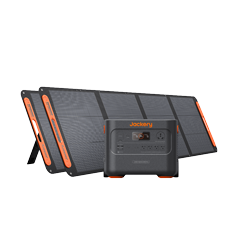
Jackery Solar Generator 2000 Plus
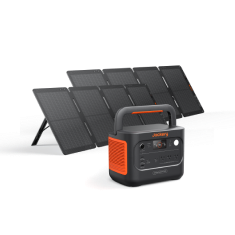
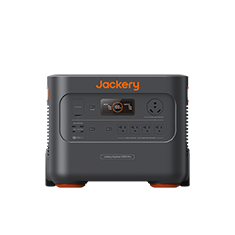
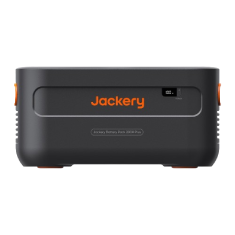
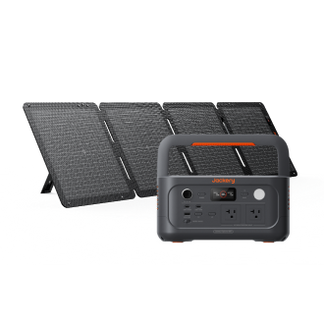
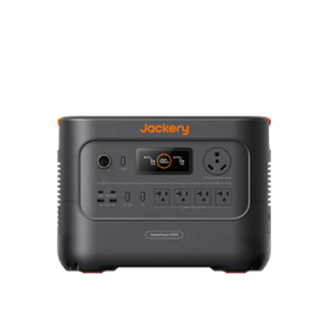
Jackery Solar Generator 2000 Plus is another great home power backup to run your appliances for hours without electricity from the grid and cope during power outages. With a LiFePO4 battery with a 2042.8 Wh capacity and an expandable limit to 24 kWh, adding another Jackery Battery Pack 2000 Plus to the Jackery Explorer 2000 Plus Portable Power Station helps to waive most of your monthly electricity bill.
Appliances Running Time
- Refrigerator (300W) = 5.3H
- TV (150W) = 10.0H
- Microwave (1000W) = 1.6H
- Vacuum Cleaner (1500W) = 1.1H
- Coffee Maker (800W) = 2.0H
Who Should Buy This
If you wish to have an expandable home battery backup solution that can grow with your needs, then the Jackery Solar Generator 2000 Plus is a reliable choice.

Customer Review
Excellent quality; the battery lasts a very long time. It's very easy to move around with the built-in tires. I love the upgradeability. It's the best solar generator I have ever had.
—Marc.
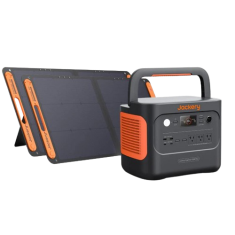
Jackery Solar Generator HomePower 3000
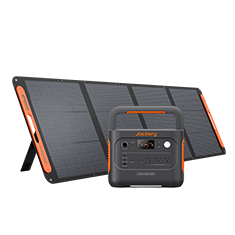
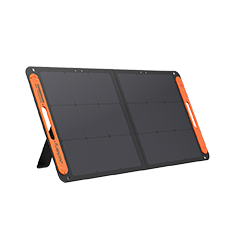
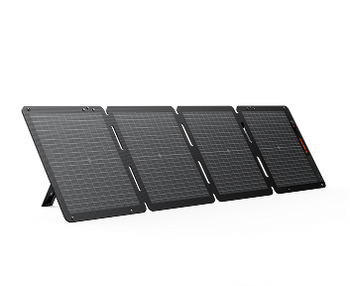
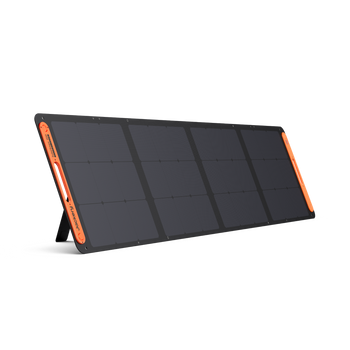
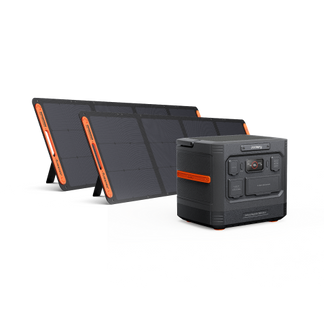
In California, where utility rates are among the highest in the country and time-of-use billing can significantly increase costs during peak hours, the Jackery Solar Generator HomePower 3000 provides a portable home battery backup, allowing you to stay in control. It allows you to power essential appliances, such as fans, lights, and even small AC units, during expensive evening hours. The bundle includes the Jackery SolarSaga panels, so you can take advantage of California’s abundant sun.
Appliances Running Time
- Refrigerator (300W) = 8.1H
- TV (150W) = 15.2H
- Microwave (1000W) = 2.6H
- Vacuum Cleaner (1500W) = 1.7H
- Coffee Maker (800W) = 3.2H
Who Should Buy This
The Jackery Solar Generator HomePower 3000 is ideal for eco-conscious homeowners, renters, or individuals in wildfire-prone areas seeking portable backup power and daily savings.

Customer Review
I finally feel secure knowing that when the blackouts occur, I can simply push a button and keep my fridge and freezer running. Blackouts are occurring more frequently, and I am prepared. Thank you.
— Victoria Woodward.
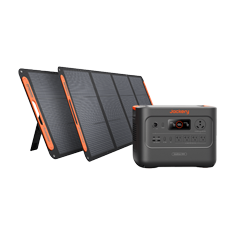
Jackery Solar Generator HomePower 3600 Plus
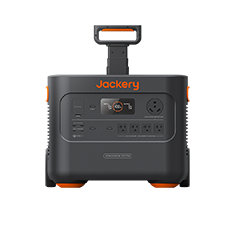
The Jackery Solar Generator HomePower 3600 Plus is an advanced, essential home backup solution for California residents who want to reduce their monthly electricity bills. With a large battery capacity and expandable options up to 21kWh, it can run most critical household appliances during peak electricity hours. It also has an easy-to-transport design with a pull rod and double wheels. This lets you easily move the essential home backup solution from the kitchen to the bedroom to the living room and even the garage.
Appliances Running Time
- Refrigerator (300W) = 9.5H
- TV (150W) = 17.7H
- Microwave (1000W) = 3.0H
- Vacuum Cleaner (1500W) = 2.0H
- Coffee Maker (800W) = 3.7H
Who Should Buy This
The Jackery Solar Generator HomePower 3600 Plus offers enough battery capacity to run most essential appliances for long hours, reducing the reliance on the electrical grid.

Customer Review
We love it! Holding power after being charged up, and the packaging was top-notch! We own two of them now!
Laura W.
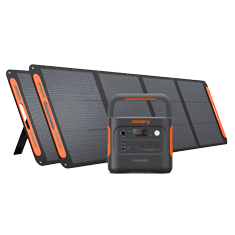
Jackery Solar Generator 5000 Plus
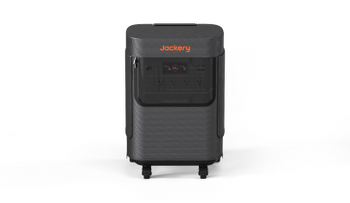
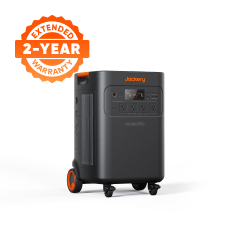
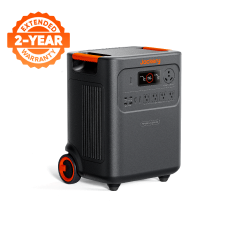
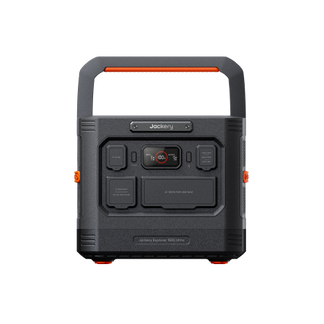
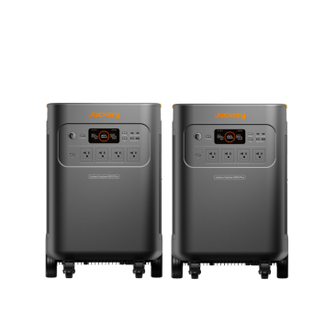
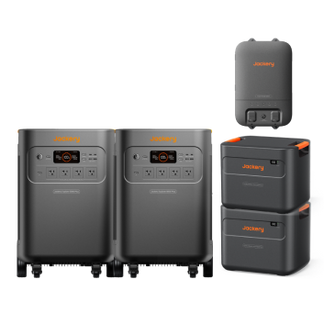
For Californians who want more than just occasional savings, the Jackery Solar Generator 5000 Plus offers an essential home backup to help offset high utility costs and mitigate grid instability. With enough capacity to cover multiple high-load appliances, it’s especially useful during peak electricity hours, rolling blackouts, or hot afternoons. When connected to a transfer switch, it becomes a semi-permanent solution that can automatically power essential circuits during outages.
Appliances Running Time
- Refrigerator (300W) = 12.2H
- TV (150W) = 21.4H
- Microwave (1000W) = 4.1H
- Vacuum Cleaner (1500W) = 2.8H
- Coffee Maker (800W) = 5.0H
Who Should Buy This
The Jackery Solar Generator 5000 Plus is ideal for homeowners in single-family homes who want to avoid installing rooftop solar but still achieve long-term savings and blackout resilience.

Customer Review
This is my second unit from Jackery. Love them. I bought the 5000 plus for backup for the coming storm season here in Houston. Mainly to run the refrigerator. The great sale and stackable coupon sealed the deal.
— David Tanaka.
Average Electric Bill in California FAQs
What size of solar generator do I need for my apartment in California?
Solar generators are a reliable and clean way to cut down on electric bills, but their exact size depends on your home size, the number of appliances you need to power, and for how long.
Let’s say you have a toaster (850W), a freezer (200W), and a dishwasher (250W) simultaneously running on the Jackery Solar Generator 2000 Plus. To understand the runtime of the solar generator, all you need to do is visit the product page and scroll to find the Running Time Calculator. You can input the appliance's wattage and click Enter to get an estimated runtime. In this case, the Jackery Solar Generator 2000 Plus can run 1200W appliances for 1.4 hours.
How much is the average energy bill in California?
The average retail price of electricity in California as of December 2025 is 34.71 ȼ per kWh. Considering the average electricity consumption of 491 kWh per month, the average electricity bill in California stands at $170.42.
What is the average electric bill for a 3-bedroom house in California?
With average rates of 34.71 ȼ per kWh, a three-bedroom house in California consuming 1000 kWh pays an average of $347.10 per month.
Why is my electric bill so high in California?
Your electricity bill in California might be high for the following reasons: outdated electricity grid, tiered pricing structures, time-of-use rates, climate influence, and complex electricity market.
How do I reduce my electric bill in California?
To reduce your electric bill, you must check the plans you opt for, and conserve electricity, or one of the best ways is to go solar by investing in Jackery Solar Generators.
Final Thoughts
Irrespective of the reasons, the average electric bill in California is skyrocketing. So, it’s high time you adopt solar energy to save the environment and your hard-earned money. Jackery, with its wide and efficient range of solar generators, be it the expandable Jackery Solar Generator 5000 Plus, the non-expandable Jackery Solar Generator HomePower 3000, or others, lets you power most of your home and outdoor appliances.