
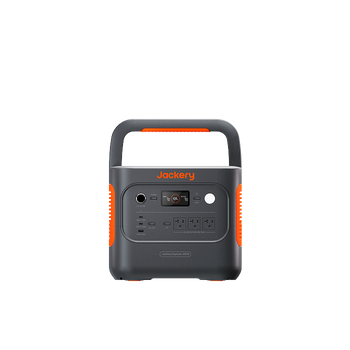
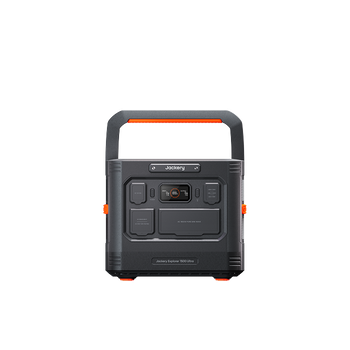
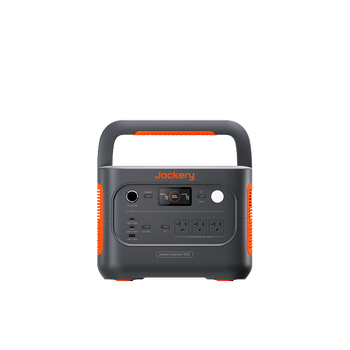
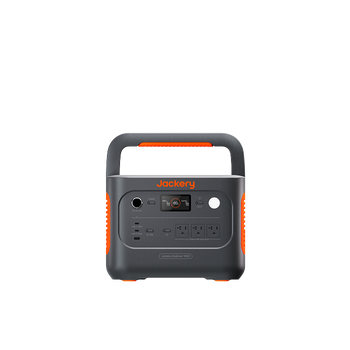
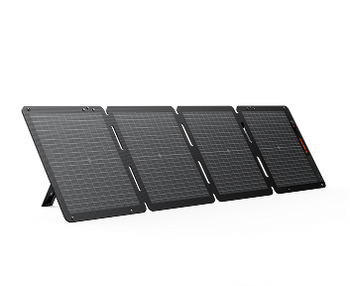
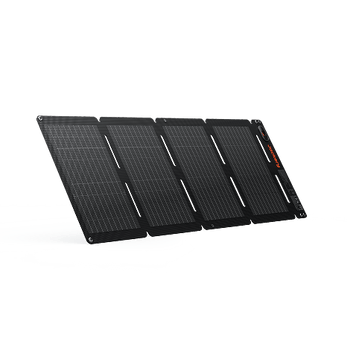




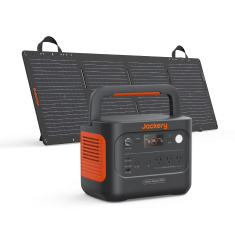
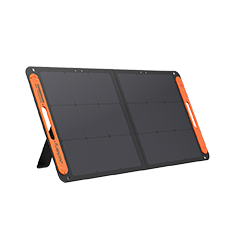



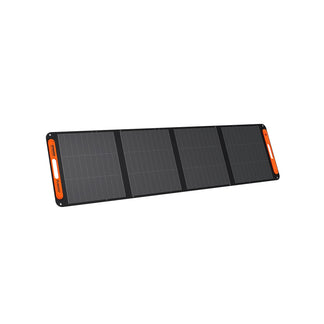
![[Add-on] Jackery SolarSaga 500 X - Jackery](http://www.jackery.com/cdn/shop/files/add-on-jackery-solarsaga-500-x-1493607.webp?v=1786503068&width=324)
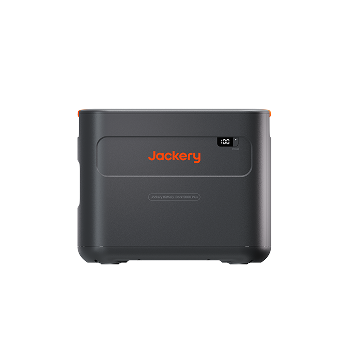
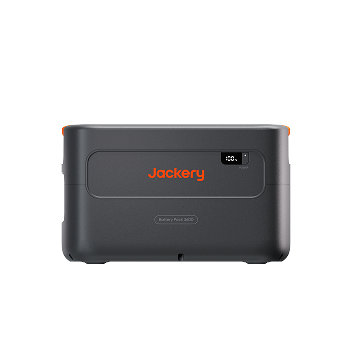
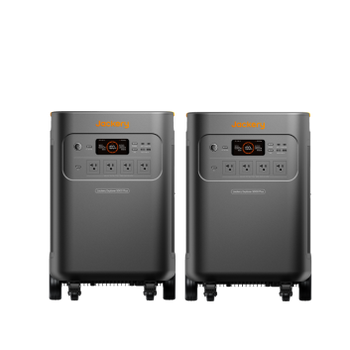
![[Add-on] Jackery Battery Pack 5000 Plus - Jackery](http://www.jackery.com/cdn/shop/files/add-on-jackery-battery-pack-5000-plus-6713401.webp?v=1786503068&width=324)






How Do You Build N+1 Home Backup With Two Independent Solar Generators?
N+1 home backup means the defined essential backup capability remains available if either of two generators is unavailable. Two units are not automatically redundant: remove Generator A, then Generator B, and require the remaining unit to cover the same documented fallback target. With exactly two solar generators, choose between separate-load coverage and failover coverage before comparing equipment.
Choose the N+1 home backup design that fits your essential loads
Use separate-load coverage when divided appliance groups are acceptable. Use failover coverage when the same priority loads must remain available after either generator is lost. Call the plan N+1 only when you can remove each generator in turn and the remaining unit covers the explicitly defined fallback loads.
| Design | Normal assignment | Single-generator fallback | Best fit and trade-off |
|---|---|---|---|
| Separate-load coverage | Each generator powers a different appliance group. | The remaining unit covers only its assigned group. | Works when some loads can be unavailable after one unit is lost. It is easier to distribute, but it does not preserve the same priority loads. |
| Failover coverage | Both units are assigned to the same priority load group for different failure scenarios. | Either remaining unit covers that group alone. | Fits a household that needs the same critical loads to survive either failure. Each unit must meet the more demanding standalone requirement. |
| Hybrid coverage | Normal use is divided, with a smaller shared fallback group. | Either unit covers the explicitly named shared group. | Useful only when the shared fallback fits one generator by itself. Other loads remain nonredundant. |
The choice is straightforward: use separate-load coverage when divided appliance groups are acceptable; use failover coverage when the same priority loads must remain available after either unit is lost. Do not count combined output toward the N+1 test. Browse home backup power options after defining the fallback target; the collection does not prove two-unit compatibility or fallback performance.

Calculate the single-generator fallback target
Size each generator for the harder case: Generator A unavailable and Generator B unavailable. The target is not a single capacity figure. It combines continuous output, startup capability, usable stored energy, required runtime, and a realistic recharge window.
- Inventory and prioritize the loads. Record appliance labels or measured watts. Classify each load as must-run, scheduled, or optional, and note which loads may operate at the same time. This creates a critical-load home backup sizing target instead of relying on a household average.
- Separate running demand from startup demand. Record normal operating draw and any startup or surge behavior for motors, compressors, pumps, and other loads that do not start at their running wattage. Check the generator's verified continuous output and startup capability separately.
- Define the operating schedule. Write down how many hours each load must run, which loads can cycle, and whether the plan applies overnight or during a low-recharge period. A refrigerator, communications equipment, medical equipment, and lighting may need different schedules, but any medical or life-safety load requires advice specific to that equipment.
-
Estimate energy and recharge. For each load group, use this planning relationship:
required watt-hours = average watts × operating hours. For example, an assumed 100-watt load running for 8 hours requires100 W × 8 h = 800 Whbefore accounting for conversion losses, cycling, reserve, and recharge uncertainty. This appliance-level relationship is consistent with storage capacity based on selected loads. Reconcile the estimate with the generator's verified usable-energy specification. Battery sizing must account for power demand and stored energy, while solar can extend runtime without increasing inverter peak AC output, as explained in this residential backup sizing guidance. - Repeat the removal cases. Calculate the fallback with Generator A removed, then with Generator B removed. Select equipment and assignments based on the more demanding output, startup, energy, runtime, and recharge requirements. Solar contribution is conditional because weather, season, panel angle, shading, access, and system limits affect it. Use estimate appliance runtime only as an estimation aid after defining the loads and assumptions, not as proof that an N+1 arrangement passes.
Before selecting equipment, keep the appliance records, desired hours, startup notes, and likely recharge windows together. Do not turn the illustrative calculation into a runtime promise or apply a universal reserve percentage.
Remove shared failure points from both generator setups
A two-generator plan is more usable when charging, storage, access, control, load, and operator paths do not all depend on one hidden resource. Separating these paths is a practical way to reduce common failure points, but physical separation alone does not prove electrical compatibility, automatic transfer, or simultaneous operation.
Prepare separate charging and storage paths
Give each generator an accessible storage position and its required charging equipment or a documented recharge path. Keep both units reachable during an outage and follow each product's current operating and storage instructions. Do not assume that a charger, cable, or input path is interchangeable simply because both units are solar generators.
Document separate load and control paths
Label each generator's normal appliance assignment and the loads that move to the fallback unit. Map power strips, extension paths, control devices, apps, rooms, and access routes. If both units depend on one of these, redesign the procedure or verify the dependency before calling the plan independent. Store printed fallback instructions with the equipment so another household member can follow them without relying on one operator.
Plan around recharge, access, and weather limits
Treat solar recharge as an opportunity, not a guaranteed schedule. Define conservation rules and an alternate recharge opportunity for cloudy weather, shading, poor panel placement, or restricted access. Record which loads are shed first and keep the fallback assignments with the generators. Before an outage, map each charging path, storage location, assigned load, control method, and backup operator. Mark every dependency shared by both setups for redesign or verification.
Keep portable appliance backup separate from home-circuit connections
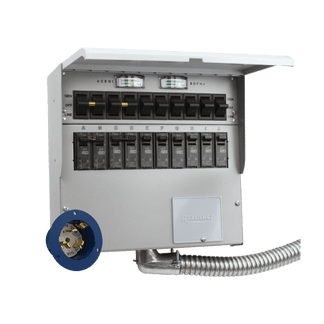
Portable appliance backup powers selected loads directly through permitted connections. Home-circuit backup requires appropriately rated equipment, an isolation method, compatibility checks, and qualified installation verification. Seattle City Light guidance distinguishes direct-to-load portable use from transfer-switch installation, but it does not establish compatibility for a specific two-generator arrangement.
For portable operation, keep the documented appliance group within the product's verified rating and connect the generator directly to the load. Do not improvise a circuit connection. The CPSC safety alert warns against connecting a portable generator to household wiring through a wall outlet, a practice commonly called backfeeding. Before connecting any generator to home circuits, stop and have a qualified electrician verify equipment rated for the application, the isolation or transfer method, load limits, grounding, compatibility, and local requirements.
For this plan, do not treat two current Jackery units as a paralleled, synchronized, shared-circuit, or automatic-failover system unless current official model documentation and qualified installation verification support the complete setup. Do not rely on combined output or a transfer accessory for that purpose. Use home backup installation support for installation guidance only; it does not establish compatibility.
Test the failover plan before an outage
Test both failure directions with the actual intended load groups and every household member who may operate the equipment. Follow each battery product's current instructions for operation, testing, and maintenance rather than applying a conventional-generator testing interval to battery products.
- Identify the unavailable unit. Run one simulation with Generator A unavailable and a second with Generator B unavailable. Start with the documented fallback assignment, including the overnight or lowest-recharge condition that matters to your plan.
- Shed optional loads. Disconnect or turn off scheduled and optional appliances before activating the fallback. Keep only the explicitly defined priority group so the test measures the N+1 target rather than an improvised combination.
- Activate the documented fallback. For portable use, connect only the permitted appliance group through properly rated connections. For a home-circuit setup, follow only the verified installation procedure. Do not create a new connection method during the test.
- Observe and record the result. Note startup behavior, continuous operation, cycling, runtime, battery state, the next recharge opportunity, uncovered loads, and any shared dependency. Revise the assignment or sizing target when either direction fails, then repeat the test.
Create the critical-load list now, label Generator A and Generator B's fallback assignments, and run both failure-direction tests before the next outage.

Frequently Asked Questions
These questions address architecture, compatibility, and sizing for a two-generator backup plan.
What does N+1 home backup mean for two generators?
It means the remaining generator still covers the explicitly defined essential fallback loads after either generator is taken out of service. Separate-load coverage may leave different appliance groups uncovered; failover coverage keeps the same priority group available only if either unit can serve it alone.
Can two solar generators run together during a home power outage?
Do not assume that two solar generators can operate together, be paralleled, synchronize, share a circuit, or provide automatic failover. Use separate documented appliance loads unless current model-specific documentation and qualified installation verification support another arrangement.
How do I size two generators for redundant home backup?
List priority loads, check running and startup demand, define operating hours and recharge windows, estimate watt-hours, and repeat the removal test for each generator. The more demanding standalone case sets the requirement.
Is separate-load backup or failover backup better with two generators?
Separate-load backup fits when divided appliance groups are acceptable. Failover backup fits when the same highest-priority loads must remain available after either unit is lost. A hybrid requires an explicit shared fallback group that fits one generator alone.
Disclaimer:
The runtime mentioned for appliances powered by Jackery is for reference only. Actual runtime may vary under different conditions. Please refer to real-world performance for accurate results.

