
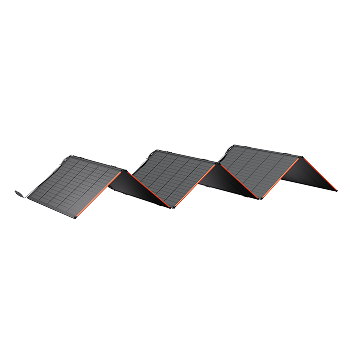
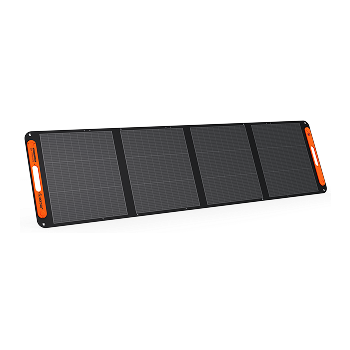


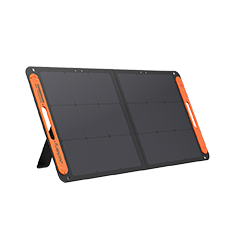
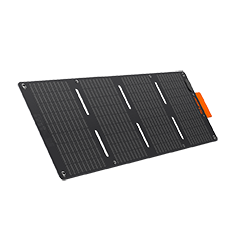
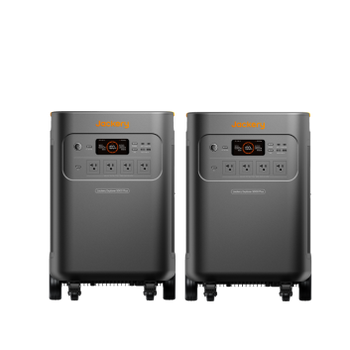



![[Add-on] Jackery SolarSaga 500 X - Jackery](http://www.jackery.com/cdn/shop/files/add-on-jackery-solarsaga-500-x-1493607.webp?v=1786503068&width=324)
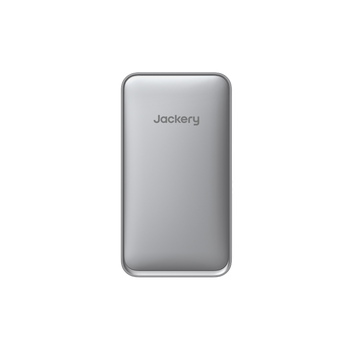
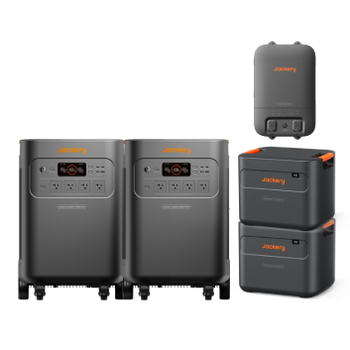
![[Add-on] Jackery Battery Pack 5000 Plus - Jackery](http://www.jackery.com/cdn/shop/files/add-on-jackery-battery-pack-5000-plus-6713401.webp?v=1786503068&width=324)



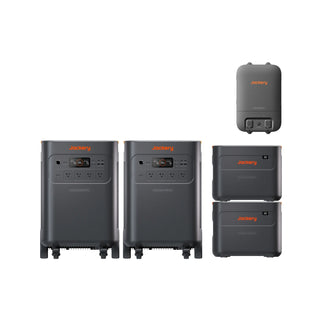


Quick Answer: A portable power station can run a camping AC if its continuous output exceeds the AC’s running wattage and its surge rating handles the startup spike — typically 2–3 times the running watts. For a 10,000 BTU unit drawing 1,200W, you need at least 2,500Wh of battery capacity with a 3,000W surge-capable inverter to get 2–3 hours of runtime, assuming a 50% duty cycle. Real-world performance drops in extreme heat, and single-hose units waste power, so always size with a 25% buffer.
Key Takeaways
- A 10,000 BTU camping air conditioner draws about 1,200W running and can spike to 3,000W at startup — your power source must handle both.
- LiFePO4 battery capacity (in Wh) divided by AC running watts gives approximate hours, but compressor cycling and inverter efficiency (85–90%) reduce real-world runtime.
- Dual-hose portable ACs are mandatory for tents and RVs; single-hose units lose ~30% cooling efficiency by pulling hot outdoor air inside.
- A soft-start device can cut startup surge by half, letting a 2,200W power station run an AC that would otherwise need a 4,000W generator.
- Solar panels alone can’t start a compressor AC — they only extend runtime when paired with a battery buffer of at least 2,000Wh.
The Realities of Off-Grid Cooling
A standard portable AC drains a 2,000Wh battery in under two hours, often leaving you in the heat when you need cooling most. Many campers size based on running watts but overlook the startup surge — an 800W compressor can momentarily draw 1,500W, tripping the inverter. Condensation from a portable AC can produce 1–3 gallons of water daily, enough to soak gear.
Understanding Camping AC Types and Their Real-World Power Draw
Compressor-based ACs are the only option that delivers genuine cooling in any humidity. A 13,500 BTU RV unit runs at 1,200–1,800W; a 5,000–8,000 BTU tent unit draws 500–900W. The table below compares common types:
AC Type |
Running Watts (Typical) |
Startup Surge |
Humidity Limit |
Real-World Runtime on 2,000Wh Battery |
Compressor (dual-hose) |
500–1,800W |
2–3× running |
Works in all humidity |
1–4 hours (duty cycle dependent) |
Compressor (single-hose) |
Same as above |
Same |
Works but ~30% less efficient |
30% shorter than dual-hose |
Evaporative cooler |
50–150W |
None |
Fails above 60% RH |
13–40 hours (but ineffective when humid) |
Battery-powered portable AC |
500–800W |
Usually handled internally |
Works in all humidity |
2–4 hours on internal battery alone |
Key sizing rules:
- BTU to wattage: roughly 110–130W per 1,000 BTU for modern units. A 10,000 BTU AC consumes about 1,100–1,300W.
- Space sizing: 20 BTU per square foot is a solid rule. A 100 sq. ft. tent needs about 2,000 BTU, but with near-zero insulation, a 5,000 BTU unit is more realistic for a comfortable temperature drop.
Real-world power draw climbs 10–20% on 95°F+ days compared to 80°F. The compressor works harder against the higher temperature gradient, and the condenser coil rejects heat less efficiently. Always assume the worst-case wattage when sizing your battery.
The Critical Difference: Running Watts vs. Startup Surge
- Inrush current: When a compressor AC starts, the motor draws 2–3 times its running wattage for 5–10 seconds. A 1,500W running AC can demand 3,200W.
- True surge requirement: Locked Rotor Amps (LRA) × voltage. Example: an AC label shows LRA 52A at 115V → 52 × 115 = 5,980W surge. Your inverter must support that number.
- Soft-start reduction: A soft-start device can drop this spike to 1,200–1,800W, making a 2,200W power station viable where a 4,000W generator was previously required.
- Binding constraint: Never size a power source solely on running watts — the surge is the binding constraint.
Calculating Runtime: Matching Battery Capacity to AC Load
(Battery Usable Capacity in Wh ÷ AC Running Watts) × Duty Cycle Factor = Realistic Hours
Example: 2,042Wh (usable from a Jackery Explorer 2000 v2) ÷ 1,200W = 1.7 hours continuous; at a 50% duty cycle, about 3.4 hours. However, real-world factors reduce runtime:
- Inverter efficiency (85–90%) shaves off 10–15%.
- High ambient heat drives the duty cycle higher.
- Cold weather: at 32°F, LiFePO4 capacity drops about 20%.
Because the thermostat cycles the compressor off, average power draw is lower than nameplate, so runtime often exceeds the simple Wh÷W math. Add a 25% safety buffer — if you estimate 2,000Wh, target 2,500Wh.
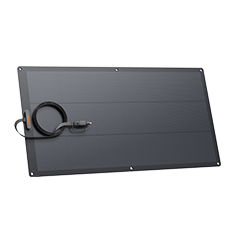
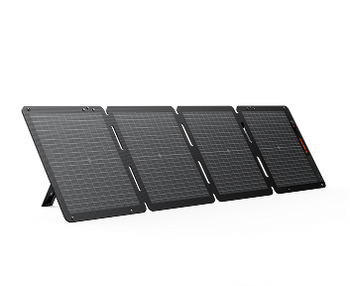
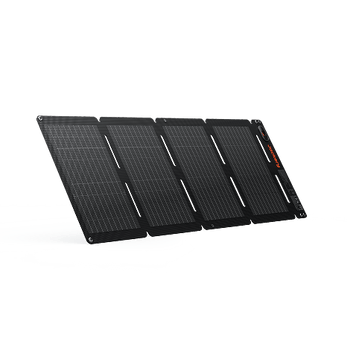
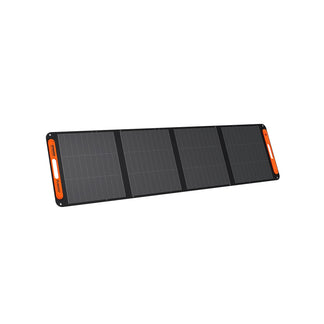
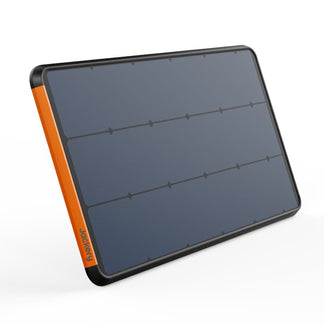
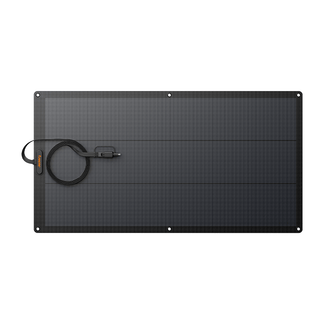
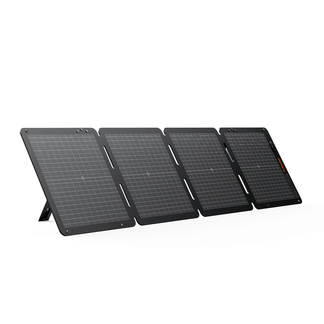
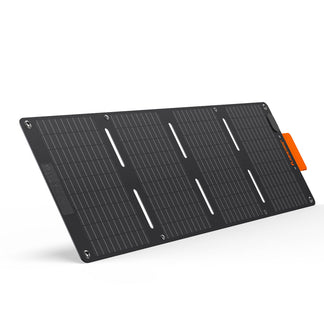
Solar panels extend daytime runtime but can’t start the AC. A 400W array yields 1,600–2,000Wh over 5 peak sun hours, offsetting much of the consumption if you run the AC during sunny hours. You still need a battery buffer to absorb the surge and ride through clouds.
Choosing the Right Power Source: Inverter Portables vs. Generators vs. Solar
Power Source |
Pros |
Cons |
Best Use Case |
Portable power station |
Silent, no fumes, pure sine wave |
Limited runtime without recharge |
Quiet campgrounds, tent camping, short trips |
Gas generator |
Unlimited runtime with fuel |
Loud (60–75 dB), CO risk, fuel cost $3–6/day |
Boondocking with no solar, backup for cloudy days |
Solar + battery hybrid |
Renewable, silent, extended runtime |
High upfront cost, sun-dependent |
Multi-day off-grid camping with good sun |
Soft-start + large battery |
Cheaper than huge generator, quiet |
Still limited by battery capacity |
RV AC use where noise is restricted |
For quiet campgrounds and short sessions, a portable power station is the best choice; for unlimited runtime, a gas generator or hybrid solar setup is necessary. Pure sine wave output protects AC electronics. A hybrid approach — a power station like the Jackery Explorer 2000 v2 paired with a small generator — can cut generator fuel use by about 60% while guaranteeing cooling.
For a deeper dive into avoiding common sizing errors, see common sizing mistakes when choosing a solar generator.
Practical Setup Tips for Safe and Efficient Off-Grid Cooling
- Vent hot air outside with dual-hose systems. Single-hose units create negative pressure, pulling hot air back in. If you must use one, seal the tent as tightly as possible and accept the efficiency loss.
- Manage condensation. Route the drain hose to a container or outside. One gallon of water near your battery is a short-circuit waiting to happen.
- Use 12-gauge extension cords for runs over 25 feet. Thinner cords cause voltage drop that can stall the compressor or damage it over time.
- Park in shade and insulate windows. Reflective covers on tent windows or RV glass can cut AC runtime by 20–30%, directly extending battery life.
- Install a soft-start and test at home. Don’t discover a surge mismatch at the campsite. Run the full system in your driveway first.
- Pre-cool while solar is active. Run the AC hard during peak sun hours when panels are replenishing the battery, then switch to a fan or higher thermostat setting at night.
- Wrap the exhaust hose. A foil blanket around the hose stops it from radiating heat back into your sleeping space.
- Target a 5°F temperature drop. You don’t need 68°F in a tent; dropping from 85°F to 80°F feels dramatically better and cuts power consumption in half.
For broader strategies on keeping essential appliances running during outages, building a secure power backup for home appliances applies similar principles to home setups.
Limitations / What to Know Before You Buy a Camping AC Setup
- Battery runtime is still short. Even with a 3,000Wh station, a 13,500 BTU AC will drain it in 2–3 hours continuously. For all-night cooling you need a large array or hybrid generator.
- Evaporative coolers are useless in most U.S. summer camping. Anywhere east of the Rockies in July, humidity routinely exceeds 60%; if the dew point is above 55°F, skip the swamp cooler.
- Weight and bulk matter. A portable AC unit weighs 50–70 lbs, and a 2,000Wh power station adds another 50 lbs. This is car-camping or RV equipment, not backpacking.
- Noise under 50 dB is rare. Most portable ACs produce 50–60 dB, about the level of a normal conversation. Look for units with a dedicated “sleep” or “low” mode.
- Cold-weather camping reduces battery capacity. LiFePO4 batteries lose ~20% at freezing. If you camp in shoulder seasons, keep the power station inside the heated space or use a battery blanket.
For a comparison of backup power options beyond solar generators, best emergency battery backup power covers home-oriented solutions that share the same core technology.
Jackery Solutions for Off-Grid AC Power
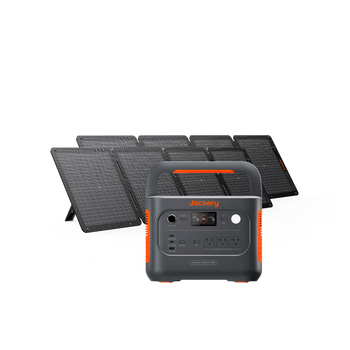
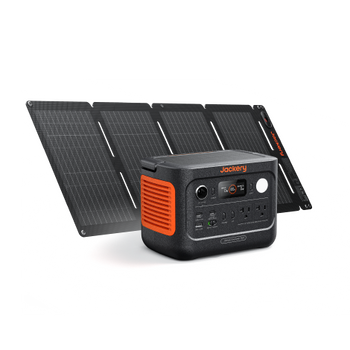
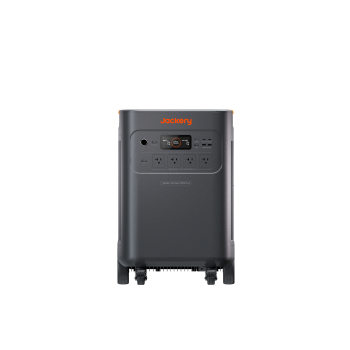
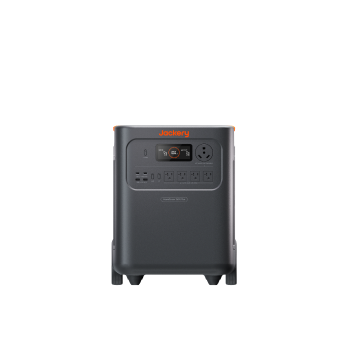
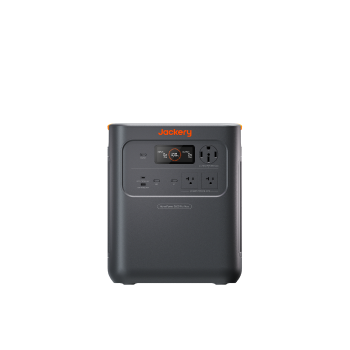
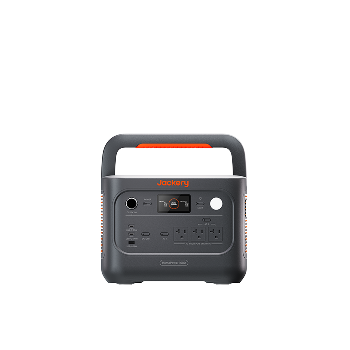
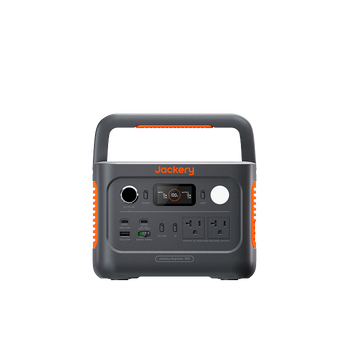
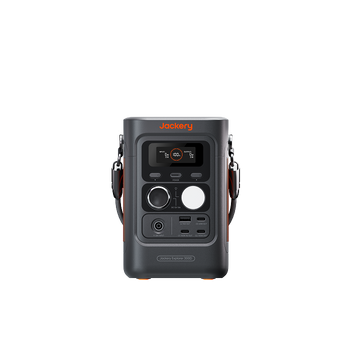
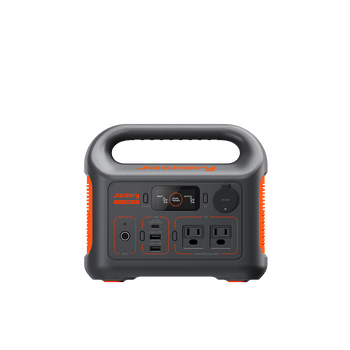
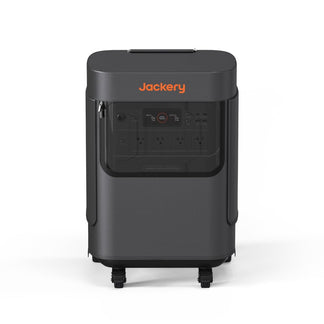
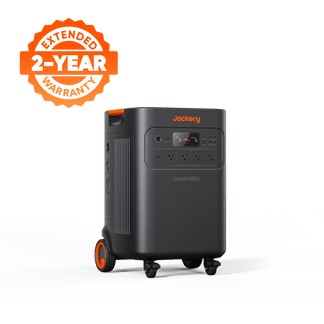
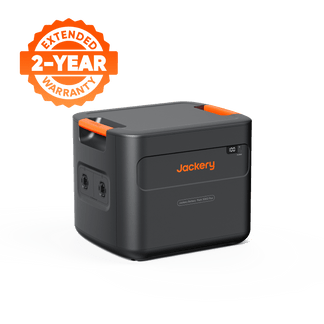
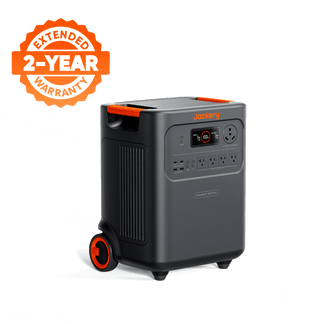
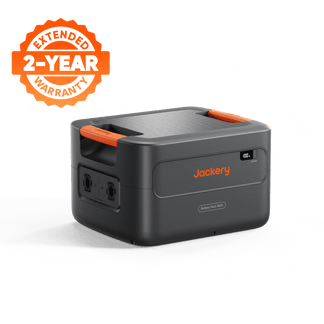
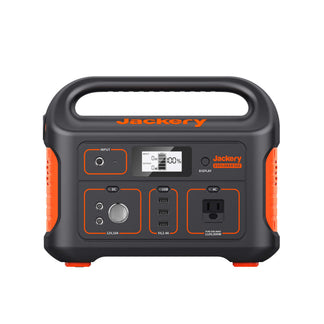
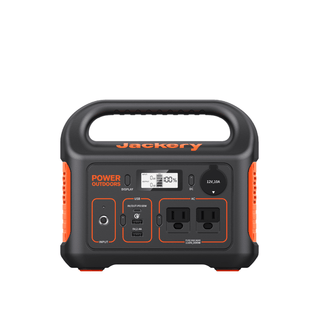
Jackery’s LiFePO4 power stations can serve as essential backup for compressor ACs when paired with a soft-start, and their pure sine wave output protects sensitive electronics. These units are intended for essential backup cooling, not as a replacement for a whole-home generator. The table below matches each unit to the camping AC scenario it fits best.
Model |
Capacity (Usable) |
AC Output (Surge) |
Best For |
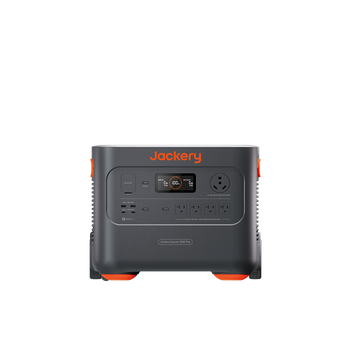
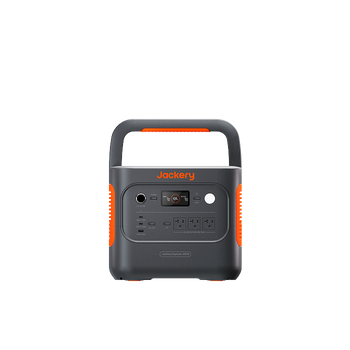
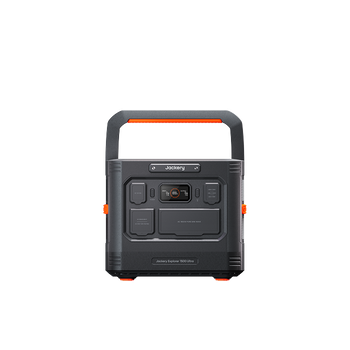
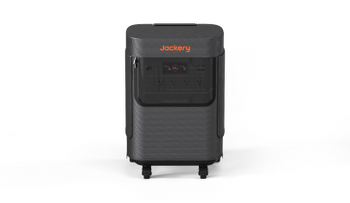
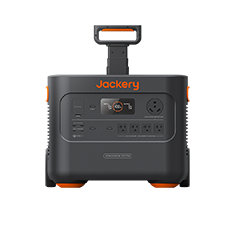
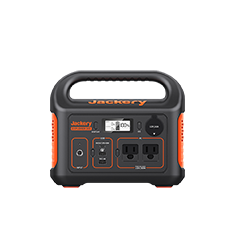
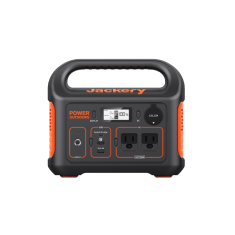
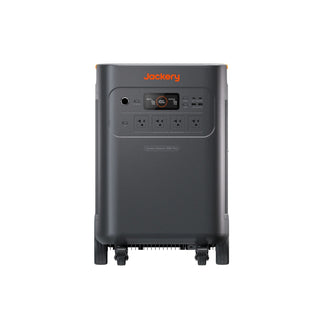
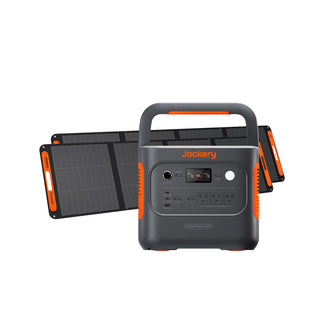
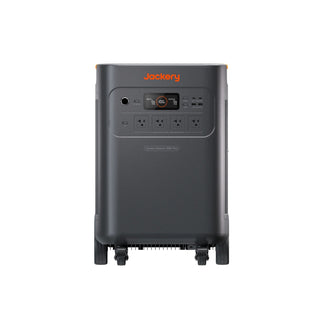
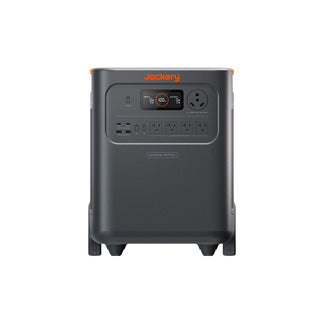
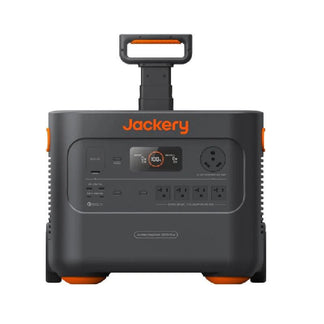
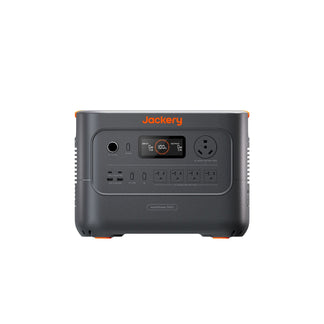
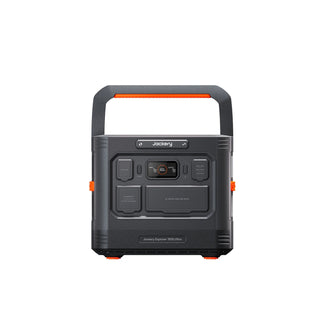
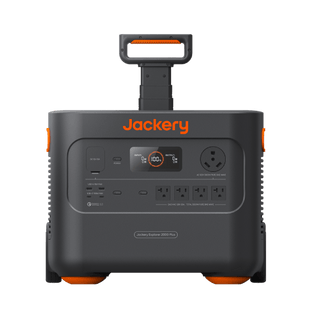
Jackery Explorer 2000 v2 |
2,042Wh |
2,200W (4,400W surge) |
Mid-sized RV AC (up to 13,500 BTU with soft-start), limited multi-hour cooling with solar top-up |
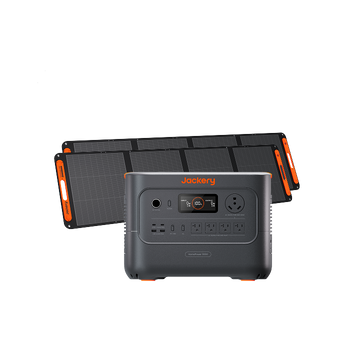
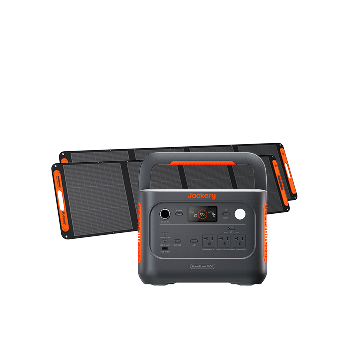
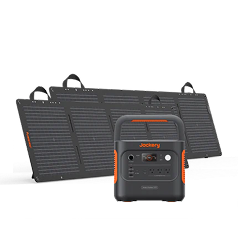
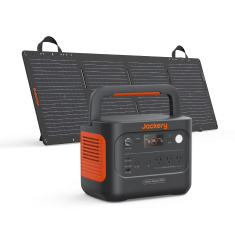
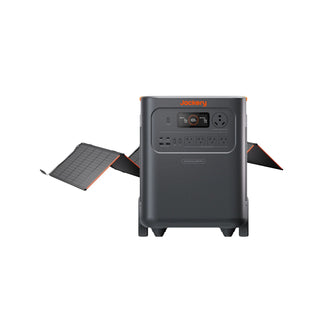
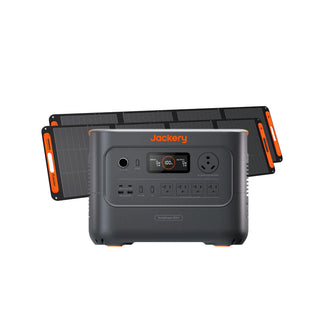
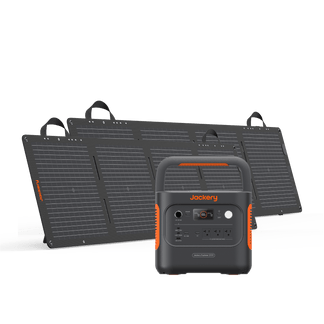
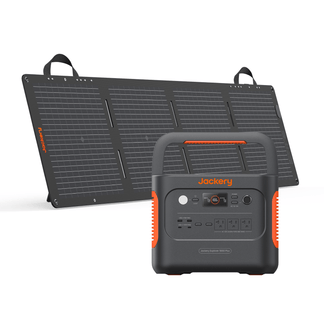
Jackery Solar Generator 2000 v2 |
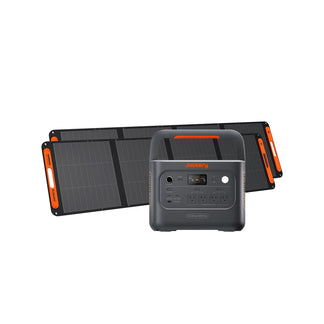
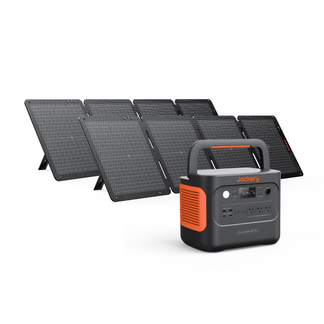
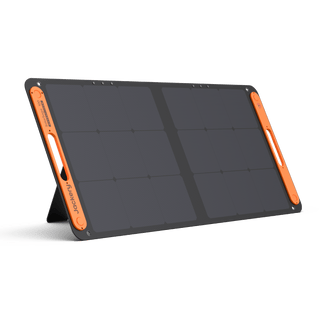
2,042Wh + two 100W SolarSaga panels |
Same as above |
Daytime cooling for a few hours with solar recharge, silent campground operation |
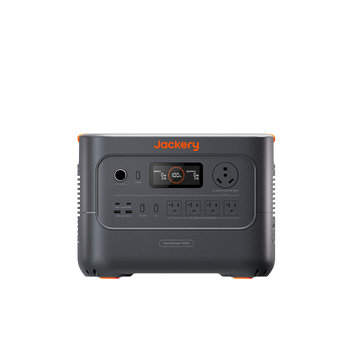
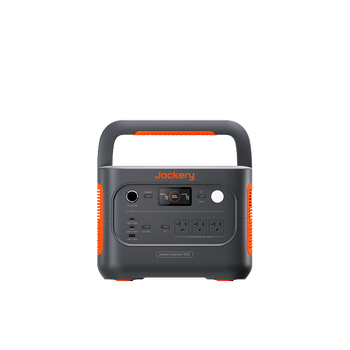
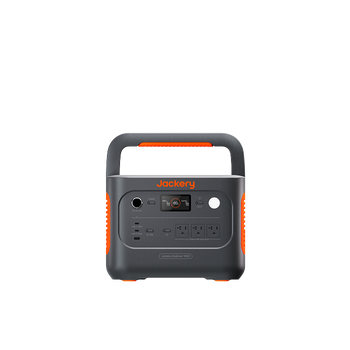
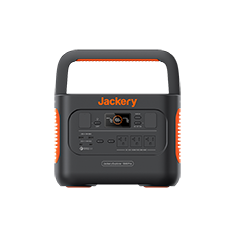
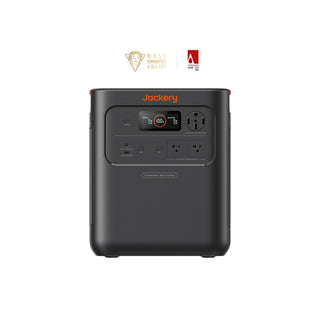
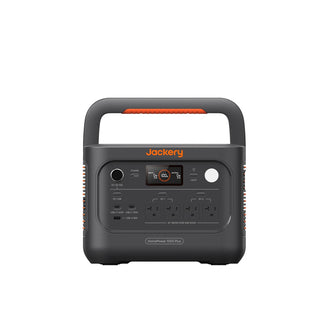
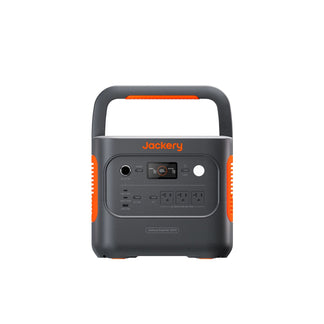
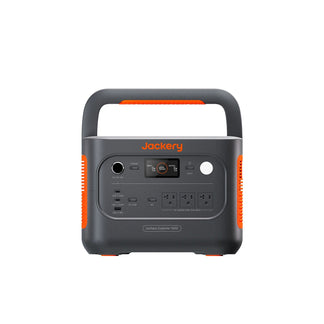
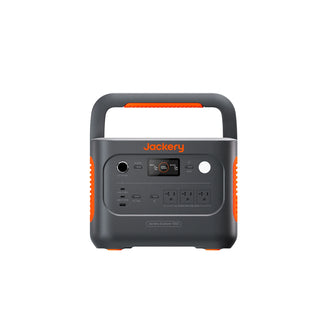
Jackery Explorer 1000 v2 |
1,070Wh |
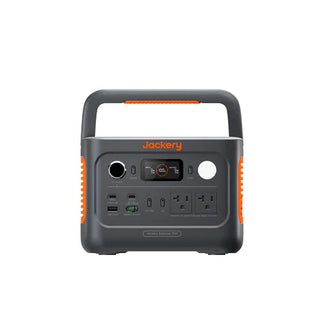
1,500W (3,000W surge) |
Small tent AC (5,000–8,000 BTU), short cooling sessions, lightweight car camping |
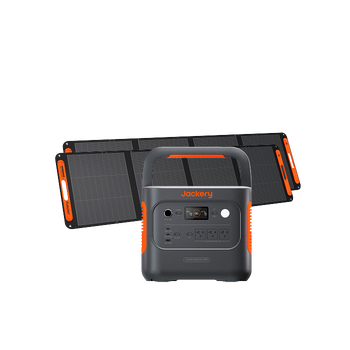
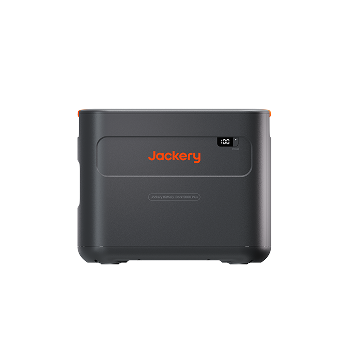
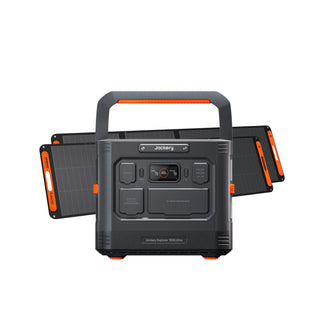
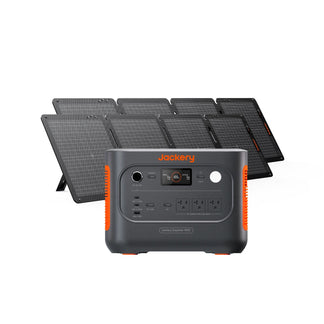
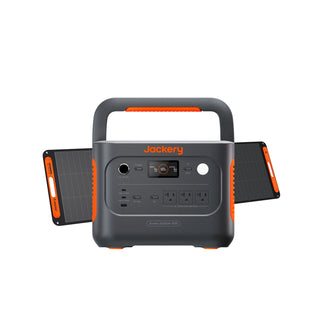
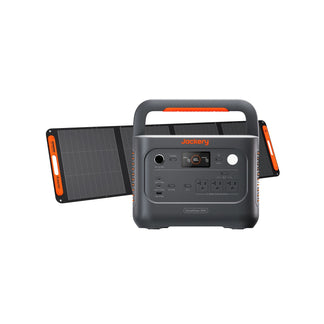
The Jackery Explorer 2000 v2’s 4,400W surge rating handles the startup spike of most 13,500 BTU RV ACs when combined with a soft-start. However, runtime is limited, and it’s best used as a backup for short cooling sessions. With the Solar Generator bundle, a 200W solar input can add roughly 0.8–1 kWh on a sunny day in ideal conditions, helping extend your cooling runtime. The Jackery Explorer 1000 v2 is the grab-and-go choice for tent campers running a 5,000 BTU unit for a few hours before bed.
For a broader look at battery backup generators in different sizes, best battery backup generators offers additional context.
Frequently Asked Questions (FAQ)
How often should I clean the air filter on a camping AC?
Clean the filter every 2–3 days of heavy use to maintain airflow and prevent the compressor from overheating, which wastes battery power.
Can I run a portable AC in a pop-up camper or soft-sided tent?
Yes, but only with a dual-hose unit and a sealed exhaust panel. Single-hose models create negative pressure that can collapse soft walls and pull in hot air.
Is it safe to sleep with a portable AC running in a tent?
Yes. Battery-powered ACs produce no carbon monoxide. Place the unit on a stable surface, drain condensation away from sleeping areas, and keep the exhaust hose insulated.
Can I connect multiple portable power stations to increase runtime?
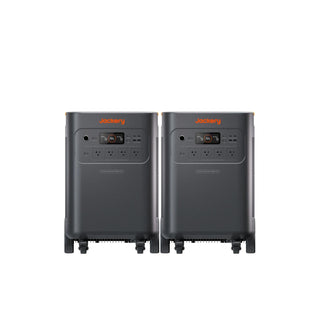
Some models support parallel connection, but most require manual swapping. Check the manufacturer’s instructions — do not attempt DIY paralleling without approved hardware.
Does using a portable AC void a tent’s warranty or damage the fabric?
High exhaust heat can damage tent fabric if the hose touches it directly. Wrap the hose with a foil blanket and keep it at least 6 inches from walls to avoid warranty issues.


