

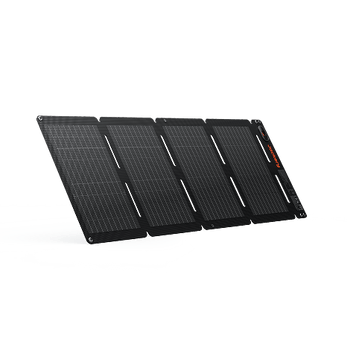







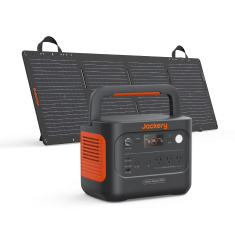
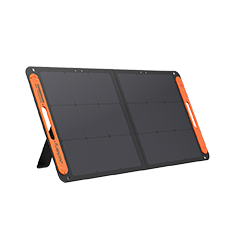



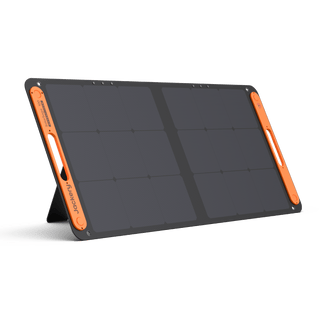
![[Add-on] Jackery SolarSaga 500 X - Jackery](http://www.jackery.com/cdn/shop/files/add-on-jackery-solarsaga-500-x-1493607.webp?v=1786503068&width=324)
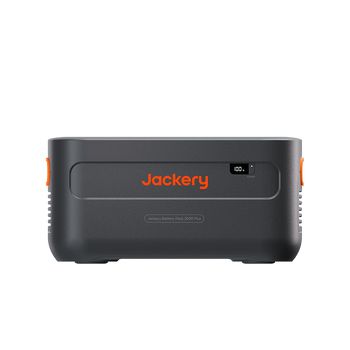
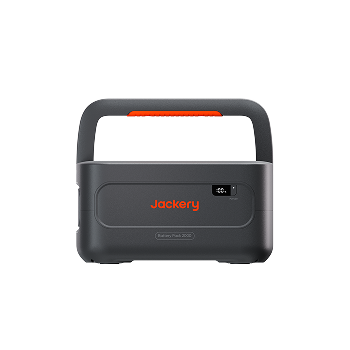
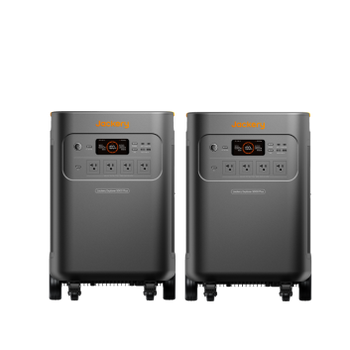
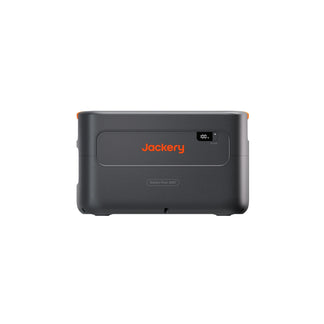
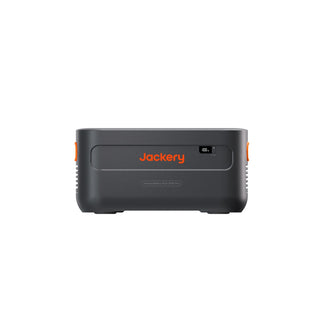
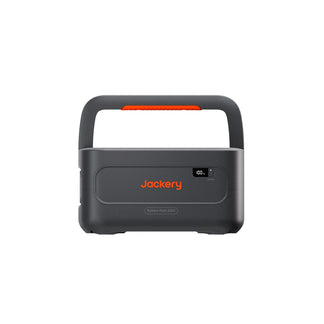
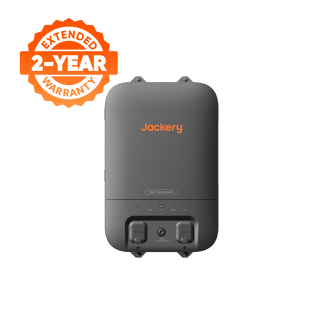
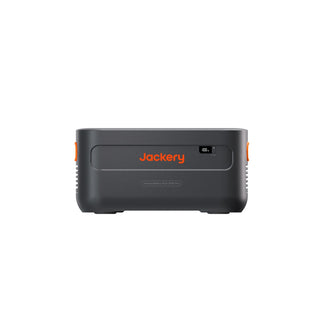
![[Add-on] Jackery Battery Pack 5000 Plus - Jackery](http://www.jackery.com/cdn/shop/files/add-on-jackery-battery-pack-5000-plus-6713401.webp?v=1786503068&width=324)
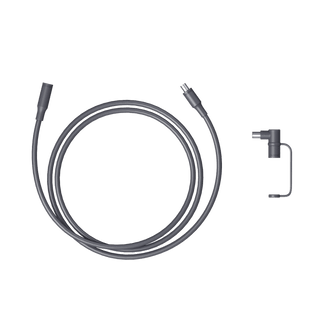
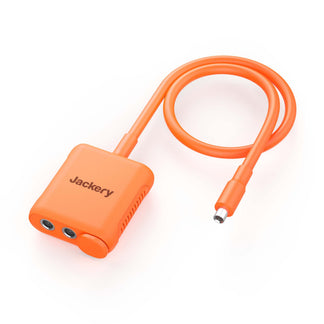
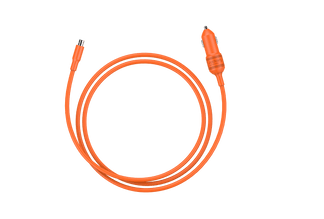
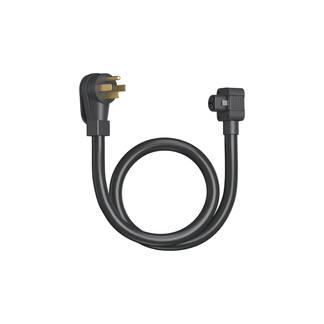








The cost to run an RV air conditioner depends on five things: the AC's power consumption, how many hours it runs, your electricity price, its duty cycle (how much of that time the compressor actually runs at full load), and which power source you are using: shore power, a generator, or a solar battery backup solution. The core formula is simple: operating cost = electricity used × price per kilowatt-hour, and electricity used is just power draw × time.
Here is a simple example: an RV AC averaging 1,200 watts, run for 8 hours, uses 9.6 kilowatt-hours (kWh). At a typical residential electricity rate of around $0.18/kWh, that is roughly $1.73 for the day. This guide walks through the full calculation framework, breaks down cost by power source (shore power, generator, solar and battery, and portable power stations), and gives you the formulas to plug in your own AC's numbers rather than relying on a single generic figure.
Key Takeaways
- Running an RV air conditioner costs roughly $1–3 per day on shore power, but actual cost depends heavily on wattage, hours, and local rates.
- Cost equals average power draw in kilowatts multiplied by operating hours, multiplied by your electricity price per kilowatt-hour.
- RV ACs cycle on and off rather than running at full rated power constantly, so real-world consumption is usually lower than worst-case math.
- Generators cost more per hour than shore power once fuel and maintenance are factored in, and most enforce campground quiet hours.
- Solar and battery systems have low ongoing operating costs but require a higher upfront investment before any savings begin.
- Battery capacity alone does not guarantee an RV AC will start. Check surge wattage against the power station's rated output first to understand if the solar generator can run the RV AC.
How Much Does It Cost to Run an RV Air Conditioner?
The cost to run an RV air conditioner depends on the AC's BTU rating, compressor type, efficiency, ambient temperature, thermostat setting, RV insulation, duty cycle, voltage, and general operating conditions.
|
RV AC scenario |
Average power assumption |
Hours/day |
Energy used/day |
Example electricity cost (at $0.18/kWh) |
|
Light use |
900W |
4 |
3.6 kWh |
$0.65 |
|
Moderate use |
1,200W |
8 |
9.6 kWh |
$1.73 |
|
Heavy use |
1,500W |
12 |
18.0 kWh |
$3.24 |
The $0.18/kWh figure reflects a rounded version of the EIA's average US residential electricity rate for June 2026, but rates vary widely by state and utility (roughly 13 cents/kWh in some states to well over 40 cents/kWh in others).
How Do You Calculate the Cost to Run an RV Air Conditioner?
The core formula to calculate the cost to run an RV air conditioner:
Cost = average power draw (kW) × operating hours × electricity price ($/kWh)
A simple five-step process:
- Find your RV AC's running wattage from its nameplate or manufacturer spec sheet.
- Convert watts to kilowatts by dividing by 1,000.
- Estimate your operating hours for the period you are calculating (a day, a week, a trip).
- Multiply by your electricity price in dollars per kWh.
- Adjust for duty cycle, since the compressor cycles on and off rather than running continuously. Your real average draw is often lower than the AC's maximum rated running watts.
Worked example: An RV AC averaging 1,200W, run for 8 hours:
1.2 kW × 8 hours = 9.6 kWh
9.6 kWh × $0.18/kWh ≈ $1.73
This calculation is based on stated assumptions. Compressor cycling generally means your actual average power draw is lower than the AC's maximum rated running wattage, so real-world costs often come in below a "max watts the whole time" estimate. Always verify your specific AC's running and startup wattage against its manufacturer nameplate or spec sheet before relying on any number here.
How Much Electricity Does an RV Air Conditioner Use?
Most RV air conditioners use between 1,000 and 1,800 running watts, but need a brief surge of 2,500 to 3,500+ watts to turn on. Electricity use for an RV AC is best understood across a few distinct units: BTU describes cooling capacity, watts describe electrical power draw at any given moment, watt-hours (Wh) and kilowatt-hours (kWh) describe energy consumed over time, and dollars per kWh describe price.
How Many Watts Does a 13,500 BTU RV Air Conditioner Use?
Manufacturer specifications and field measurements generally put a 13,500 BTU RV AC at around 1,300–1,600 watts running, with a startup surge in the roughly 2,700–3,500 watt range. These figures vary meaningfully by brand and model. For example, a Dometic-designed compressor does not necessarily draw the same as a Coleman-Mach or Furrion unit of the same BTU rating, so use this as a planning range rather than a fixed number, and check your specific unit's nameplate for its actual figures.
How Many Watts Does a 15,000 BTU RV Air Conditioner Use?
A 15,000 BTU RV AC unit typically runs at around 1,500–1,800 watts, with a correspondingly higher startup surge than its 13,500 BTU counterpart. As with the smaller unit, this is a range across brands and models rather than a single fixed figure. You should always confirm against the specific AC's spec sheet. If you want to know the RV AC wattage consumption by brand and BTU rating, you can check out our guide on how many watts does an RV AC use.
What is the Difference Between Running Watts and Startup Watts?
Running watts are the continuous power draw once the AC is already operating. Startup (or surge) watts are the brief spike, often just a second or two, when the compressor first kicks on, which typically requires substantially more power than steady-state running.
Starting watts vs. running watts matters for anyone sizing a generator or power station: it's the startup surge, not the continuous running wattage, that determines whether a given system can start the AC at all, independent of how that same system handles the AC once it's already running.
How Much Does It Cost to Run an RV AC on Shore Power?
Many campgrounds bundle electricity into a flat site fee, in which case there is no separate per-kWh cost to calculate at all. Others meter electricity separately, with rates that commonly range from roughly $0.11 to $0.35 per kWh depending on the park and region. For calculations, you should always use the posted or billed rate at your specific campground rather than a national average when you have access to it.
How Much Does an RV AC Cost to Run Per Hour on Shore Power?
Using the formula above with a 1,200W average draw and a $0.18/kWh rate:
1.2 kW × 1 hour × $0.18 = $0.22 per hour
How Much Does It Cost to Run an RV AC for 8 Hours?
1.2 kW × 8 hours × $0.18 = $1.73 for 8 hours
How Much Does It Cost to Run an RV AC for a Full Day?
If the AC cycles enough that its 24-hour average draw is similar to the 8-hour example above (roughly 1,200W average, accounting for compressor cycling), a full day might land somewhere in the $2–$4 range, depending on how much the unit actually runs versus cycles off. It's worth being explicit here: this is the electricity cost of the AC specifically, not your total campground or site cost, which typically includes the site fee itself plus any other metered utilities.
How Much Does It Cost to Run an RV AC With a Generator?
Generators, such as gasoline, propane, or dual-fuel, cost more to operate than shore power once you factor in fuel and maintenance. The formula:
Generator fuel cost = fuel consumed per hour × fuel price × operating hours
Worked example: A generator burning 0.4 gallons of gasoline per hour at partial AC load, with gasoline at $3.50/gallon, running 8 hours:
0.4 gal/hour × $3.50/gal × 8 hours = $11.20 for that day
Fuel consumption is not constant across load levels. A generator working near its rated capacity to handle the AC's startup surge burns noticeably more fuel per hour than the same generator running at a lighter, steady-state load.
Generator cost also depends on the specific unit's efficiency, how many other appliances are drawing power simultaneously, and ongoing maintenance (oil changes, filters, and general upkeep) that shore power simply doesn't require.
It is also worth remembering that most campgrounds and many dispersed camping areas enforce quiet hours that restrict generator use to certain times of day.
How Much Does It Cost to Run an RV AC With Solar Power?
Running an RV air conditioner on solar power requires an upfront investment of $3,000 to $6,000 for a mid-range system. Once a solar generator is installed, the ongoing operational cost is $0 per hour, as the energy generated from the sun is entirely free.
How Much Battery Power Does an RV Air Conditioner Need?
Power (watts) determines whether a battery system can start and run the AC at all, while capacity (watt-hours) determines how long it can do so.
Estimated runtime ≈ usable battery capacity (Wh) ÷ average AC load (W)
Worked example: A 2,048Wh battery at roughly 85% usable capacity (≈1,741Wh) running a 1,200W average AC load:
1,741 Wh ÷ 1,200 W ≈ 1.45 hours of continuous full-load runtime
Real-world runtime is typically longer because the compressor cycles rather than drawing 1,200W continuously for every minute it is "on." This formula shows a conservative, continuous-load estimate. Inverter losses, battery age, and battery temperature also reduce usable capacity below the manufacturer-stated rating, so treat any runtime estimate as a starting point to verify against your own equipment.
What Size Power Station Do You Need to Run an RV Air Conditioner?
Sizing a power station for an RV AC comes down to checking several specs together, including:
- The AC's running watts
- The AC's startup/surge watts
- Voltage requirements (120V vs. 240V)
- The power station's continuous output rating
- The power station's surge output rating
- Battery capacity
- Your desired runtime
- Any other RV loads sharing the same system
The most important point here: output rating alone does not tell you runtime, and battery capacity alone does not tell you whether the unit can start the AC. A power station with plenty of stored energy but insufficient surge output simply won't start the compressor, while one with huge surge capacity but a small battery will start the AC fine and then run out of stored energy quickly. Both specs have to meet your AC's requirements. For more information on sizing the generator, you can check out our guide on what size generator is needed to run an RV air conditioner.
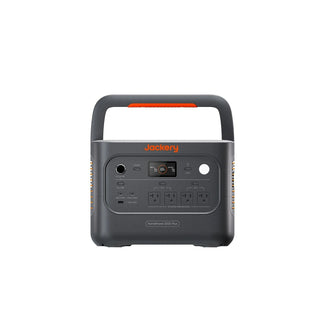
For John Bachman, a mechanical engineering professor in Los Angeles, energy has always been a question of how systems hold up under strain. Few things test a system like his life, split between the classroom, a camper van, and the open road with his partner and two dogs. The dogs needed climate control whenever the couple stepped away, and during his sabbatical in Baja, where the power goes out weekly, the smaller batteries that came with the van could no longer keep up. After weighing several brands, John chose the Jackery HomePower 3000 paired with solar panels. Now the refrigerator stays cold, the air conditioning keeps the dogs comfortable, and his laptop stays charged. The same setup goes with him into the field, where it powers welders for his student build teams. Explore more such Jackery Stories.
Which Jackery Solar Generators Can Help Run an RV Air Conditioner?
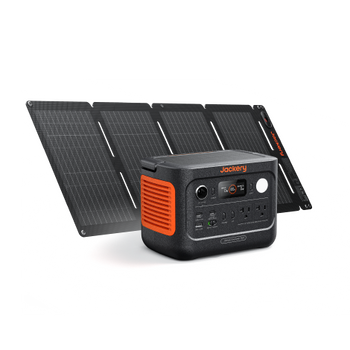
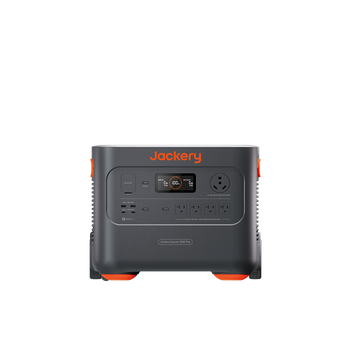
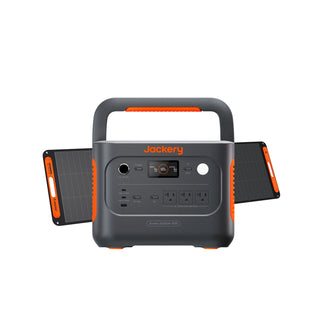
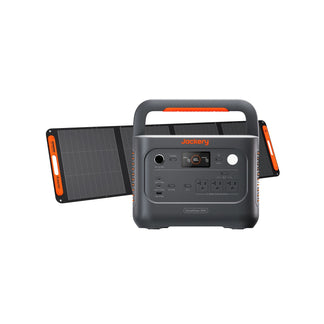
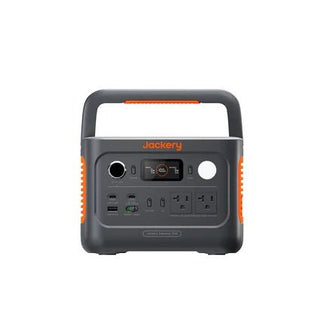
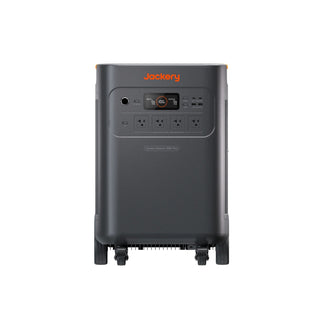
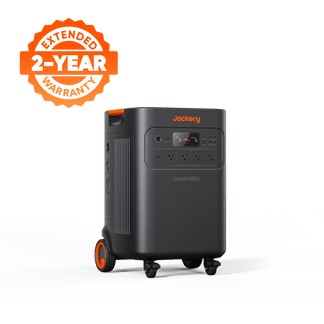
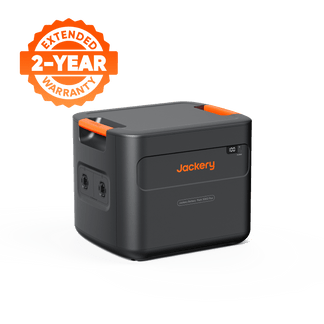
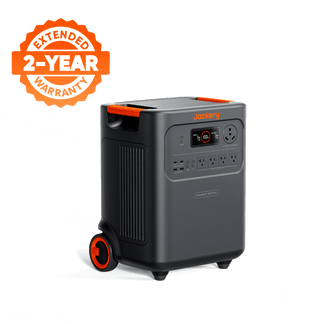
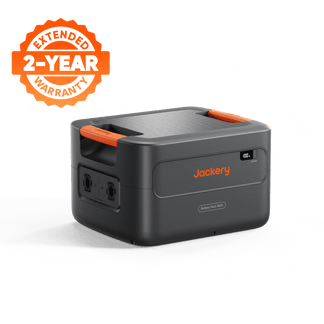
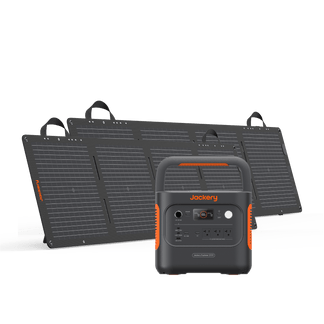
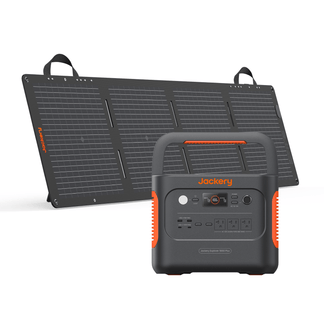
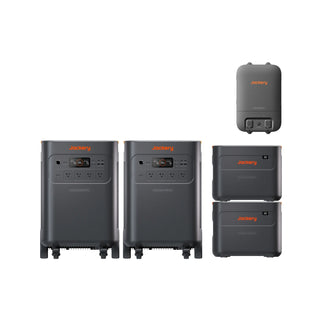
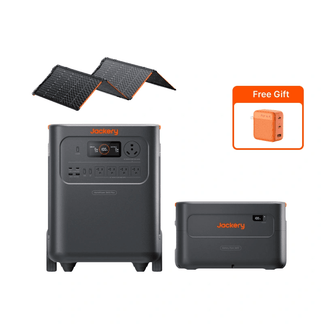
Sizing a power station for an RV air conditioner comes down to two separate questions: can it start the AC's compressor surge, and does it hold enough capacity for how long you actually want to run it? The three Jackery Solar Generators below span a range of continuous output and battery capacity, so the right generator for RV and camper depends on your RV AC's specific running and startup wattage, how many hours a day you expect to run it, and whether you are pairing the system with solar for extended off-grid trips.
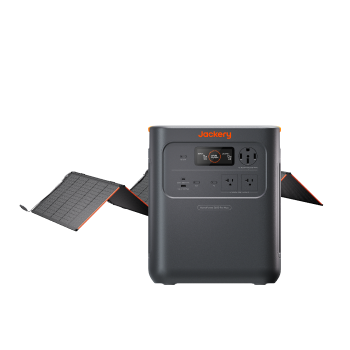
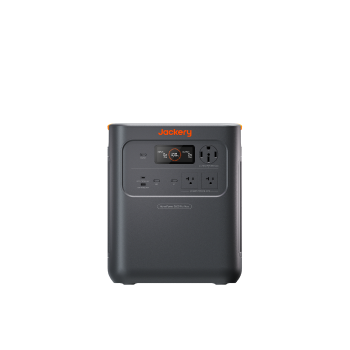
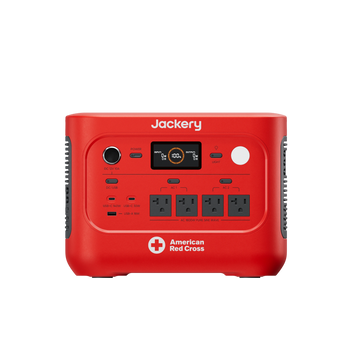
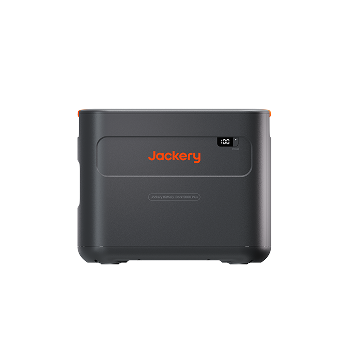
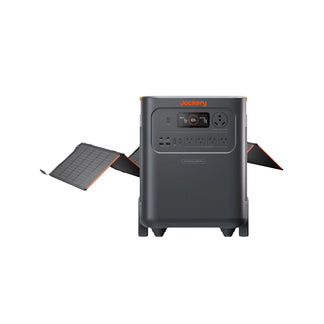
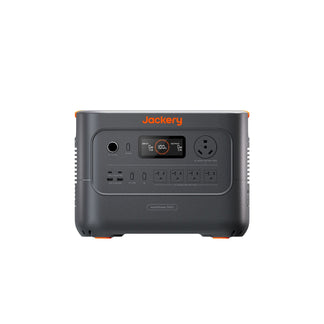
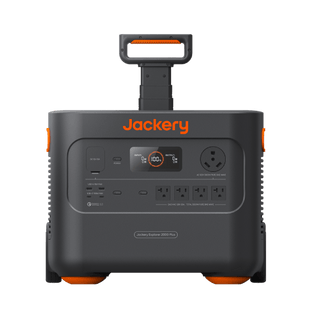
Jackery Solar Generator 2000 Plus
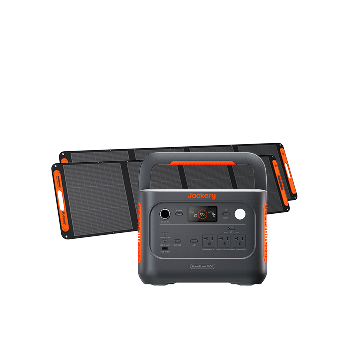
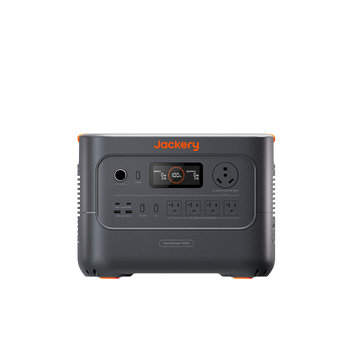
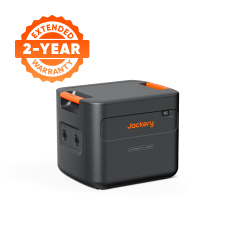
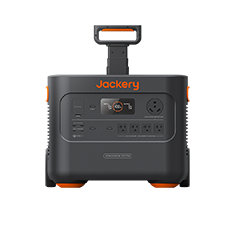
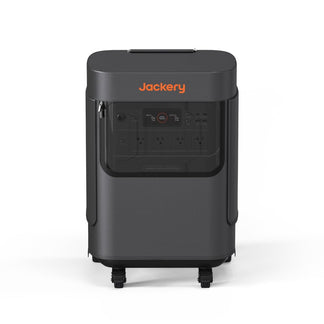
The Jackery Solar Generator 2000 Plus has enough surge headroom to start most 13,500 BTU RV AC units, whose startup draw typically falls within its rated surge capacity. Its expandable design (2kWh up to 24kWh) also means a shorter weekend trip does not require the same investment as a full-time setup, while still leaving room to grow if your cooling needs increase later. It has a foldable handle, pull rod, and double wheels so you can easily move the power station in and out of the RV and also to RV campgrounds.
Appliances Running Time
- Rooftop AC (1500W) = 1.1H
- Low-Profile Rooftop AC (1300W) = 1.3H
- Ductless Mini-Split RV AC (700W) = 2.3H
- Portable RV AC (800W) = 2.0H
- Basement RV AC (2000W) = 48 min
Who Should Buy This
The Jackery Solar Generator 2000 Plus is an ideal RV generator for weekend and short-trip RVers running a single smaller (13,500 BTU) AC unit for a few hours at a time, who want enough surge capacity to start the compressor reliably without paying for capacity they won't use.

Customer Review
It’s easy to use, recharges fast, and has been very reliable so far. I’m really happy with the performance and would definitely recommend it.
— Steve R.
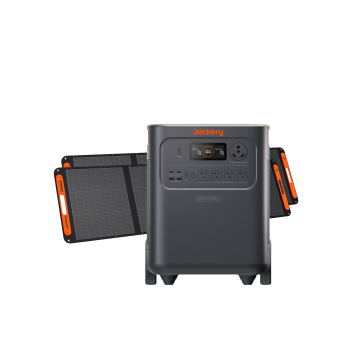
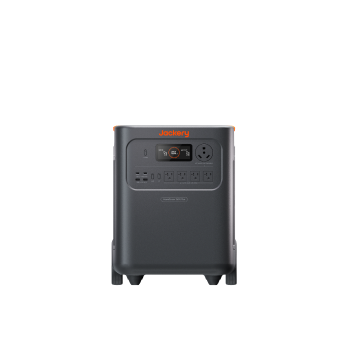
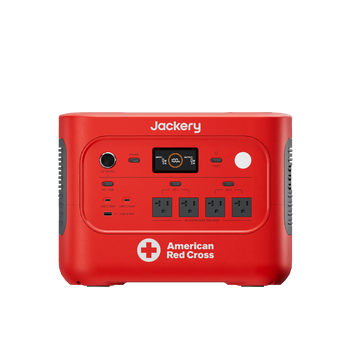
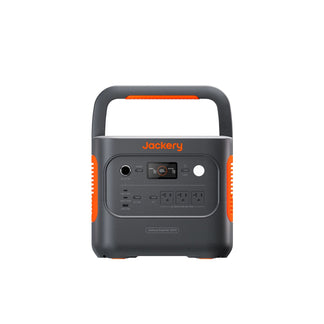
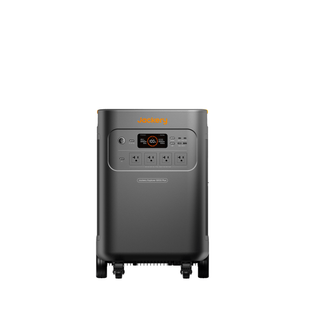
Jackery Solar Generator HomePower 3600 Plus
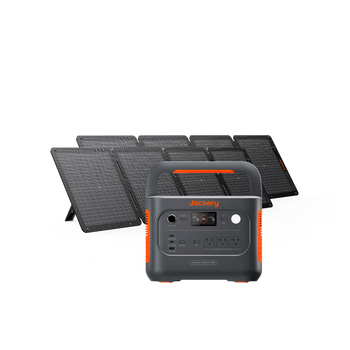
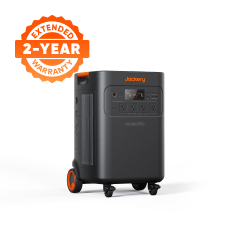
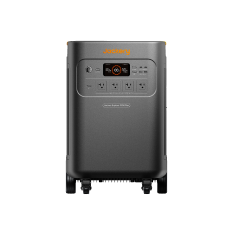
The Jackery Solar Generator HomePower 3600 Plus is built for RVers running a 15,000 BTU unit for camp air conditioning or wanting meaningfully longer runtime between charges. Its dual-voltage support (120V, with 240V available in parallel) and expandability up to roughly 21kWh per unit or 43kWh with two units in parallel give larger rigs room to run the AC alongside a few other essential loads without constantly monitoring the battery level. It features a built-in 30-amp RV outlet (specifically a NEMA TT-30 120V port) that provides enough output to power standard RV appliances, including lights, refrigerators, microwaves, and even an RV air conditioner.
Appliances Running Time
- Rooftop AC (1500W) = 2.0H
- Low-Profile Rooftop AC (1300W) = 2.3H
- Ductless Mini-Split RV AC (700W) = 4.2H
- Portable RV AC (800W) = 3.7H
- Basement RV AC (2000W) = 1.5H
Who Should Buy This
The Jackery Solar Generator HomePower 3600 Plus is ideal for RVers running a larger 15,000 BTU AC or wanting to run a 13,500 BTU unit for noticeably longer stretches, especially those who camp off-grid often enough to value multiple charging options.

Customer Review
Finally I was able to put into service my 3600 Plus. It was charged and ready for the unexpected 2 hour outage one recent morning. I hooked up my TV, WiFi, 2 lamps, fan, and most important was the morning cup coffee! I was very happy!
— Billy V.
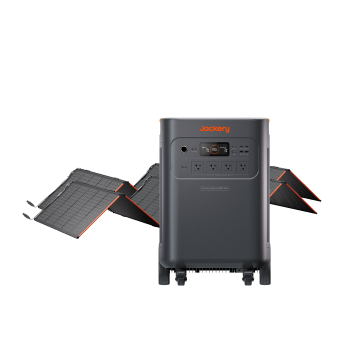
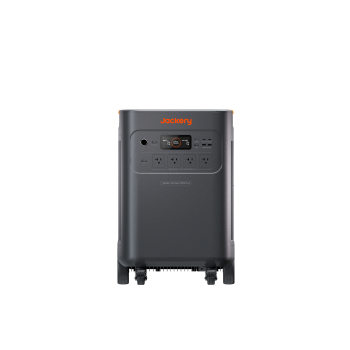
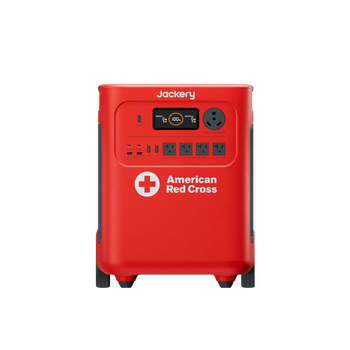
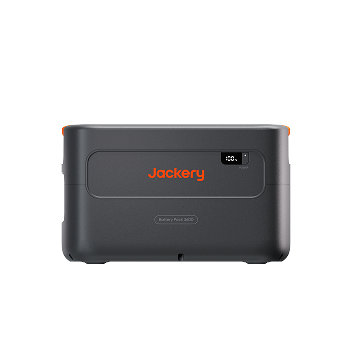
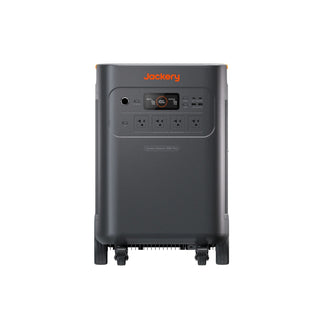
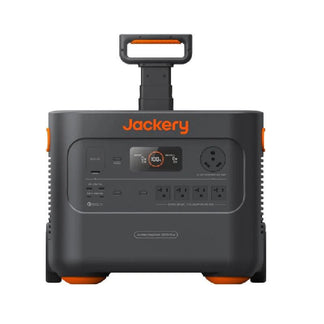
Jackery Solar Generator 5000 Plus
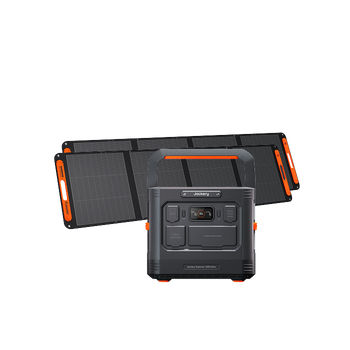
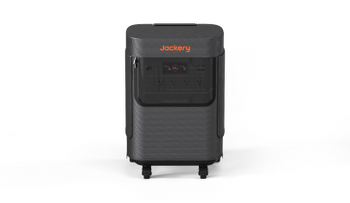
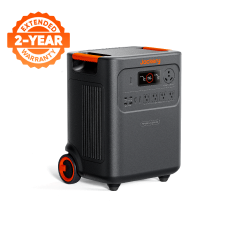
The Jackery Solar Generator 5000 Plus is sized for those who prefer full-time RV living, have larger rigs with dual AC units, or anyone who wants to run the AC for the better part of a hot afternoon without recharging mid-cycle. Its higher continuous output also gives more power to run the AC alongside other significant loads, such as a microwave, a second AC zone, or charging equipment, without needing to sequence appliances carefully to avoid tripping the system. It can also be transported with the help of a pull rod and double wheels.
Appliances Running Time
- Rooftop AC (1500W) = 2.8H
- Low-Profile Rooftop AC (1300W) = 3.2H
- Ductless Mini-Split RV AC (700W) = 5.7H
- Portable RV AC (800W) = 5.0H
- Basement RV AC (2000W) = 2.1H
Who Should Buy This
The Jackery Solar Generator 5000 Plus is ideal for full-time RVers, larger rigs running a 15,000 BTU unit or dual ACs, or anyone prioritizing long off-grid stretches in hot climates where the AC runs for extended periods.

Customer Review
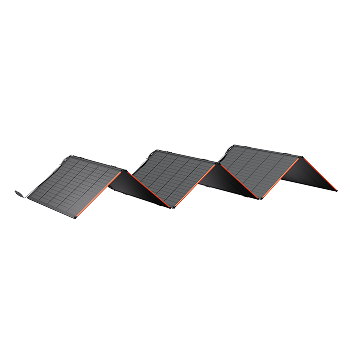
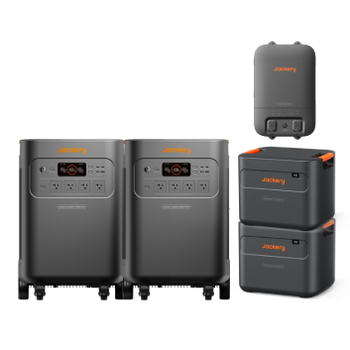
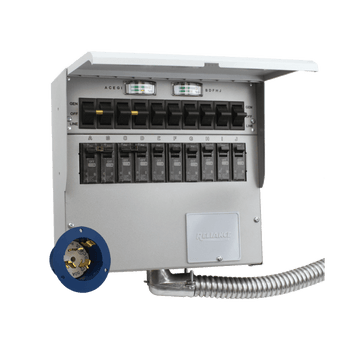
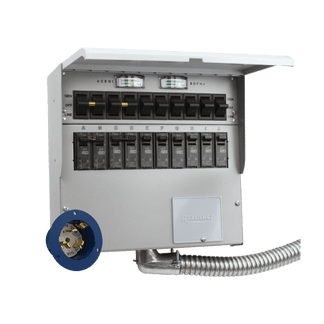
We purchased the Jackery Explorer 5000 Plus + SolarSaga 500 X x 2 + Smart Transfer Switch and are super pleased with the quality and the ease of the back up power. With the transfer switch you hardly notice when it switches from grid to back up power. It's amazing!
— C J.
What Factors Affect the Cost to Run an RV Air Conditioner?
The cost to run an RV air conditioner depends primarily on your power source, electricity rates, unit size, and weather conditions.
Does RV AC Size Affect Operating Cost?
BTU rating correlates with energy consumption but doesn't perfectly determine it. Efficiency varies meaningfully within the same BTU class depending on brand, compressor design, and unit age.
Does Outside Temperature Affect RV AC Cost?
Yes, hotter conditions increase cooling demand, which generally means the compressor runs a larger share of each hour (a higher duty cycle), increasing average power draw and therefore cost.
Does RV Insulation Affect AC Operating Cost?
Better insulation reduces how quickly heat enters the RV, which reduces cooling demand and compressor cycling, generally lowering operating cost for the same target temperature.
Does an Inverter RV AC Cost Less to Run?
Inverter-equipped ACs can run their compressor at variable speeds rather than simply cycling fully on or off, which can offer real efficiency benefits in some conditions. That said, there is no fixed savings percentage that applies universally. Actual efficiency gains depend on the specific unit and how it is used.
Does the RV's Size Affect AC Operating Cost?
Larger interior volume generally requires more cooling capacity, but size alone doesn't determine consumption. Other factors affecting the cost include insulation quality, window area, and shading.
Does the Number of Appliances Running Matter?
Yes, in two ways: total simultaneous electrical load affects how you need to size a generator or battery system, and on metered shore power, every additional appliance running alongside the AC adds to your total electricity cost for that period.
How Can You Reduce the Cost of Running an RV Air Conditioner?
You can reduce the cost of running an off-grid RV air conditioner by lowering the heat load, optimizing airflow, and managing power usage efficiently.
- Improve insulation where practical (window coverings, door seals).
- Use window shades or reflective covers to block direct sun.
- Park in shade when possible.
- Keep doors and windows closed while the AC is running.
- Maintain and clean AC filters regularly, since restricted airflow makes the compressor work harder.
- Avoid running unnecessary high-power appliances at the same time as the AC.
- Use reasonable thermostat settings rather than an extreme low target temperature.
- Consider an inverter or otherwise efficient AC unit when it's time to replace one.
- Combine solar with battery storage where it fits your camping style, to lower ongoing marginal electricity cost.
FAQs
How much does it cost to run an RV AC per hour?
Using the formula (average power draw in kW × electricity price per kWh), a typical 1,200W AC on a $0.18/kWh rate costs about $0.22 per hour, though your specific AC's wattage and local rate will change that figure.
How much electricity does an RV air conditioner use?
A typical 13,500–15,000 BTU RV AC uses somewhere in the range of 3.6 to 18 kWh per day depending on hours of operation and duty cycle, translating to roughly $0.65 to $3.25 per day at a $0.18/kWh rate.
How much power does a 13500 BTU RV air conditioner typically consume?
Typically around 1,300–1,600 watts running, with a startup surge in the roughly 2,700–3,500 watt range. These figures vary by brand and model, so check your specific unit's spec sheet.
How much does it cost to run an RV AC all day?
A rough illustrative range is $2–$4 for continuous operation with typical compressor cycling, though a true "rated watts times 24 hours" calculation would significantly overestimate real-world cost, since the compressor doesn't run at full power every minute.
Can a portable power station run an RV air conditioner?
Yes, a portable power station can run an RV air conditioner as long as both its continuous output and surge output exceed the AC's requirements, and it has enough battery capacity for the runtime you want.
Is it cheaper to run an RV AC with solar?
Solar lowers your ongoing marginal electricity cost once the system is installed, but it is not free. It requires a real upfront investment with a payback period, typically becoming cost-competitive after enough trips or enough time off-grid.
Conclusion
The cost of running an RV air conditioner is a function of wattage, hours, and power source, and understanding that math is what lets you actually compare shore power, a generator, and a battery system fairly. This is where a Jackery Solar Generator changes the equation: once you know your AC's running and surge wattage, matching it to the right capacity means quiet, plug-and-play cooling with a predictable, largely fixed cost after the initial purchase.
Whether you are taking occasional weekend trips with the Jackery Solar Generator 2000 Plus, running a larger 15,000 BTU unit with the Jackery Solar Generator HomePower 3600 Plus, or living on the road full-time with the Jackery Solar Generator 5000 Plus, matching your AC's real electrical needs to the right system turns RV cooling from a recurring cost question into a one-time sizing decision.


