



![[Add - on] Jackery Manual Transfer Switch for Explorer 5000 Plus - Jackery](http://www.jackery.com/cdn/shop/files/add-on-jackery-manual-transfer-switch-for-explorer-5000-plus-9017324.png?v=1754016782&width=350)




![[Add - on] Jackery Manual Transfer Switch for Explorer 5000 Plus - Jackery](http://www.jackery.com/cdn/shop/files/add-on-jackery-manual-transfer-switch-for-explorer-5000-plus-9017324.png?v=1754016782&width=324)


Grid instability and severe weather are driving homeowners toward energy independence. While a portable battery is useful, a truly integrated backup system requires a panel with generator input for off grid power. This setup allows you to power hardwired appliances—like well pumps, furnaces, and ceiling lights—directly from a high-capacity solar generator.
Understanding the Panel with Generator Input for Off Grid Power
Your main breaker panel distributes electricity throughout the home. Introducing a solar generator turns a single-source system into a multi-source system. This transition requires strict adherence to electrical codes to prevent overloading and fire hazards.
The 120% Rule (NEC 705.12)
The 120% Rule limits the total amperage fed into a panel to prevent fire hazards. The National Electrical Code (NEC) states that the sum of the main breaker amperage and the generator backfeed breaker amperage cannot exceed 120% of the busbar's rating.
Example Calculation:
- Busbar Rating: 200 Amps
- Main Breaker: 200 Amps
- Calculation: (200A x 1.2) = 240 Amps total allowable capacity.
- Remaining Capacity: 240A - 200A (Main) = 40 Amps.
In this scenario, the largest breaker you can install for generator input is 40 Amps. Exceeding this limit requires a main panel upgrade or a line-side connection performed by a licensed electrician.
Busbar Safety
Busbar safety relies on preventing hotspots caused by excessive current. The physics behind the 120% rule ensures that feeding power from opposite ends of a panel (grid at the top, generator at the bottom) does not overheat the middle of the busbar. Mismatched amperage or incorrect breaker placement creates dangerous thermal stress, leading to potential fire hazards behind your walls.
Essential Hardware for Off-Grid Integration
Connecting a solar generator to a panel requires specific components designed to handle high loads and ensure isolation.
High-Capacity Solar Generators
Hardwired panel integration demands a system capable of sustaining high-wattage household loads. A robust setup requires a unit with at least 3000W continuous output to handle startup surges.
- Output: 3000W+ continuous output is necessary for motors and pumps.
- Capacity: 3kWh+ is the baseline for practical home backup.
- Battery Chemistry: LiFePO4 (Lithium Iron Phosphate) batteries offer thermal stability and 4,000+ life cycles, ensuring the system lasts for over a decade of daily use.
Homeowners interested in learning how to DIY a solar generator often find that integrated units provide superior safety features for panel connections compared to custom builds.
Transfer Switches (Manual)
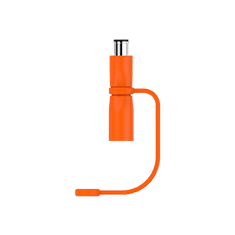
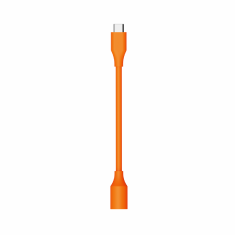
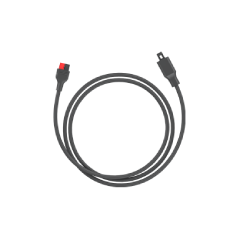
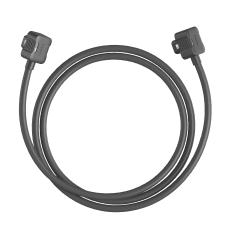
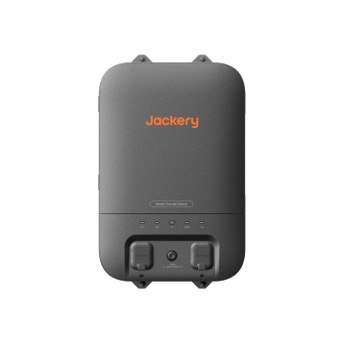
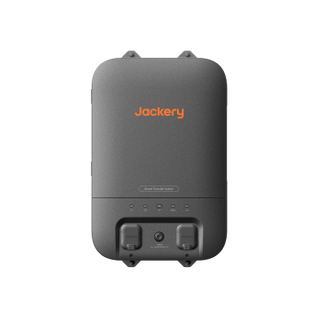
A manual transfer switch isolates specific circuits for safe backup power. This sub-panel is installed next to the main breaker box, with critical circuits (fridge, furnace, kitchen lights) wired directly to it.
- Function: A physical switch toggles circuits between Line (Grid) and Gen (Generator).
- Benefit: The switch physically isolates the neutral and hot wires, guaranteeing zero chance of backfeeding the grid.
Interlock Kits
An interlock kit mechanically prevents the main and generator breakers from being on simultaneously. This sliding metal plate mechanism is installed directly on the main panel cover.
- Operation: To switch on the generator breaker, the user must physically switch off the main grid breaker first.
- Benefit: An interlock kit is a cost-effective, code-compliant way to energize the entire panel (up to the generator's limit) rather than just selected circuits.
Power Inlet Box
A power inlet box connects the exterior generator cord to interior wiring. You cannot run a generator cord through a window; a weather-rated box mounted on the home's exterior is required.
- Standard: NEMA L14-30 (30 Amp) or SS2-50 (50 Amp) are the industry standards.
- Function: This box connects the generator's output cord to the wiring running inside the wall to the transfer switch or interlock breaker.
Safe Connection Methods and Backfeed Prevention
Isolation is mandatory to prevent electrocution risks. Only one power source (the utility grid OR the generator) should feed the panel at any given time.
Manual Transfer Switch
The manual transfer switch is the preferred method for targeted backup. A 6-circuit or 10-circuit transfer switch prevents users from accidentally powering the whole house and overloading the generator. This method is ideal for keeping essential lights on and food cold without managing complex loads.
Interlock Kit
The interlock kit offers flexibility by energizing the panel's busbars. While this makes every outlet live, it requires manual load management. Users must flip off breakers for high-draw appliances (like dryers) before switching to generator power. This discipline allows for running any circuit in the house, provided they are not all run simultaneously.
Neutral-Ground Bonding
Neutral-ground bonding must occur at only one point in the system to prevent shock hazards.
- Floating Neutral: Most portable generators have a bonded neutral, but home panels also have a neutral-ground bond. Connecting a bonded generator to a bonded panel creates parallel return paths, violating NEC codes.
- Requirement: Generators powering a house panel usually require a floating neutral configuration.
- Action: Consult a professional to determine if the specific setup requires a switched neutral transfer switch or a modification to the generator's bonding plug.
Understanding how to use a generator during a power outage safely includes knowing these specific bonding protocols.
Sizing Your System for Off-Grid Success
A panel with generator input for off grid power requires precise sizing to prevent immediate tripping. Proper sizing is a mathematical calculation of running and surge watts.
Calculate Loads
System sizing requires summing the running watts and surge watts of every device intended for power.
- Running Watts: The continuous power a device needs (e.g., Fridge: 700W).
- Surge Watts: The momentary spike required to start a motor (e.g., Fridge Startup: 2200W).
- Total: The generator's surge rating must exceed the highest startup load, and its continuous rating must exceed the sum of all running loads.
Calculations for how to set up a small solar generator differ significantly from whole-home systems, which require stricter adherence to peak load data.
Voltage Requirements
Standard US homes use split-phase 240V power.
- 120V Generators: Can only power one leg of the panel unless a special bridging adapter is used (prohibiting 240V appliances).
- 240V Generators: Required for running well pumps, electric dryers, or water heaters. These units energize both busbars in the panel naturally.
Battery Capacity
Battery capacity determines autonomy during an outage. If the essential load is 500W per hour, a 2kWh battery lasts only 4 hours. Lithium systems allow for deeper discharge (up to 95%) compared to lead-acid batteries (50%), providing more usable power for the same rated capacity.
Example Solution
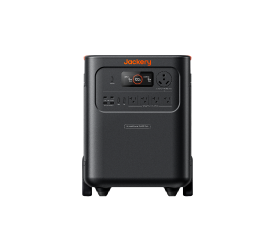
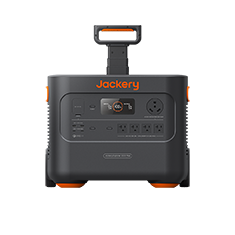
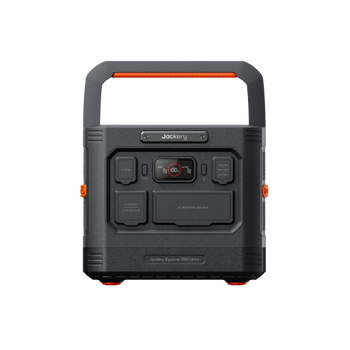
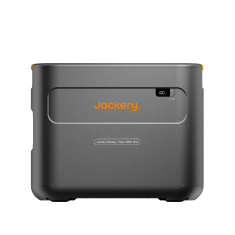
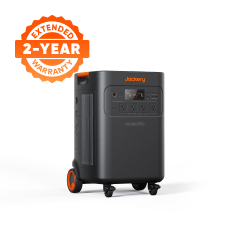
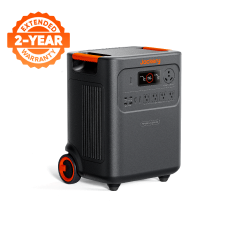
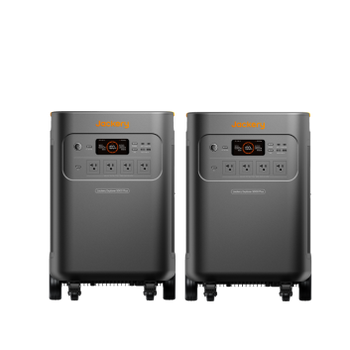
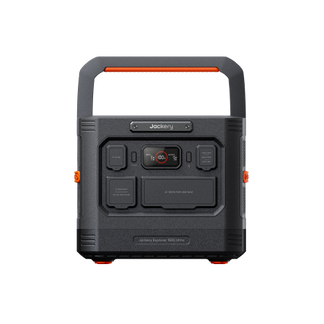
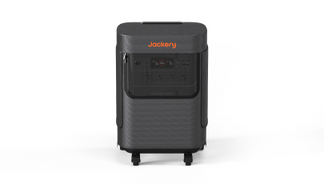
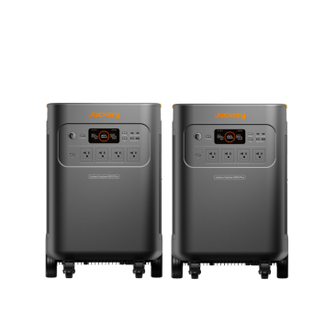
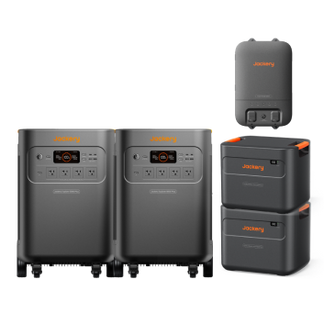
Jackery Solar Generator 5000 Plus
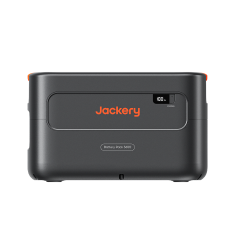
- Capacity: Expandable up to 60kWh with add-on battery packs.
- Output: 7200W rated power with a massive 14400W surge capacity.
- Voltage: Native 120V/240V dual voltage support.
- Use Case: The Jackery Solar Generator 5000 Plus plugs directly into a standard transfer switch or inlet box to power 240V well pumps and heavy-duty appliances without adapters.
Step-by-Step Connection Process (Planning Phase)
Do not attempt to wire a panel yourself unless you are a qualified electrician. This workflow outlines the planning process.
Step 1: Assessment
Check the amperage rating of the main breaker and the busbar rating. Perform the NEC 705.12 calculation to determine the maximum size backfeed breaker the panel can handle.
Step 2: Hardware Selection
Choose an inlet box that matches the generator's output.
- 30A Output (approx 7200W): Buy a NEMA L14-30 inlet.
- 50A Output (approx 12000W): Buy a SS2-50 inlet.
Step 3: Installation (Professional Recommended)
The electrician mounts the inlet box outside and runs wire (typically 10-gauge for 30A) to the panel. They install the dedicated backfeed breaker and the interlock kit or mount the transfer switch.
Reviewing DIY solar panel installation guides can help homeowners understand the DC side of the equation while the electrician handles the AC integration.
Step 4: Bonding Check
Verify the neutral/ground bonding before the electrician leaves. Confirm if the setup is a separately derived system and if the generator bonding is compatible with the transfer device.
Step 5: Testing
Perform a safety check by ensuring the main breaker is physically locked out by the interlock mechanism before the generator breaker can flip. Connect the generator, start it, and flip the transfer switch. Turn on circuits one by one to monitor the load.
Optimizing Energy Capture and Maintenance
Once the panel with generator input for off grid power is installed, regular maintenance ensures reliability.
Solar Input
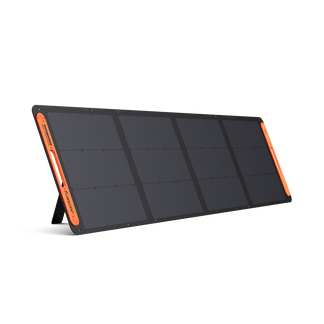
Series wiring increases voltage and efficiency for solar charging. If the generator supports high-voltage solar input, like the Jackery Solar Generator 5000 Plus, wire panels in series. This keeps the battery topped up even in low-light conditions.
Load Management
Load rotation extends runtime significantly.
- Run the well pump to fill pressure tanks, then turn it off.
- Run the microwave to cook dinner, then turn it off.
- Run the furnace blower to heat the house. Managing inverter capacity in this sequence prevents overloading.
Battery Health
LiFePO4 batteries perform best in temperate environments. Keep units like the Jackery Solar Generator HomePower 3600 Plus in a garage or basement where temperatures remain above freezing to maximize lifespan and charging efficiency.
Regular Testing
Test the full system monthly. Connect the generator to the inlet box and power a few circuits to ensure familiarity with the switching process and check for corrosion on exterior inlet contacts.
Real-World Use Cases
Whole-Home Backup (High Demand)
Solution: Jackery Solar Generator 5000 Plus.
Why: The Jackery Solar Generator 5000 Plus features native 240V output and a 7200W rating. It handles well pumps and HVAC systems via a transfer switch without requiring complex adapters, effectively mirroring grid power.

Cabin/Essential Circuits (Medium Demand)
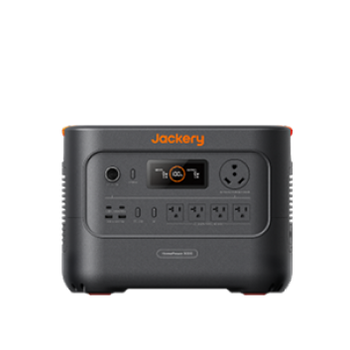
Solution: Jackery Solar Generator HomePower 3600 Plus.
Why: Jackery Solar Generator HomePower 3600 Plus provides 3600W output, easily covering lights, Starlink internet, and refrigerators. Its expandable capacity supports additional battery packs for longer autonomy during multi-day storms.
Targeted Circuit Isolation
Solution: Manual Transfer Switch.
Why: Powering only the furnace blower and fridge during winter storms is the most efficient use of battery power. This strategy ensures heat and food preservation take precedence over entertainment.
When to Call a Professional
While the generator is plug-and-play, panel work requires a licensed electrician.
- Service Entry Work: Work involving the electric meter or main service cables requires a professional.
- Complex Bonding: Incorrect bonding creates shock hazards on metal appliance casings.
- Permitting: Professionals ensure installations pass local building codes and safety inspections, which is vital for home insurance validity.
Common Beginner Questions
Can I plug a generator into a dryer outlet?
NO. Plugging a generator into a dryer outlet creates a suicide cord connection. This male-to-male plug configuration is illegal and deadly, as it electrifies the exposed prongs and backfeeds the grid.
Do I need a permit?
Yes. Any modification to the main electrical panel—including installing a transfer switch, interlock kit, or new breaker—typically requires a municipal permit and an electrical inspection.
What is the difference between 120V and 240V backup?
120V powers standard wall outlets like lights and fridges. 240V is required for heavy appliances like well pumps and dryers. A 240V connection energizes both legs of the breaker panel, making all circuits available.
How long will my battery last?
Battery duration depends on the load. A 5kWh system running a 500W refrigerator will last approximately 10 hours continuously. Since fridges cycle on and off, the system may last 24+ hours.