










![[Add-on] Jackery SolarSaga 500 X - Jackery](http://www.jackery.com/cdn/shop/files/add-on-jackery-solarsaga-500-x-1493607.webp?v=1786503068&width=324)
![[Add-on] Jackery Battery Pack 5000 Plus - Jackery](http://www.jackery.com/cdn/shop/files/add-on-jackery-battery-pack-5000-plus-6713401.webp?v=1786503068&width=324)




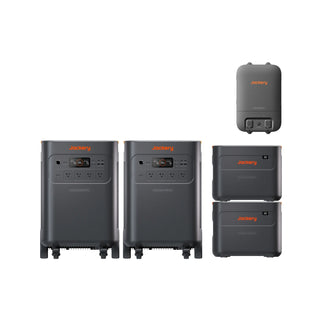


Start by writing down the exact essential loads and outage window your setup must support. A practical home backup test validates one named combination of approved portable appliance connections—not automatic whole-home backup. Test in this order: define the target, inspect the equipment, recreate the outage load sequence, measure runtime, test recharging, then fix and retest any failure.
Define the exact loads and outage window your home backup test must prove
Your first test target is a written load schedule: which devices will run, when they will run, and for how long. The plan is ready only if that specific combination starts normally, operates on your intended schedule, and can realistically recharge before the next expected use.
List every essential device you plan to connect, such as a refrigerator, lights, phones, internet equipment, or a laptop. Mark each one as continuous or intermittent. Record its operating demand and any potential startup demand from the appliance label, manual, or power station display. Do not assume that a station that runs each device separately can support every device at the same time.

Define the outage window around your household's actual schedule. For example, you might need refrigeration continuously, communications equipment during working hours, and lights only after dark. No universal number of test hours proves every plan. Your measurable target is the schedule you intend to cover.
Use this short planning checklist before connecting the station:
- Name the exact essential loads and their approved portable connections.
- Separate continuous loads from devices used intermittently.
- Write down the outage window and minimum operating schedule the test must cover.
- Record operating demand and potential startup demand from labels, manuals, or observed readings.
- State clearly that the result applies only to these loads and connections—not to untested appliances or household circuits.
If the load list is still unclear, use this backup size calculation guide to organize the demand you need to test. It is a planning aid, not proof of runtime for a particular station.
Inspect the equipment and record a known starting state
A meaningful home backup test starts with equipment that is intact, charged, configured correctly, and connected only in an approved way. Stop before applying a load if you find damage, moisture, blocked airflow, loose or damaged cables, unusual heat, or abnormal behavior.
Inspect the power station, cables, plugs, outlets, charging equipment, and operating area. Record the starting battery level, output mode, charging state, location, and devices included in the test. If the station has a display or app, confirm that you can read the load and battery information. Record the date and conditions so you can repeat the same check after storage, a move, a seasonal reset, or an equipment change.

For a battery-only station, this is an equipment and operating-area check, not a carbon monoxide test. If your broader plan also includes a fuel-burning or engine-driven generator, keep it outdoors and at least 20 feet from windows, doors, and attached garages, following Ready.gov's generator location guidance. Never operate a fuel-burning generator indoors or in a garage because carbon monoxide can accumulate, as the CPSC generator safety guidance warns.
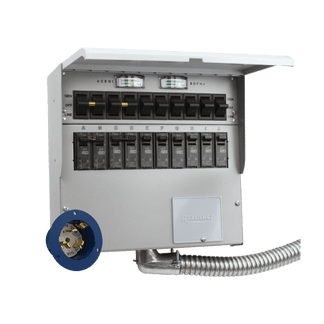
Do not use a portable-appliance dry run to test household wiring. If the plan involves a transfer switch or connection to a home's electrical panel, follow the equipment instructions and use qualified installation rather than improvising a connection. A passing portable test does not authorize powering household circuits.
Before proceeding, record:
- Starting battery level and output mode
- Included loads and their connection points
- Cable and plug condition
- Charging method and current charging state
- Displayed demand and battery information, when available
- Any condition that requires stopping the test
Run the real outage load sequence
Recreate the order your household would use during an outage. Connect the highest-priority load first, confirm normal operation, and then add the remaining loads one at a time. The pass condition is normal startup and operation of the intended combination without an overload warning, unexpected shutdown, abnormal heat, or other equipment alarm.
- Start the station on battery power with the highest-priority load connected.
- Confirm that the device starts and operates normally before adding another load.
- Add each remaining device in the order you expect to use it during an outage.
- Run the intended combination together and observe the displayed demand, startup response, alarms, heat, and shutdown behavior.
- Record elapsed time, demand readings, battery checkpoints, and any failed load.
- If the combination fails, remove the most recently added load and test the suspected device separately to isolate the symptom.
Use the applicable product manual for the station's continuous and startup limits. Your observations matter, too: a load can appear acceptable by itself but change the result when another device starts. This is a load-specific solar generator load test, not a fixed-duration certification. For the household's priority order during a real event, you can also follow the outage-use sequence.
Verify runtime and recharge before calling the plan ready
The plan passes the endurance check only when the observed load schedule covers the outage window you defined in the first section. A solar plan also needs a separate recharge result that supports the next expected operating period. Do not infer runtime from watt-hours alone.
Run the intended load combination and record the starting charge, displayed demand, elapsed time, remaining charge, and conditions at each checkpoint. Compare those observations with your written schedule. If the station stops before the schedule is complete, the battery-only portion fails even if every device started normally.
Then test the charging method you actually expect to use. For a solar setup, record the panel arrangement, shade or obstruction, weather, time of day, season, and recharge duration. Available solar energy varies with light conditions and time of year, so DOE's photovoltaic guidance supports testing under realistic conditions instead of assuming a universal charge time. Storage can provide electricity when sunlight is unavailable, but runtime and solar replenishment remain separate readiness checks.
| Observed result | Decision | Next action |
|---|---|---|
| Named loads start and run for the defined schedule | Runtime passes | Continue to the recharge check |
| Loads run, but the schedule ends before the outage window | Runtime fails | Reduce, reschedule, or revise the supported load plan |
| Runtime passes, but the chosen charging method does not restore enough energy for the next period | Recharge fails | Change the charging opportunity or outage assumption and retest |
| Runtime and recharge both match the intended plan | Endurance passes | Complete the reset and schedule the next test |
The result is a backup power readiness check for the tested loads and conditions. It is not a guarantee for a different appliance combination, weather pattern, season, or connection method.
Fix the failed variable, retest it, and reset the backup plan
When the test fails, change the variable that caused the failure instead of automatically buying more capacity. A plan is ready only after the starting state, combined-load operation, runtime, and recharge checks all match the schedule you intend to support.
| Symptom | First adjustment | Retest scope |
|---|---|---|
| Alarm or shutdown when loads are combined | Remove or reschedule a lower-priority load; review startup demand | Test the suspected load, then repeat the combined sequence |
| Loads operate but runtime is too short | Revise the load schedule or the outage assumption | Repeat the runtime test with the changed schedule |
| Runtime is acceptable but recharge is too slow | Change the realistic charging opportunity or expected operating period | Repeat the recharge check under representative conditions |
| A device will not start | Inspect the specific cable, connection, setting, or device demand | Test that connection separately, then rebuild the load combination |
| Household-wiring integration is the problem | Stop the portable test and use approved instructions and qualified installation | Do not improvise; test only the approved setup once complete |
Rerun the smallest useful check after a narrow correction. Repeat the full sequence when the change affects combined demand, runtime, or recharge. After a pass, restore the intended storage charge according to the equipment instructions, return the cables and load instructions to the station, and make the next retest part of your outage preparedness routine. Schedule it after a move, equipment change, extended storage period, or seasonal reset.
Frequently Asked Questions
Can I run a home backup test before the power goes out?
Yes. A pre-outage dry run is appropriate when it uses the intended, approved portable appliance connections and does not attempt to energize household wiring through an improvised connection. If your goal is panel or transfer-switch operation, pause the appliance test and use the approved installation and equipment instructions for that system.
How long should a solar generator home backup test run?
Run the test long enough to represent the outage window and load schedule you actually intend to cover, rather than choosing a universal number of hours. Record elapsed time and remaining charge, then extend or revise the schedule if the result does not represent the expected use.
What should I do if my solar generator powers the loads but cannot recharge fast enough?
Treat that as a failed readiness result, even if the battery-runtime portion passed. First change one assumption, such as the load schedule, charging opportunity, or expected operating period, and then repeat the recharge check under conditions similar to the outage scenario.
Should I test backup appliances one at a time or all together?
Use both sequences for different purposes. Add and verify each appliance one at a time to isolate startup problems, then run the intended combination together to expose combined demand. If the combination fails, remove the suspected load and test it separately before rebuilding the plan.


