










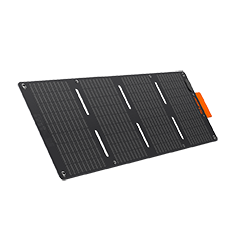
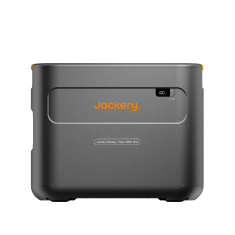
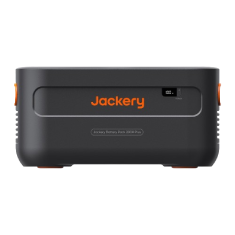
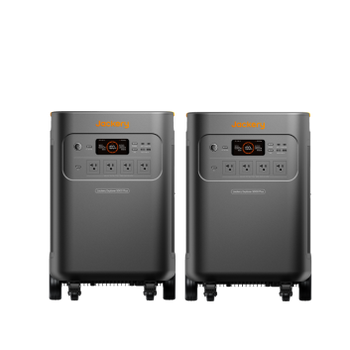


![[Add-on] Jackery SolarSaga 500 X - Jackery](http://www.jackery.com/cdn/shop/files/add-on-jackery-solarsaga-500-x-1493607.webp?v=1786503068&width=324)
![[Add-on] Jackery Battery Pack 5000 Plus - Jackery](http://www.jackery.com/cdn/shop/files/add-on-jackery-battery-pack-5000-plus-6713401.webp?v=1786503068&width=324)









![[Add - on] SolarSaga 200W - Jackery](http://www.jackery.com/cdn/shop/files/add-on-solarsaga-200w-4834329.png?v=1754016915&width=324)



![How Many Watts Does a Refrigerator Use? [and Mini-Fridge, Freezer] - Jackery](http://www.jackery.com/cdn/shop/articles/how-many-watts-does-a-refrigerator-use-and-mini-fridge-freezer-8759355.jpg?v=1784195749&width=800)
Brief Answer: A standard refrigerator uses 300 to 800 watts, while mini-fridges draw 50 to 100 watts and freezers typically run on 150 to 400 watts. Knowing these numbers not only helps you estimate electricity costs but also reveals how much backup power you need to keep food safe during an outage.
No kitchen is complete without a refrigerator, and this appliance runs 24/7. Knowing how many watts a refrigerator uses is important for two reasons: it helps you calculate your monthly electricity costs, and it tells you exactly what size backup power station you need to keep food from spoiling during a blackout.
How many watts a refrigerator uses is not a fixed number. Instead, it depends on the type of refrigerator, its size, age, energy efficiency, and operating conditions. Jackery Solar Generators are essential home backup solutions that can run refrigerators for hours or even days. These home battery backups not only help you lower your reliance on the electricity grid but also ensure your home stays functional during power outages.
Key Takeaways
- A standard household refrigerator uses 300 to 800 watts while running. Mini-fridges use 50 to 100 watts, and freezers run on 150 to 400 watts.
- Because the compressor cycles on and off, a refrigerator only runs at full wattage approximately one-third of the time, making actual daily energy consumption significantly lower than the nameplate wattage suggests.
- Every refrigerator with an electric motor requires a startup surge, typically 2 to 3 times the running wattage, that lasts only a few seconds but must be met by your backup power source.
- A typical Energy Star refrigerator consumes approximately 1 to 2 kWh per day, costing roughly $0.17 to $0.34 at the US average electricity rate.
- To keep a refrigerator running during an outage, your backup power station must meet both the surge wattage (for startup) and the continuous wattage (for sustained operation), choosing based on running watts alone is a common and costly mistake.
How Many Watts Does a Refrigerator Use?
A standard refrigerator uses 300 to 800 watts. Mini fridges usually consume 50 to 100 watts, freezers run on about 150 to 400 watts, and standard refrigerators use around 300 to 800 watts. The exact usage depends on factors like capacity, energy rating, and usage habits.
Since these appliances do not run constantly, their average daily power consumption is lower than the listed wattage. The compressor cycles on and off to maintain temperature, typically running for about one-third of the time. For example, if a refrigerator is rated at 300 watts:
- Running 24 hours straight = 300 × 24 = 7,200 watts (or 7.2 kWh)
- In reality, the compressor runs about one-third of the time
- So: 7,200 ÷ 3 = 2,400 watts (or 2.4 kWh) in one day
This cycling behavior is also why startup surge wattage matters so much for backup power planning. Every time the compressor restarts, it demands that surge, even though it only lasts seconds.
Different types of refrigerators draw meaningfully different amounts of power. Here is a comprehensive breakdown:
|
Refrigerator Type |
Running Watts |
Daily Energy Use (est.) |
Annual Energy Use (est.) |
Startup Surge |
|
Mini / Compact Fridge (1.7–3.3 cu ft) |
50–100W |
0.4–0.8 kWh |
146–292 kWh |
150–300W |
|
Top-Freezer Refrigerator (14–18 cu ft) |
100–200W |
0.8–1.6 kWh |
292–584 kWh |
400–600W |
|
Bottom-Freezer Refrigerator (18–22 cu ft) |
150–300W |
1.2–2.4 kWh |
438–876 kWh |
600–900W |
|
Side-by-Side Refrigerator (20–28 cu ft) |
150–400W |
1.2–3.2 kWh |
438–1,168 kWh |
700–1,200W |
|
French Door Refrigerator (20–30 cu ft) |
200–500W |
1.6–4.0 kWh |
584–1,460 kWh |
800–1,500W |
|
Energy Star Certified Refrigerator |
100–300W |
0.8–2.4 kWh |
292–876 kWh |
300–700W |
|
Chest / Upright Freezer |
150–400W |
1.2–3.2 kWh |
438–1,168 kWh |
400–900W |
|
Garage-Ready Refrigerator |
150–350W |
1.2–2.8 kWh |
438–1,022 kWh |
500–900W |
|
Commercial Display Refrigerator |
500–2,000W |
4.0–16.0 kWh |
1,460–5,840 kWh |
1,200–4,000W |
Note: Daily and annual estimates are based on the compressor running approximately ⅓ of the time. Actual consumption varies by model, ambient temperature, usage habits, and door opening frequency.
How Many Watts Does a Mini Fridge Use?
A mini fridge typically uses 50 to 100 watts. Most mini fridges run at around 50 to 100 watts while the compressor is active, and their typical duty cycle of 8 hours in a day means daily consumption of approximately 0.4 to 0.8 kWh.
This low wattage makes mini fridges the easiest type of refrigerator to run from a portable power station. Even a 500Wh unit can run a 75W mini fridge for approximately 5 to 6 hours continuously. However, mini fridges still have a startup surge of 150W to 300W, so your power station needs to handle that brief demand to start the compressor.
|
Mini Fridge Size |
Running Watts |
Daily Energy (8 hrs) |
Monthly Cost (at $0.17/kWh) |
|
1.7 cu ft |
~50W |
0.4 kWh |
~$2.04 |
|
3.2 cu ft |
~65W |
0.52 kWh |
~$2.65 |
|
4.5 cu ft |
~85W |
0.68 kWh |
~$3.47 |
|
5.5 cu ft |
~100W |
0.8 kWh |
~$4.08 |
How Many Watts Does a Freezer Use?
Chest and upright freezers generally use 150 to 400 watts while the compressor is running. Because freezers are typically better insulated than refrigerators and are opened less frequently, they often have a lower effective duty cycle. The compressor runs less often to maintain a stable temperature.
A full chest freezer is also more energy efficient per unit volume than an equivalent refrigerator, because the cold air does not spill out when you open the lid, the way it does in a side-door refrigerator. A fully stocked chest freezer can also hold safe temperatures for 24 to 48 hours without power, significantly longer than a household refrigerator, which stays food-safe for approximately 4 hours with the door kept closed.
|
Freezer Type |
Running Watts |
Daily Energy (8 hrs) |
Monthly Cost (at $0.17/kWh) |
|
Small Chest Freezer (7 cu ft) |
~150W |
1.2 kWh |
~$6.12 |
|
Medium Chest Freezer (14 cu ft) |
~200W |
1.6 kWh |
~$8.16 |
|
Large Chest Freezer (20 cu ft) |
~300W |
2.4 kWh |
~$12.24 |
|
Upright Freezer (16 cu ft) |
~350W |
2.8 kWh |
~$14.28 |
A refrigerator's wattage is not constant. It operates in two phases that draw very different amounts of power.
- Running watts is the power the refrigerator needs while the compressor is actively running. This is the number listed on the appliance's nameplate and in most product specifications. It represents the sustained power draw after startup.
- Startup surge (peak watts) is the brief, much higher power demand the compressor requires every time it starts from rest. This surge typically lasts only 2 to 3 seconds but is 2 to 3 times higher than the running wattage.
Why does this matter? Because a backup power station that can sustain 500 watts of running load may not be able to deliver the 1,000 to 1,500 watt startup surge your refrigerator needs. If the surge exceeds the power station's peak output, the compressor will not start, or the power station will trip its overload protection and shut off.
|
Refrigerator Type |
Running Watts |
Startup Surge |
Surge Multiplier |
|
Mini Fridge |
50–100W |
150–300W |
~2–3× |
|
Top-Freezer |
100–200W |
400–600W |
~3× |
|
Bottom-Freezer |
150–300W |
600–900W |
~3× |
|
Side-by-Side |
150–400W |
700–1,200W |
~3× |
|
French Door |
200–500W |
800–1,500W |
~3× |
|
Chest Freezer |
150–300W |
400–700W |
~2–3× |
|
Commercial Display |
500–2,000W |
1,200–4,000W |
~2–3× |
When choosing a backup power station for your refrigerator, always verify that the unit's surge (peak) watt rating exceeds your refrigerator's startup surge. All Jackery Portable Power Stations and Solar Generators use pure sine wave inverters, which ensure refrigerator compressors start and run exactly as they would on grid power.
How to Find Your Refrigerator's Wattage
There are three reliable methods for determining exactly how many watts your refrigerator uses:
Method 1: Check the Nameplate Label
The most common method is to locate the nameplate sticker inside the refrigerator, which is usually on the interior sidewall near the top, or sometimes on the back panel. It will list the appliance's voltage (V) and amperage (A). Multiply them together to get running watts:
Running Watts = Volts × Amps
For example, if your refrigerator runs at 120V and 5A: 120 × 5 = 600 watts.
If only amps are listed, use the same formula, assuming 120V for standard US household refrigerators.
Method 2: Use the EnergyGuide Label
Most refrigerators in the US have a yellow EnergyGuide label that shows estimated annual energy consumption in kilowatt-hours (kWh). To convert this to average daily wattage:
Average Daily kWh = Annual kWh ÷ 365
Average Watts = Daily kWh × 1,000 ÷ 24
For example, a refrigerator rated at 500 kWh per year uses approximately 500 ÷ 365 = 1.37 kWh per day, or an average of approximately 57 watts across all 24 hours (including the compressor's off cycles).
Method 3: Use a Plug-In Power Meter
The most accurate method is to install a plug-in watt meter (such as a Kill A Watt meter) between your wall outlet and the refrigerator. The meter measures actual real-time and cumulative power consumption, accounting for all compressor cycles, defrost events, and ice maker activity. Run it for 24 hours for the most accurate daily energy estimate. A clamp meter applied to the power cord can also measure real-time amp draw without unplugging the fridge.
What Factors Affect How Many Watts a Refrigerator Uses?
Many factors contribute to power consumption, such as location, ventilation, door opening frequency, season, ambient temperature, compressor technology, age, efficiency, etc.
Location and Ventilation: Refrigerators placed in well-ventilated areas with space around the sides and back allow heat to dissipate from the coils more efficiently. Units packed tightly against walls or in enclosed cabinetry trap heat, causing the compressor to run more frequently.
Door Opening Frequency: Opening the refrigerator door allows cold air to escape, requiring the compressor to restart and restore temperature. Frequent or prolonged door openings increase power consumption and accelerate compressor wear.
Season and Ambient Temperature: Refrigerators use more energy during summer and in warm environments. A garage refrigerator in Texas during August will draw significantly more watts than the same unit in an air-conditioned kitchen, because the compressor must work harder against higher external temperatures.
Compressor Technology: Inverter refrigerators use a variable-speed compressor that adjusts its speed based on cooling demand rather than cycling fully on and off. They typically consume 10% to 30% less energy than conventional models of the same size.
Age and Efficiency: Older refrigerators, particularly those manufactured before 2000, may use two to three times more energy than a modern Energy Star-certified equivalent. If your refrigerator is 15 or more years old, the wattage draw may be significantly higher than its nameplate rating suggests due to compressor wear and seal degradation.
Built-in Features: Smart refrigerators with touchscreens, ice makers, water dispensers, and WiFi connectivity add baseline power consumption beyond the compressor. A refrigerator with an ice maker and dispenser may draw 20% to 40% more on average than a basic model of the same size.
How Much Does It Cost to Run a Refrigerator?
Understanding refrigerator wattage also helps you calculate exactly how much it is costing you on your monthly electricity bill. Here is a practical breakdown related to how much does it cost to run a refrigerator:
Cost formula:
Daily Cost = (Running Watts × Daily Running Hours ÷ 1,000) × Electricity Rate
Since a refrigerator runs its compressor for approximately 8 hours in a day (one-third of 24 hours on average), the calculation for a 300W refrigerator at the US average electricity rate of $0.1883/kWh is:
(300W × 8H ÷ 1,000) × $0.1883 = 2.4 kWh × $0.1883 = $0.45 per day, or approximately $164 per year.
Monthly electricity cost by refrigerator type (at $0.1883/kWh, compressor running 8 hrs/day):
|
Refrigerator Type |
Daily Energy |
Monthly Cost |
Annual Cost |
|
Mini Fridge (75W) |
0.6 kWh |
~$3.40 |
~$41 |
|
Top-Freezer (150W) |
1.2 kWh |
~$6.79 |
~$81 |
|
Bottom-Freezer (225W) |
1.8 kWh |
~$10.18 |
~$122 |
|
Side-by-Side (300W) |
2.4 kWh |
~$13.58 |
~$163 |
|
French Door (400W) |
3.2 kWh |
~$18.10 |
~$217 |
|
Chest Freezer (200W) |
1.6 kWh |
~$9.06 |
~$109 |
|
Commercial Display (1,000W) |
8.0 kWh |
~$45.28 |
~$543 |
Note: Electricity rate based on US EIA average of $0.1883/kWh as of March 2026. Actual costs vary by location and usage habits.
How to Calculate the Right Backup Power for Your Refrigerator
Once you know your refrigerator's running wattage and startup surge, calculating the right backup power is straightforward. Use this three-step process:
Step 1: Confirm Your Refrigerator's Startup Surge
Use the nameplate wattage and multiply by 2 to 3. For a 300W refrigerator: 300 × 3 = 900W startup surge. Your backup power station's surge watt rating must exceed this number.
Step 2: Calculate the Battery Capacity You Need
Use the formula:
Required Capacity (Wh) = Running Watts × Hours Needed ÷ 0.85
For a 300W refrigerator that you need to run for 8 hours: 300 × 8 ÷ 0.85 = 2,824Wh. You need a backup station with at least 2,824Wh of capacity.
Step 3: Add a 20% Safety Buffer
Always add 20% to your calculated minimum capacity: 2,824 × 1.20 = 3,389Wh. This accounts for efficiency losses, higher-than-expected ambient temperatures, and the added draw from other essential devices running simultaneously.
You can also use the Running Time Calculator on any Jackery Buying Guide page or individual product pages. There, you can enter your refrigerator's wattage and get an instant runtime estimate for any Jackery Portable Power Station.
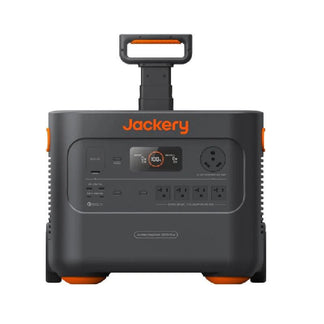
When tornadoes from a nearby hurricane flattened neighborhoods around him and left friends without power for ten days, Bernard Bereksazi watched the chaos of gas generators, fuel lines, and sleepless nights play out from close range and decided quietly that none of that was acceptable. He researched carefully, chose Jackery, and built a deliberate system around a single priority zone: the master bedroom. A Jackery Explorer 2000 Plus with three expansion batteries and six SolarSaga 200W panels keeps the room air-conditioned, the internet live, and the television on. Read more such Jackery Stories to see how people power their appliances during power outages and outdoor adventures.
Best Jackery Solar Generators to Keep Your Refrigerator Running During an Outage
Refrigerators and freezers are among the most critical appliances to protect during a power outage. Jackery Solar Generators are reliable, renewable backup solutions that keep food fresh without depending on the grid or a noisy, fume-producing gas generator.
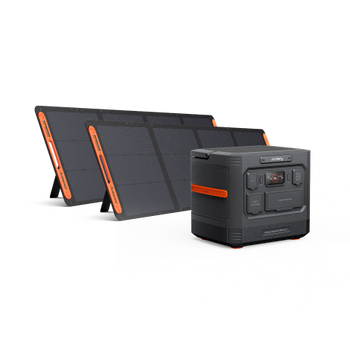
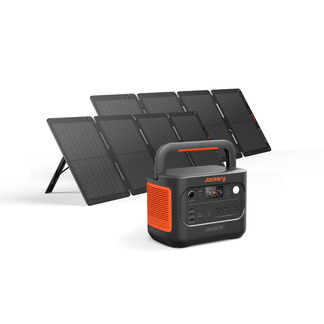
Jackery FridgeGuard
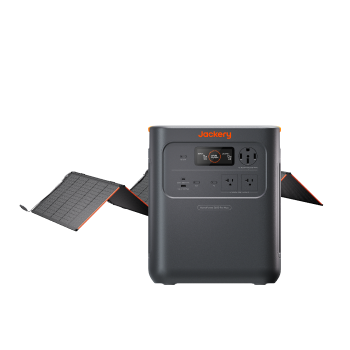
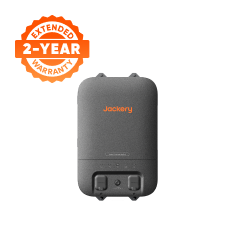
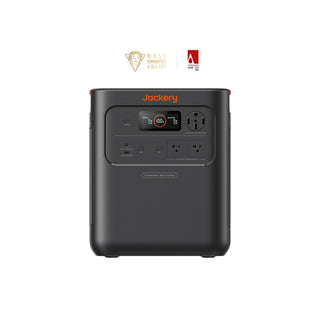
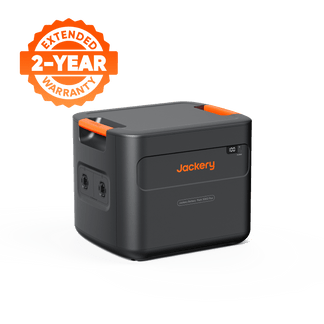
The Jackery FridgeGuard is ideal for refrigerator and freezer protection. Unlike a general-purpose power station that you connect manually during an outage, the FridgeGuard is a Plug & Play device that lives permanently between your wall outlet and your refrigerator. It is always connected, monitoring, and ready to switch to battery in under 10 milliseconds when the grid drops. Besides the refrigerator, it can also power multiple appliances, such as microwaves, toasters, home office appliances, etc.
Appliances Running Time
- Mini Fridge (75W) = 9.3H
- Top-Freezer Fridge (150W) = 5.1H
- Bottom-Freezer / Side-by-Side (200W) = 3.9H
- French Door (300W) = 2.7H
- Chest Freezer (150W) = 5.1H
Who Should Buy This
The Jackery FridgeGuard is suited to those who want dedicated, zero-effort refrigerator protection. It is particularly ideal for households storing insulin, medications, or baby formula where continuity is critical.

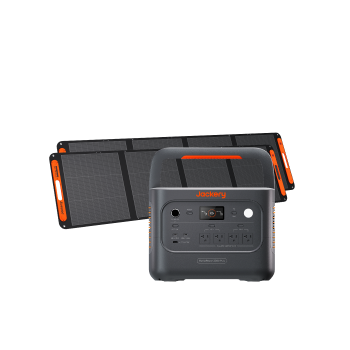
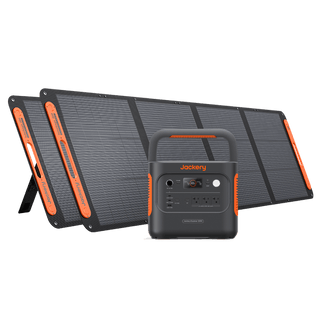
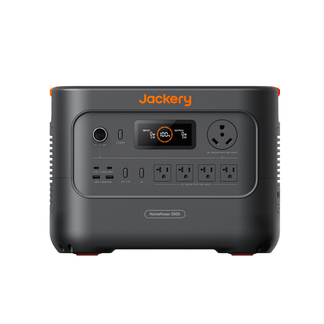
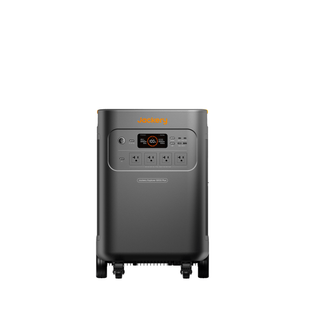
Jackery Solar Generator HomePower 3600 Plus
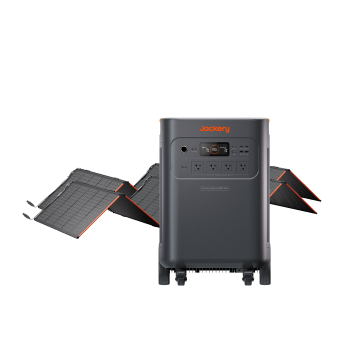
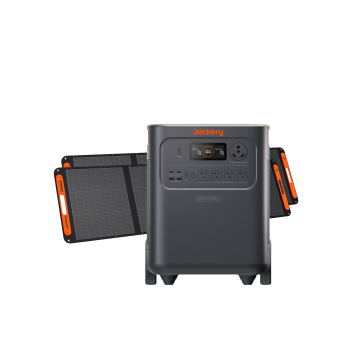
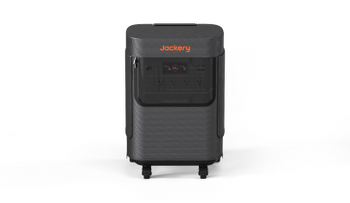
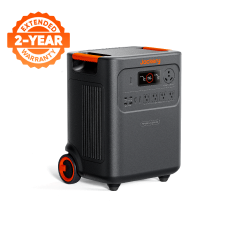
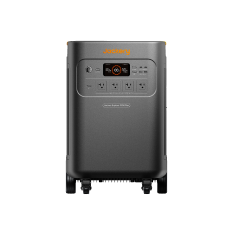
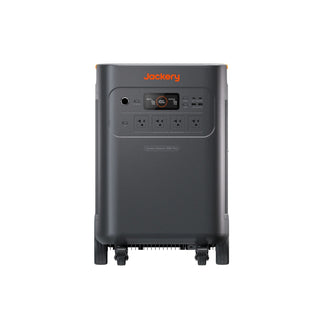
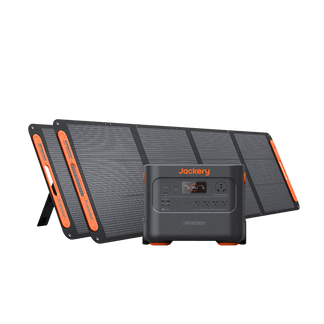
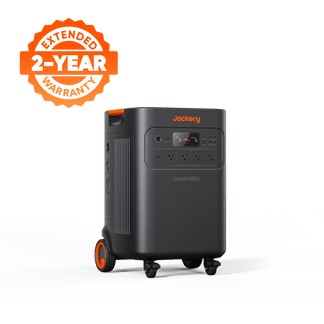
The Jackery Solar Generator HomePower 3600 Plus is a home backup solar generator with 3,600W continuous output and 7,200W surge, which is enough to start and run the largest household refrigerators and freezers while simultaneously powering lights, WiFi, fans, and device chargers across multiple rooms. Its sub-10ms UPS switchover means connected appliances, including the refrigerator, experience no interruption when the grid drops.
Appliances Running Time
- Mini Fridge (75W) = 31.4H
- Top-Freezer Fridge (150W) = 17.7H
- Bottom-Freezer / Side-by-Side (200W) = 13.7H
- French Door (300W) = 9.5H
- Chest Freezer (150W) = 17.7H
Who Should Buy This
The Jackery Solar Generator HomePower 3600 Plus is ideal for families who want multi-day off-grid refrigerator protection alongside essential home backup in a single unit with built-in wheels and expandable capacity.

Customer Review
I lovveee this! I brought it to 2 different festivals so far. Ran it with the humidifier and heated hose for 3 nights at the first one. Blew up my mattress and charged my phone/used my straightener. Came back with 70 percent battery. Then went to a 2 nighter did the same but also blew up my sisters mattress and ran a heating pad.
— Shan.
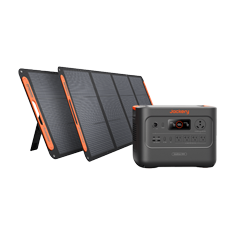
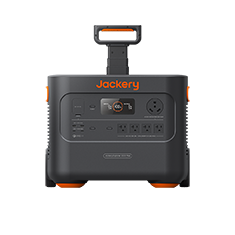
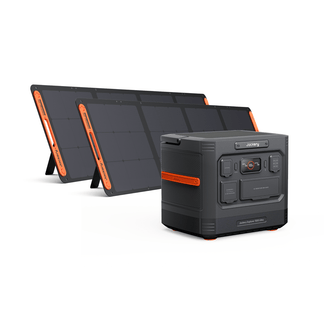
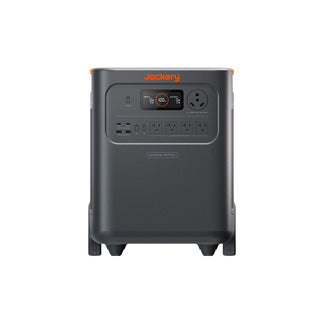
Jackery Solar Generator 5000 Plus
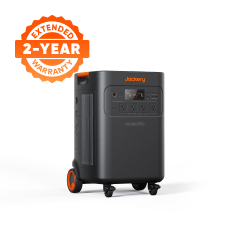
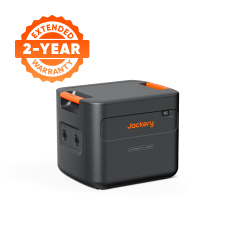
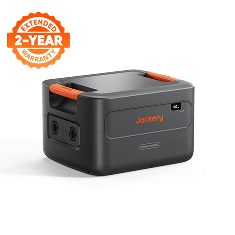
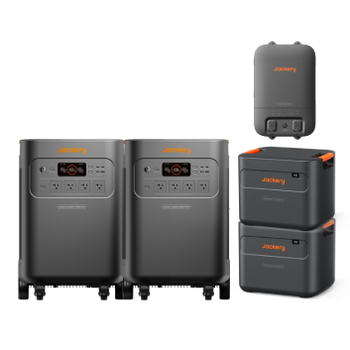
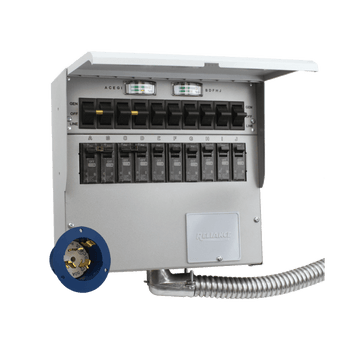
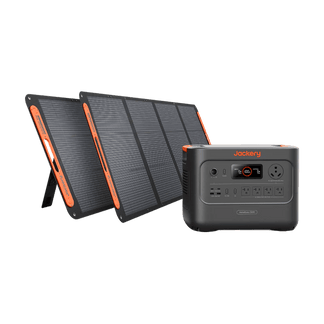
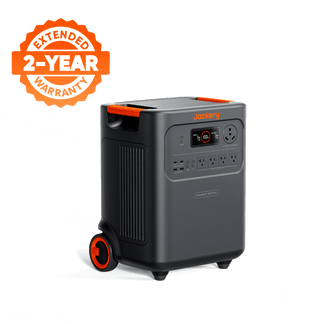
The Jackery Solar Generator 5000 Plus delivers 5,040Wh of base capacity (expandable up to 60kWh). It can easily handle different types of refrigerators. The 0ms Online UPS switching ensures connected refrigerators and freezers experience zero interruption when the grid drops. Native 120V and 240V support covers the full range of home and commercial refrigeration equipment from a single unit, and the 60A Smart Transfer Switch enables circuit-level home integration for automatic protection of refrigerators in the house simultaneously.
Appliances Running Time
- Mini Fridge (75W) = 34.3H
- Top-Freezer Fridge (150W) = 21.4H
- Bottom-Freezer / Side-by-Side (200W) = 17.1H
- French Door (300W) = 12.2H
- Chest Freezer (150W) = 21.4H
Who Should Buy This
The Jackery Solar Generator 5000 Plus is an essential home backup with high surge capacity, 240V appliance support, and the longest stored-battery refrigerator coverage available, particularly in storm-prone or hurricane-affected regions.

Customer Review
After researching every brand on the market I settled on the jackery 5000 plus for its performance, quality and ease of use. Multiple input and output methods provide the flexibility to either power a whole house during a multi day outage or power an off grid cabin for weeks.
— Vivek S.
Tips to Save on Refrigerator Electricity Costs
With rising energy costs, these tips can meaningfully reduce how much your refrigerator costs to run every month. Here is how to reduce refrigerator power consumption with solar and other methods:
- Set your refrigerator temperature between 35°F (1.6°C) and 38°F (3.3°C), and your freezer at 0°F (-17.7°C). This keeps food fresh without running the compressor harder than necessary.
- Clean the condenser coils regularly. Dirty coils can increase energy consumption by up to 30%. Coils are usually located on the back or underneath the refrigerator.
- Ensure adequate ventilation around the refrigerator. Allow at least 2 inches of clearance on the sides and back for heat to dissipate from the coils.
- Keep the refrigerator well-stocked. A full refrigerator holds temperature better than a half-empty one because the thermal mass of food reduces how quickly internal temperature rises.
- Check and replace door gaskets if they are cracked or loose. A poor seal allows cold air to escape continuously, forcing the compressor to run more often.
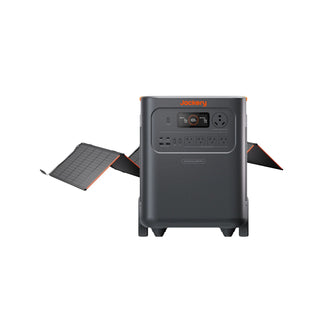
- Pair your refrigerator with Jackery SolarSaga Solar Panels to offset daily energy use from the grid. Running the refrigerator from solar-charged storage during peak electricity hours can reduce monthly utility costs in high-rate states like California and Hawaii.
- Upgrade to an Energy Star-certified refrigerator. Modern certified models use 30% to 50% less energy than equivalent models from 15 or more years ago.
Frequently Asked Questions
How many watts does a refrigerator use in one day?
A standard refrigerator running at 300 watts with the compressor active for approximately 8 hours consumes about 2.4 kWh daily. A modern Energy Star refrigerator typically uses 1 to 2 kWh daily. Mini fridges use approximately 0.4 to 0.8 kWh daily. Daily consumption varies significantly by fridge type, age, ambient temperature, and usage habits.
How many watts does a refrigerator use in one hour?
Since a refrigerator's compressor cycles on and off, the average watts consumed in one hour is approximately one-third of the running wattage. A 300W refrigerator uses an average of about 100W in an hour across a full day (when accounting for the compressor's off cycles). When the compressor is actively running, it draws the full 300W. When it is resting, it draws near-zero watts.
What is the startup wattage of a refrigerator?
A refrigerator's startup surge is typically 2 to 3 times its running wattage. A refrigerator running at 200W requires approximately 400W to 600W at startup. A larger side-by-side running at 400W may require 800W to 1,200W at startup. Always check the startup surge before choosing a backup power station. The surge output must exceed this number.
Can a 100-watt solar panel run a refrigerator?
A 100W solar panel generates approximately 0.4 to 0.5 kWh on a typical day, which is insufficient to run a standard refrigerator continuously. A 200W to 400W solar panel setup paired with a compatible Jackery Portable Power Station is typically needed for a standard household refrigerator. However, a 100W panel is sufficient to partially offset a mini fridge's daily energy consumption.
Does unplugging a refrigerator save electricity?
Only temporarily. Unplugging a refrigerator for short periods does not meaningfully reduce electricity costs and risks food spoilage once the internal temperature rises above 40°F (4.4°C). A better approach is to optimize temperature settings, clean coils, and ensure good ventilation to reduce energy use without compromising food safety.
Conclusion
Understanding how many watts a refrigerator uses is the first step to managing your home's energy costs and choosing the right backup power for outages. A standard refrigerator uses 300 to 800 watts while running, a mini fridge uses 50 to 100 watts, and a freezer runs on 150 to 400 watts, but the startup surge, which is 2 to 3 times the running wattage, is just as important when sizing a backup power station.
Whether you want a dedicated refrigerator protection solution like the Jackery FridgeGuard, multi-day essential home backup with the Jackery Solar Generator HomePower 3600 Plus, or maximum surge capacity and scalability with the Jackery Solar Generator 5000 Plus, Jackery's lineup covers every refrigerator type and outage scenario. Beyond outage protection, pairing a power station with solar panels can meaningfully offset your refrigerator's daily electricity consumption from the grid.


![3 Best Solar Generators for Refrigerators and Freezers [2026]](http://www.jackery.com/cdn/shop/files/3-best-solar-generators-for-refrigerators-and-freezers-2026-5361514.jpg?v=1786013999&width=90)


