










![[Add - on] Jackery Manual Transfer Switch for Explorer 5000 Plus - Jackery](http://www.jackery.com/cdn/shop/files/add-on-jackery-manual-transfer-switch-for-explorer-5000-plus-9017324.png?v=1754016782&width=170)











































Brief Answer: Solar panels reduce your electric bill by generating free, usable electricity from sunlight. It decreases the amount of power you purchase from your utility company and reduces the monthly bills.
When you install solar panels, your home begins producing its own electricity straight from the sun. During the day, the panels generate power that runs your lights, appliances, and devices. If you produce more energy than you use, that extra electricity often gets sent back to the grid, earning you credits through a system called net metering. At night or on cloudy days, you can still draw electricity from your utility, but your credits help lower the cost.
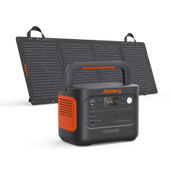
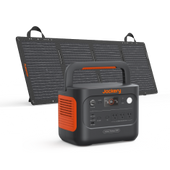
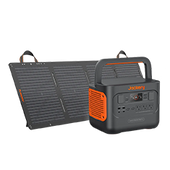
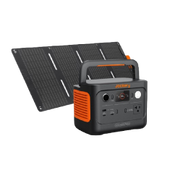
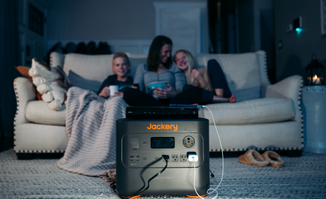
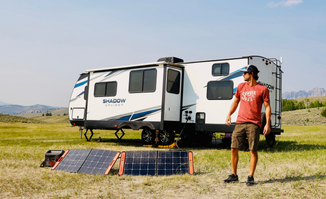
If you are looking to run essential household appliances and reduce your electricity bills but don't have a lot of roof space to install solar panels, you can consider investing in portable solar generators. Jackery Solar Generator lets you capture solar energy and use it directly at home to keep essentials powered during peak hours or to cut back on grid dependence. It is a practical first step toward lower electricity costs.
Takeaways
- You still receive an electric bill with solar panels because it might not have enough exposure to sunlight, services fee, utility charges, lack of battery storage, and net metering.
- You can install solar panels capable enough to offset the dependence on utility grids or get credits with net metering.
- Your monthly electric bills depend on utility company fees, solar offset, weather conditions, and household power needs.
- Your electric bill depends on two primary factors: your household electricity consumption and the size of your solar system.
- What will your electricity bill look like after you go solar.
- How to get the most out of your solar system.
Do You Still Have an Electric Bill with Solar Panels?
Yes, you still will have an electric bill with solar panels unless you’ve gone entirely off-grid. It’s a common misunderstanding that going solar means there won’t be any bills, but here are the reasons why the scenario is the opposite:
Cloudy Days
The primary reason is that your solar panels might not have enough exposure to sunlight, so the output isn’t great. Sun goes down every night, and not every day of the year is sunny. In other words, the electricity stored in the battery might not be able to power your entire home every day, and there’s a chance you need to source electricity from the grid. This way, an average homeowner will receive an electric bill monthly.
Utility Service Charges
People need electricity in their homes when solar panels aren’t at their full potential, so they connect the panels to a power grid. And being “grid-tied,” you’ll receive an electric bill, irrespective of whether you source electricity from them. There are a few charges that you must pay:
- Customer Service Charge: This covers costs such as account maintenance, meter reading, general utility operations, and customer charges.
- Distribution Charge: Charge for building and maintaining the distribution system, including power lines and transformer stations.
- Transmission Charge: This covers the cost of transmitting the electricity from the utility grid to your home.
Lack of Solar Battery Storage
When you’ve built a solar system at your home, there are times they generate more electricity than needed, especially during peak sun hours. If you have a solar battery attached, the excess electricity is stored for use when the sun is down at night or during emergencies.
But, as mentioned, many have their solar panels grid-tied and send the excess power back to the utilities. In this way, they’ll depend on grids for power when the solar panels aren’t in operation and end up paying high electric bills. It’s recommended to have some battery power ready for typical use and keep the grid power as a backup in case you need more.
Lack of Net Metering
Net Metering is an element in a utility’s billing program, where you get credits or waive-offs for generating excess solar power. Solar panels are sent to the utility grid whenever they generate more electricity. The utility then compensates you with credits or waives the amount from your electric bills.
However, if the utility doesn’t have a net metering program, you won’t be paid for the extra electricity you send to the grid. So you will pay for the electricity you draw during stormy days, nights, or power outages.
How Do Solar Panels Work With Your Electric Bill?
The solar panel consists of plenty of photovoltaic (PV) cells that transform light energy into electric energy using the photovoltaic effect. So when sunlight is incident on the panel, it makes its way into the cells and knocks down the electrons loose from the atoms into the semiconductor materials of the panel, creating electric-hole pairs. These move in response to the electric field in the battery and generate an electric current. It’s further used as electricity for household purposes.
Now, the electricity produced by your solar panel works with the electric bills in two ways:
- You can install solar panels that generate adequate power to fulfill your household needs or get a part of your electricity from utility grids. Irrespectively, you’re paying a lower electric bill than you did earlier.
- Also, under net metering, you send the excess solar production onto the utility grid in exchange for credit. You can then use the credit to cut down the cost of purchasing electricity from the grid during power outages or at night.
Let’s understand how much you save from installing solar panels. For instance, your house needs 22kWh of electricity in a day, and the solar panels can provide around 7kWh of your usage. So you only purchase 15kWh from the grid.
Secondly, suppose your solar panels generate 24kWh electricity in a day, and 7kWh is directly used to power your home. The rest, 17kWh, is exported to the utility grids for net metering credit, which offsets more than 13kWh of electricity you pull from the grid.
With 10.4kWh solar panels, your effective average electric rate stands at 8 cents per kWh, much lower than any US metro's average kWh cost. So after 20 years, considering your average per day consumption at 22kWh, you’ll pay $12,848, which, considering the national average of 16.68 cents per kWh, costs $26,788, and you end up saving $13,940.
Your savings can get even more for three reasons:
- Most solar panels are warranted 25 years and last much longer than that
- Grid electricity prices increase over time
- Solar panels increase your home value

What is the Average Monthly Electric Bill with Solar Panels?
With solar panels, a homeowner's monthly electric bill can be reduced from the national average of around $157.05 per month to potentially zero, depending on the system's size, local electricity rates, sunlight exposure, and whether battery storage is included. Remember, you might still have to pay some amount depending on multiple factors, such as:
Utility Company Fees
Whether you take electricity from the grid or not, the utility will still send you bills, including delivery fees and customer service. While some offer fixed rates, others consider your total electricity usage.
Before you go solar, make sure to enquire about these charges as well as net metering credits with which you can even get a negative bill. For example, you pay a flat service charge of $7.00, and the utility pays you net metering credits of $72.10, so your effective bill stands at -$65.10. Mostly, you can accumulate negative charges during spring and summer to offset your bills in winter when the sun is not at its full power.
Solar Offset
Solar offset, in simple words, measures the amount of electricity the panels produce and your household usage. Many systems are designed with a 100% solar offset, which means you use every bit of what your panel produces and won’t pay anything to the utility except for the service charges. Taking the above example, your monthly bill now stands at $7.00.
Weather Conditions
Weather conditions primarily dictate how much power your panels generate and, in turn, savings on electric bills. For example, if your locality is mostly cloudy, the panels might not generate enough electricity to fulfill your home usage, and you take power from utility grids. You are here paying more on electric bills than one residing in a sunny place.
Household Power Usage
Your house's type and number of appliances dictate your overall power consumption. If you’re wondering, “Why is my electric bill so high with solar panels?” The answer is that your solar panel system isn’t capable of powering the devices, so you rely more on the electric grid and pay higher monthly bills.
For example, let’s consider your daily consumption is 25kWh, and the panels can only generate 10kWh of electricity. So you’ve got to pay for the remaining 15kWh, or $78.61 in a month. This still should look better than your previous monthly bill of $157.05, considering the national average electric rate of 17.47 cents per kWh.
What Will Your Electric Bill Look Like After Going Solar?
After going solar, your monthly bill will be significantly lower, possibly even resulting in a negative balance or a small fixed charge. This is because your solar panels generate electricity, which reduces your reliance on the grid.
Mostly, when the sun is at its full power in summer, you’ll receive a zero and even a negative bill. The reason is simple: net metering credits. The utility company is paying more than they’re charging.
In your electric bill after going solar, you’ll see two main measurements: electricity you’ve used from electric grids and electricity you’ve given back to the utility. When the latter exceeds the former, you get a negative bill and don’t have to pay anything for the grid electricity you’ve used. Instead, you’ll have an amount that you can offset from future bills.
Now, you also must check if you’re rightly compensated by the utility company or the “net metering credit.” It’s typically displayed on the first page of your bill. You can look for the “net metering credit” or “net generation credit” line on it, beside which you’ll find the credited amount.
How to Maximize Solar System Energy Production?
Maximizing your solar system’s efficiency is crucial to having robust and reliable electricity for your household. The bigger, the better phrase might not hold true here, but the size of your home directly affects your electric bill.
To achieve the maximum energy output in your small roof, try installing small yet efficient solar panels with high electricity yield. These are a bit expensive, so larger, lower-cost panels are ideal if you've large rooftops. A typical household solar system ranges between 5-10kW, and its installation, alongside other factors like shading, alignment, and others, influences the electricity it produces. On average, a 5kW solar system can produce 8,000kWh a year, provided everything else is done right. And it is suitable for fulfilling the needs of most average households.
As solar panels need the sun’s rays to produce electricity, it’s crucial to ensure that they are installed in a way that maximum sunlight falls on them. The panels are typically made of silicon or similar semiconductor material, and when it’s exposed to photons of sunlight, it releases electrons and produces an electric charge. It creates a DC current, which is passed through the wires into the inverter, which converts it into AC current or usable current that powers up your entire household.
But to achieve a 100% dependence on solar energy, you’ll need a powerful system, which can be a bit heavy for your pocket. So, if you wish to use solar power but can’t spend thousands of dollars, Jackery Solar Generators are a great choice. The best part is they’re portable and capable enough to power most of your household appliances.
Jackery Solar Generators Explained
Jackery is a pioneer in manufacturing portable power stations, solar panels, and solar generators. Since its inception in 2012, Jackery has won notable awards, and with multiple patents registered, Jackery has sold millions of solar-related products to a global audience.
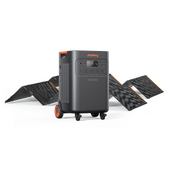
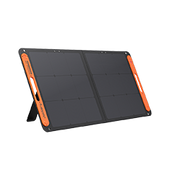
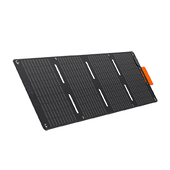
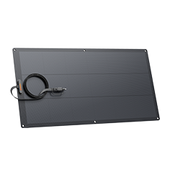
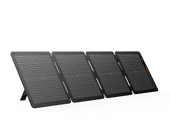
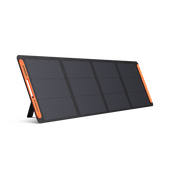
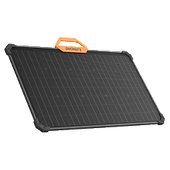
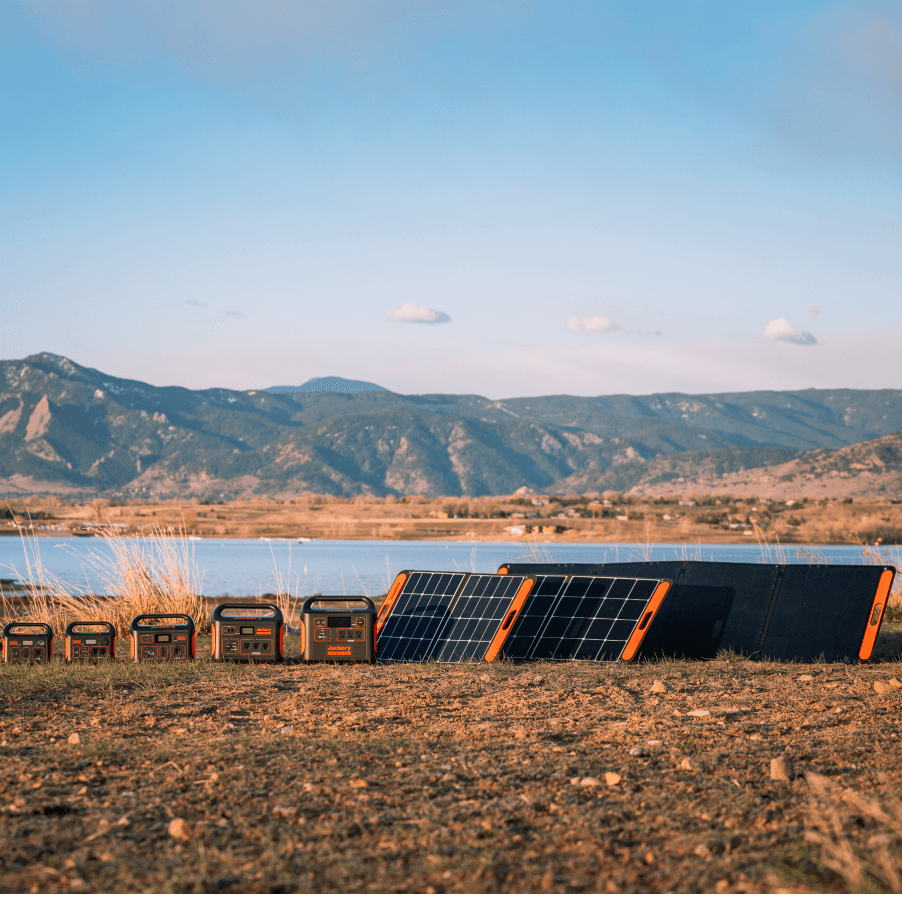
Jackery Solar Generators combine high-quality Jackery SolarSaga Solar Panels, which have a honeycomb structure to harness maximum sunlight with their monocrystalline silicon solar cells. The energy is then converted into usable AC electricity by the pure sine wave inverter of Jackery Explorer Portable Power Station and then passed on to charge multiple household and outdoor appliances at once.
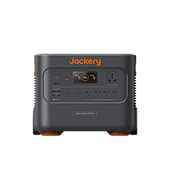
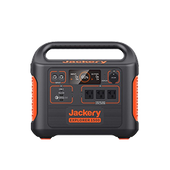
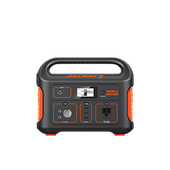
Jackery Solar Generator 2000 Plus
If you reside in a mid-sized home with a decent set of appliances and need a solar generator that allows you to go fully independent, consider investing in the Jackery Solar Generator 2000 Plus. The battery lasts long and won’t emit harmful fumes while operating. The best part is that you can power multiple appliances simultaneously, making it an ideal alternative to traditional power supply options.
Appliances Working Hours
- Refrigerator (400W) = 4.0H
- Microwave (1000W) = 1.6H
- Water Heater (1500W) = 1.1H
- Air Conditioner (1000W) = 1.6H
- Coffee Maker (800W) = 2.0H
Who Should Buy This
The Jackery Solar Generator 2000 Plus is a great choice for homeowners who want to lower their electricity bills while still having peace of mind during power cuts.

Customer Review
Purchased for home backup, but I also take these out with me on long camping trips. It will easily power whatever you plug in it, and the 30 amp RV plug is a nice addition.
-- Chris.
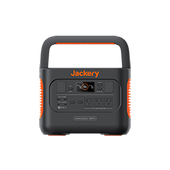
Jackery Solar Generator HomePower 3000
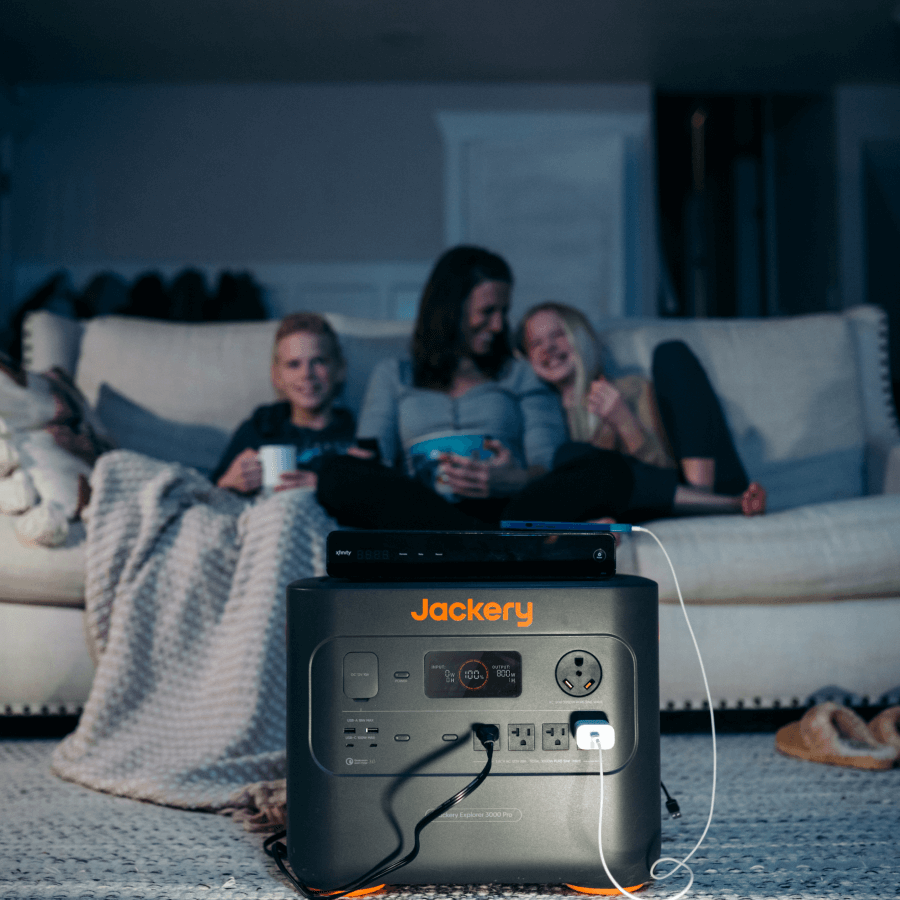
The Jackery Solar Generator HomePower 3000 is ideal for households that need an advanced essential home backup solution to power core household appliances. With its larger capacity, it can handle multiple appliances at once. It can keep fridges, lights, and even small home offices running smoothly without leaning too heavily on the utility grid. By pulling less from the grid during peak hours, families can see meaningful savings on their bills over time.
Appliances Working Hours
- Refrigerator (400W) = 6.2H
- Microwave (1000W) = 2.6H
- Water Heater (1500W) = 1.7H
- Air Conditioner (1000W) = 2.6H
- Coffee Maker (800W) = 3.2H
Who Should Buy This
If you run a bigger household or work from home, the Jackery Solar Generator HomePower 3000 provides both comfort and security when electricity costs climb.

Customer Review
This Jackery HomePower 3000 is a game-changer and a breath of fresh air for me. I drive a Chevy Silverado, so there’s plenty of room for this thing in the back. The Jackery HomePower 3000 powers EVERYTHING I need (and then some) as a nomadic traveler.
— Trin B.
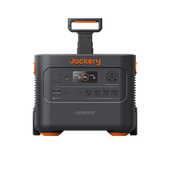
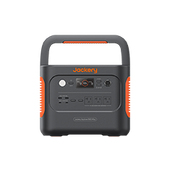
Jackery Solar Generator HomePower 3600 Plus
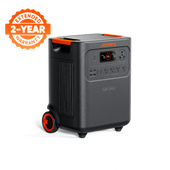
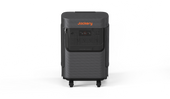
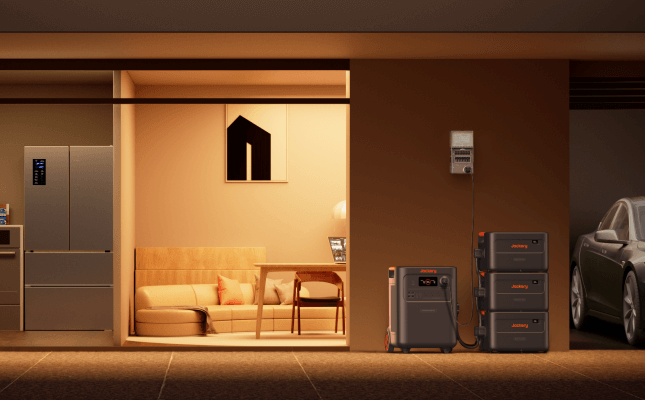
If you are trying to cut your electricity bill by using solar panels more effectively, the Jackery Solar Generator HomePower 3600 Plus helps you do that on a day-to-day basis. It can store a lot of solar power, and when you add expansion batteries, it holds enough energy to keep a fridge running for almost two weeks. It is easier to run the usual household appliances without relying on the grid as much. It also features a pull handle and wheels that ensure you can easily move the solar generator from one place to another for running core household appliances.
Appliances Working Hours
- Refrigerator (400W) = 7.2H
- Microwave (1000W) = 3.0H
- Water Heater (1500W) = 2.0H
- Air Conditioner (1000W) = 3.0H
- Coffee Maker (800W) = 3.7H
Who Should Buy This
If you are serious about using solar power to handle a chunk of your daily appliance load instead of paying for it every month, the Jackery Solar Generator HomePower 3600 Plus is an ideal choice.

Customer Review
I've only tested the 3600 thus far & I'm very satisfied with the quality of the unit & the guys absolutely love the portability design. I purchased the E500 for camping this past summer & it handled my needs well for a month of camping. I'm confident the 3600 will handle my household needs.
— Cynthia E.
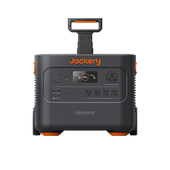
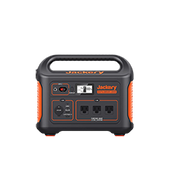
Jackery Solar Generator 5000 Plus
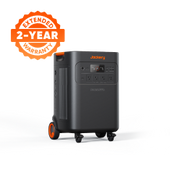
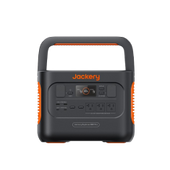
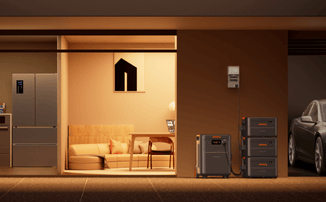
The Jackery Solar Generator 5000 Plus is the most powerful essential home backup solution. It’s designed for those who want to run multiple household appliances during extended outages or for cutting back on grid use in a big way. With this home battery backup, you can run almost all major appliances, giving your home a reliable layer of independence from the rising cost of electricity. It also supports dual voltage (120V and 240V) to run most home appliances.
Appliances Working Hours
- Refrigerator (400W) = 9.5H
- Microwave (1000W) = 4.1H
- Water Heater (1500W) = 2.8H
- Air Conditioner (1000W) = 4.1H
- Coffee Maker (800W) = 5.0H
Who Should Buy This
If you live in an area with frequent outages or simply want to slash your grid dependence to save on high electricity bills, the Jackery Solar Generator 5000 Plus is the strongest choice.

Customer Review
Exactly what we needed to power our home. Especially nice to have a 240-volt option to run the well pump. Also nice to be able to "accessorize" as finances allow.
— Richard Wamsley.
How to Get Most of Your Solar System?
In order to get the most from your solar energy system, you should ensure optimal panel placement and orientation to receive maximum sunlight. It is important to keep your panels clean to maintain efficiency and get a home battery backup to store the excess energy generated by the panels. Remember, just installing the solar panels won’t do the job, so here we will explain some ways to get the most out of them:
Positioning The Panels: As mentioned earlier, positioning the panels is crucial for them to get direct access to the sunlight. The ideal setup is on a south-facing roof, but orient the panels to produce more power if your property is north-facing.
Regular Maintenance: Although solar panels are lower maintenance, they need cleaning and inspection once a month to operate at maximum efficiency. With time, dirt, dust, and other debris deposit on the panels, potentially reducing performance. Just use water and microfiber cloth to clean the panels, and that’s it.
Get a Battery Storage: If you don’t have one already, investing in a battery to store the excess energy makes sense. In this way, you don’t have to rely on electric grids when solar panels aren’t working at night or on cloudy days and get the reserve energy to power your household equipment.
Take Advantage of the Sun: You can access free power when the sun is there with full power. You must take advantage of it by doing all the heavy work, like running your weekly wash, charging your equipment, ironing the clothes, etc. In this way, you potentially reduce your reliability on the electric grid and save money on the bills.
Upgrade your Appliances: It might not seem much, but your house's old appliances are consuming much more energy than necessary. Upgrade them to Energy-star certified modern appliances, which typically consume 10-20% less energy than traditional appliances. Many of them also come with eco-settings, which further cut the energy consumption.
Common Questions About How Solar Panels Work With Bills
What size of solar generator do I need for my home?
The size of a solar generator you need for your home depends on its size, the number of appliances, and how long you intend to run on the solar generator. For instance, if you intend to power an air conditioner (1000W) and one LED light (10W) with the Jackery Solar Generator HomePower 3000, the working hours can be calculated by using the Running Time Calculator available on the product page.
On the product page, scroll down until you find the calculator and enter the total wattage of all the appliances being powered simultaneously. In this case, the Jackery Solar Generator HomePower 3000 will power the appliances (1010W) for 2.5 hours.
Do solar panels really reduce electricity bills?
Yes, you can use solar panels to cut off your electric bills completely.
How does billing work when you have solar?
The bill you receive includes the electricity you use from the grid and service charges minus the net metering credits.
How do solar panels work on a house when power goes out?
If you have a battery attached to the solar system, the reserve power will run your household appliances when power goes out.
Can I use both solar and electricity?
Yes, you can use electricity from utility during nights, cloudy days, and times when solar panels aren’t generating electricity.
Final Thoughts
Hope the guide answered your question about how solar panels work with your electric bill. With home solar, many homeowners essentially replace their electric bills with payments for panels, where the latter gets more profitable over time. But if you can’t afford to pay such an amount upfront and still want to cut off the dependence on traditional grids, you might consider investing in Jackery Solar Generators. These are reliable, effective, safe, can power most household appliances, and have the additional benefit of portability.





Leave a comment