










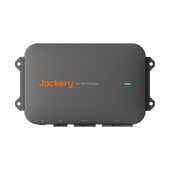
![[Add - on] Jackery Manual Transfer Switch for Explorer 5000 Plus - Jackery](http://www.jackery.com/cdn/shop/files/add-on-jackery-manual-transfer-switch-for-explorer-5000-plus-9017324.png?v=1754016782&width=170)


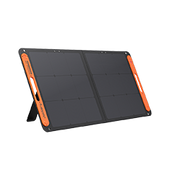
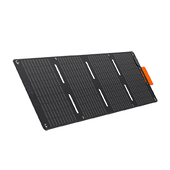
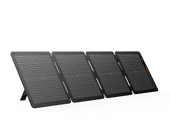













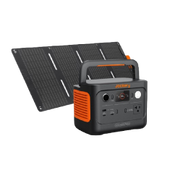
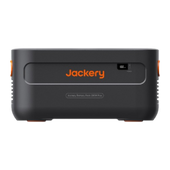
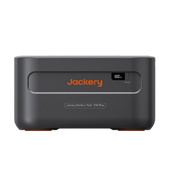
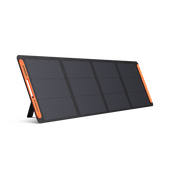
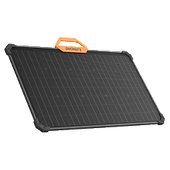


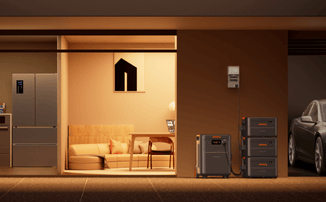
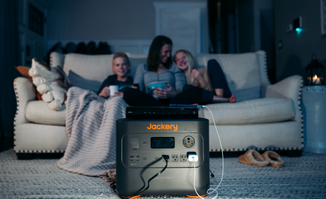





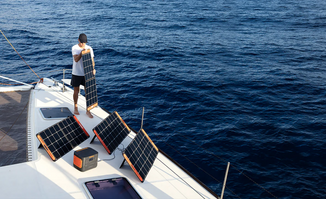






















Brief Answer: Most refrigerators need 2 - 4 solar panels (400–800 watts total) to run efficiently, depending on the fridge size, energy rating, and sunlight conditions. Pairing panels with a battery backup ensures uninterrupted operation.
The average household refrigerator consumes 250kWh of electricity annually and requires 200W of solar panels. A portable power station would also be required as a reservoir to provide surplus current for the compressor motor and to power the refrigerator through the night when the solar panel is not producing power. However, the exact solar panel and portable power station size will depend on the refrigerator size, age, make model, and type.
Alternatively, you can choose a solar generator with solar panels and a power station so that you do not need to find the appropriate inverter, battery, or charge controller to solar-power your refrigerator. Before disconnecting your refrigerator from the utility, however, you must determine how many solar panels and other solar power system components you require.
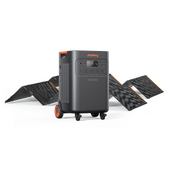
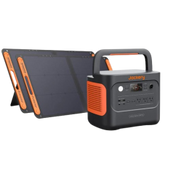
This comprehensive guide covers everything you need to know about solar panels for refrigerators. If you want a home battery backup solution that can keep refrigerators and other essential appliances powered for long hours, you can consider the Jackery Solar Generators. These solar generators can not only power refrigerators but also other appliances, such as ACs, heaters, fans, etc.
AI Takeaways
- You can run a refrigerator with solar power, as long as you have enough solar panels, a reliable battery, and a solar generator or inverter to provide steady electricity.
- Most refrigerators need about 2 - 4 solar panels (400–800 watts total) with a battery, depending on size, efficiency, and daily sun exposure.
- Standard 200W - 400W solar panels with a battery are usually sufficient, with multiple panels combined to meet the fridge’s daily power needs.
- A solar generator with at least 1,000 - 2,000Wh capacity and 1,000W output is recommended for smaller fridges, while larger models may require a 2,000 - 3,600Wh unit for reliable refrigerator functioning.
- What size of solar generator do you need for your refrigerator.
Can I Run A Refrigerator with Solar Power?
Yes, solar power can power various household appliances, including a standard refrigerator, a mini-fridge, or an RV refrigerator.
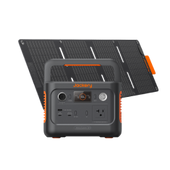
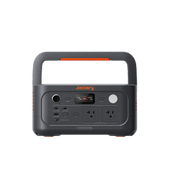
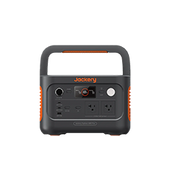
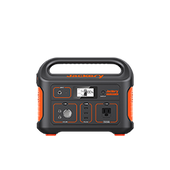
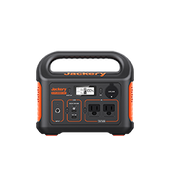
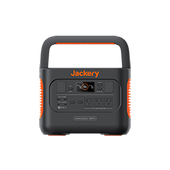
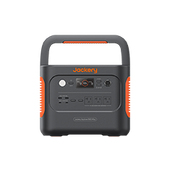
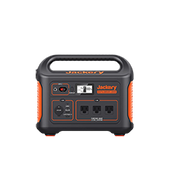
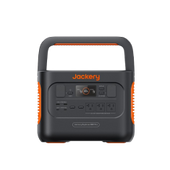
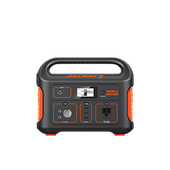
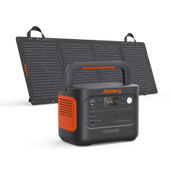
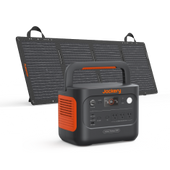
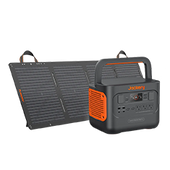
It would be best to have solar panels, a battery, an inverter, a charge controller, or only a solar generator to use solar power. Solar panels can transfer sunlight into electricity, but there is a power station or battery to store energy and power a refrigerator. A Jackery Solar Generator could be the best option to charge the refrigerator with solar power, which combines solar panels with a power station.

Solar energy is an excellent resource that is gaining in popularity daily. Solar power is never exhausted because it is a renewable energy source. Solar energy is environmentally friendly. It emits no carbon dioxide. In addition, solar energy can lessen your reliance on the utility and lower your electricity bill.
Although you can use solar power to charge a refrigerator, it is essential to know how many watts a refrigerator uses and how much solar energy is required, keep reading, and you will learn the answer.
For Lynne, a retired safety engineer in Florida, hurricanes are a fact of life but so is preparedness. After ditching her gas generator, she turned to Jackery power stations and now relies on them through storm seasons. Her Jackery Explorer 1000 Plus keeps her freezer, fridge, lights, and even hurricane shutters running during multi-day outages, while her panels and expansion batteries extend that comfort for days. Beyond emergencies, she uses Jackery for yard work, neighborhood gatherings, and even future camping plans. Discover how Lynne built everyday resilience in this Jackery Story.
How Many Solar Panels Do I Need to Run A Refrigerator?
On average, you need around 3 - 4 solar panels to power a refrigerator. However, the actual number will depend on the wattage of the solar panels and the type or size of the refrigerator. For example, you'll need a 100-200W solar panel to charge a 12V portable fridge for a few hours. On the other hand, you'll require multiple solar panels of high output to charge a larger household refrigerator for extended periods. If you want to charge a refrigerator for hours, you'll need solar panels combined with a portable power station.

Before determining how many solar panels are required to power a refrigerator, you must calculate the following:
- How many watts does a fridge use?
- How many watts do solar panels generate?
- How many peak sun hours do you receive?
- How much solar power does your refrigerator need?
How Many Watts Does A Refrigerator Use?
On average, a refrigerator consumes anywhere around 300 - 800 watts. Most refrigerators in the United States include an EnergyGuide label that estimates their Annual Energy Consumption (kWh/year), which can be used to calculate their daily energy consumption (kWh/day).
For instance, this refrigerator's label indicates an "Estimated Annual Electricity Use" of 600 kWh. To calculate the daily energy consumption of this refrigerator, we divide its estimated annual energy consumption by 365 (the number of days in a year):
Estimated Daily Energy Consumption = 600 kWh ÷ 365 = 1.644 kWh/day = 1644 Wh/day
It is the easiest and quickest method, but you can also calculate your refrigerator's energy consumption using the manufacturer-supplied electrical specifications.
|
Product |
Size |
Annual Energy Consumption |
Daily Energy Consumption |
|
Small Fridge |
4.5 Cubic Feet |
237 kWh |
650 Wh (0.65 kWh) |
|
Middle Fridge |
12 Cubic Feet |
312 kWh |
850 Wh (0.85 kWh) |
|
Large Fridge |
27 Cubic Feet |
728 kWh |
2000 Wh (2 kWh) |
How Much Energy Does A Refrigerator Use?
A refrigerator uses energy by cycling on and off, so its total consumption depends on its type, size, age, and features like water dispensers. A typical home refrigerator uses 300 - 800 watts and runs for 8 hours daily. It can consume roughly 876 - 2,336 kWh annually, though individual models and usage patterns vary significantly.
Here is a reminder of the distinction between electrical power and electrical energy to avoid confusion:
Electrical power: measured in Watts (W) or kiloWatts (kW), represents the electricity consumption rate.
Electrical energy: measured in Watt-hours (Wh) or kiloWatt-hours (kWh), electrical energy is consumed over a given period. Power (Watts or kiloWatts) and Energy (Watt-hours or kiloWatt-hours) have the following relationship:
Energy Consumption (Wh) = Power Consumption (Watts) x Duration of Use (Hours).
For instance, if you have a 500W refrigerator that you use 8 hours daily, the daily energy consumption would be 500W x 8H = 4000Wh (4kWh).
As previously explained, a refrigerator's power consumption is the rate at which it consumes electricity. While older refrigerators can consume up to 700 Watts of power, newer, more energy-efficient models only consume 150-300 Watts.
You can find the power consumption (Watts) of your refrigerator on the manufacturer's nameplate or calculate it using other electrical specifications, such as its Amperage (Amps) and Voltage (Volts).
How Long Does A Refrigerator Run?
Refrigerators have operating cycles (Duty cycles), which means they do not operate continuously.
The compressor, the primary electrical component in a refrigerator, cycles ON and OFF to maintain a constant temperature within the appliance. The refrigerator's compressor must work harder to maintain the desired temperature whenever the ambient temperature rises, which causes power surges and increased duty cycles.
How Many Watts Does A Solar Panel Generate?
First, determine your solar panels' power yield. Under perfect conditions, a solar panel can provide up to its rated electricity. However, the actual production will vary. The actual wattage produced by your solar panels depends on several factors, including:
- Accessible sunlight
- Temperature
- Orientation and angle of your solar array
- Panel type (polycrystalline, monocrystalline, thin film)
- Solar panel productivity
All of the above factors affect the amount of electricity your solar panel will generate. Also, observe that some conditions can vary substantially throughout the day.
How Many Peak Sun Hours Do You Have?
In the solar industry, W/m2 (Watts per square meter) is the standard unit for measuring sunlight (Solar irradiance). Before a solar panel is assigned a Wattage rating, it is subjected to a series of tests known as "Standard Test Conditions" (or STCs for short).
These STCs contain a standard testing condition that replicates the amount of sunlight a solar panel would receive in ideal conditions: 1000 W/m2 (1 kW/m2).

Under these ideal conditions, a Peak Sun Hour is the energy the sun receives in one hour. Peak Sun Hours help us determine the amount of energy solar panels could produce in a given location.
Daily Energy Production (Wh) = Wattage of Solar Panels x Daily Peak Sun Hours
Reversely, and more importantly, for our purposes, you can use your region's daily peak sun hours to establish the size of the solar panel you require if you know how much daily energy the solar panels generate:
Wattage of Solar Panels = Required Daily Energy Production / Peak Daily Sun Hours
For instance, if you need to generate 600Wh in an area that receives six hours of optimal sunlight daily, you will need a 100-Watt solar panel. (600Wh / 6 Sun Peak Hours) = 100W.
How Much Solar Power Does A Refrigerator Need?
To calculate the amount of solar energy required to operate a refrigerator, divide the refrigerator's daily energy consumption (in Watt-hours) by the number of Peak Sun Hours you receive daily, then multiply the result by 1.15 to account for system losses.
Solar Power Needed = (Estimated Daily Energy Consumption / Peak Sun Hours) x 1.15
For instance, if your refrigerator consumes approximately 2000Wh and receives 5 hours of peak sunlight daily, you will need (2000Wh / 5H)*1.15 = 460W of solar power to operate your refrigerator.
|
Product |
Size |
Daily Energy Consumption (When refrigerator runs for 8 hours a day) |
Peak Sun Hours |
Solar Power Needed |
|
Small Fridge |
4.5 Cubic Feet |
650 Wh (0.65 kWh) |
5 |
150W |
|
Middle Fridge |
12 Cubic Feet |
850 Wh (0.85 kWh) |
6.5 |
150W |
|
Large Fridge |
27 Cubic Feet |
2000 Wh (2 kWh) |
6.5 |
350W |
What Size of Solar Generator Do I Need to Run A Refrigerator?
A portable solar generator is ideal for using solar energy to power a refrigerator and other appliances. It is much more important for home or off-grid use because it allows you to charge most of your devices.
Jackery Solar generators convert solar energy into electricity using solar panels and store the point in a portable power station. Jackery's solar generators provide clean and dependable backup power for camping, RVs, and residential backup systems.

Jackery solar generators are renowned for their durability, portability, and originality in the international market. Numerous AC outlets, DC carports, and USB charging terminals power your devices. The pass-through charge function permits simultaneous appliance and power station charging simultaneously.
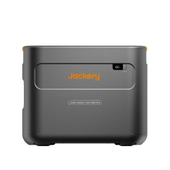
But can Jackery run a refrigerator? Yes, but you need to determine your refrigerator's required volts before choosing the proper size solar generator. You can select from Jackery Solar Generators with different capacities based on the power requirements of your appliances. Here is how to calculate what size solar generator do you need for a refrigerator:
Let's assume you are running a single-door large refrigerator (200W) with the help of Jackery Explorer 2000 Plus Portable Power Station. How long will a Jackery 2000 run a refrigerator can be calculated using the Running Time Calculator available on the product page. All you need to do is find the calculator on the product page and enter the appliance wattage (200W) to get an estimated runtime, which is 7.7 hours in this case.
Jackery Solar Generator HomePower 3000
If keeping your refrigerator running during outages is your top priority, the Jackery Solar Generator HomePower 3000 is a dependable choice. With its large battery capacity and solar charging option, this advanced essential home backup solution can power an average household fridge for hours without interruption. That means no spoiled food, no melted ice cream, and peace of mind during blackouts. For everyday savings, it also supports off-peak charging, helping you cut down on electricity costs.
Appliances Running Time
- Single Door Large Refrigerator (200W): 11.8H
- Double Door Large Refrigerator (600W): 4.2H
- Refrigerator (500W): 5.0H
- Minifridge (65W): 30.0H
- Freezer (100W): 21.4H
Who Should Buy This
The Jackery Solar Generator HomePower 3000 is a great choice for small to medium households that want a reliable backup to keep their fridge running during short power outages and also save on electricity bills with solar charging.

Customer Review
I lost power, and since I had the solar generator, I decided to plug it in. WOW, no noise. I plugged in the hookup from my home panel that runs just my refrigerator, freezer, a few lights, recliner, CPAP, well. Had to throw the breaker and then had to restart the generator. It finally recognized I needed power and started to work. LOVE MY JACKERY.
— Ann Pella.
Jackery Solar Generator HomePower 3600 Plus
The Jackery Solar Generator HomePower 3600 Plus is the standard essential home backup solution for households that rely on large refrigerators or want extended runtime. Designed with higher capacity and expandability options, it keeps fridges and freezers powered for up to 14 days. This means your weekly groceries remain fresh even during multi-day outages. Whether you are at home or preparing for emergencies, this solar generator ensures your refrigerator never becomes a worry, so you get confidence that your stored food remains healthy.
Appliances Running Time
- Single Door Large Refrigerator (200W): 13.7H
- Double Door Large Refrigerator (600W): 4.9H
- Refrigerator (500W): 5.8H
- Minifridge (65W): 35.0H
- Freezer (100W): 25.0H
Who Should Buy This
The Jackery Solar Generator HomePower 3600 Plus is ideal for families with larger refrigerators who need the added security of longer runtimes.

Customer Review
Very easy to set up, solar charge, great support! Going to buy more batteries!
— Mike Palmer.
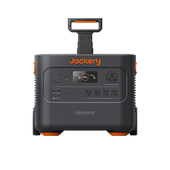
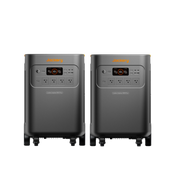
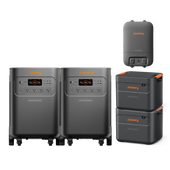
Jackery Solar Generator 5000 Plus
The Jackery Solar Generator 5000 Plus is the most powerful and essential home backup solution that offers reliable refrigerator backup. Its massive power capacity and expandable design make it ideal for running not just your fridge, but also a freezer or additional appliances simultaneously. It ensures uninterrupted cooling during long blackouts. Beyond emergencies, it helps lower electricity bills with solar charging and scheduled use.
Appliances Running Time
- Single Door Large Refrigerator (200W): 17.1H
- Double Door Large Refrigerator (600W): 6.6H
- Refrigerator (500W): 7.8H
- Minifridge (65W): 37.3H
- Freezer (100W): 28.6H
Who Should Buy This
The Jackery Solar Generator 5000 Plus is suited for anyone who wants full peace of mind knowing their fridge, freezer, and other essentials will stay powered even during extended blackouts.

Customer Review
I love the fact I can use it as a UPS, and I have 4 deep freezers plugged into my 5000 Plus, and it is plugged into the house outlet in case the grid goes down, my food is safely kept frozen. So far, it is performing great. Thanks again for the peace of mind.
— Kenneth Morgan.
Note: The refrigerator wattages are the running watts. Make sure to divide the starting wattage by 3 to calculate the running wattage of the refrigerator. Then, you can calculate the running time of the Jackery Portable Power Station by using the Running Time Calculator available on the product page.
Solar Panel for Refrigerator FAQs
The following are the frequently asked questions about solar panels for refrigerators:
Can a 200W solar panel run a refrigerator?
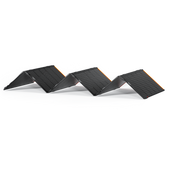
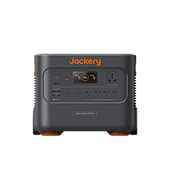
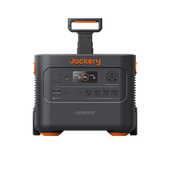
Yes, you can use a 200W solar panel to power a refrigerator, but you should combine it with a portable power station. For example, if you use Jackery Solar Generator HomePower 3000 that combines 2* Jackery SolarSaga 200W Solar Panels with an HomePower 3000, you can power your 200W refrigerator for about 11.8 hours. Check the following detailed information of different power stations that can charge refrigerators for hours.
|
Compatible with |
Capacity |
Refrigerator Watts |
Working Hours |
|
Explorer 5000 Plus |
5040Wh |
200W-600W |
6.6-17.1H |
|
HomePower 3600 Plus |
3584Wh |
200W-600W |
4.9-13.7H |
|
HomePower 3000 |
3072Wh |
200W-600W |
4.2-11.8H |
|
Explorer 2000 v2 |
2042Wh |
200W-600W |
2.7-7.7H |
|
Explorer 2000 Plus |
2042.8Wh |
200W-600W |
2.7-7.7H |
|
Explorer 1000 Plus |
1264Wh |
200W-600W |
1.7-4.8H |
Note: The 200-600W in the above table are the running wattages of the refrigerator, which are calculated by dividing the starting wattage by 3.
How many solar panels do I need to run a 12V fridge?
A 12V refrigerator typically needs 40 - 80 watts, and can easily be powered with one or two solar panels with a total wattage between 100W and 200W. For example, the Jackery Solar Generator HomePower 3000 that combines a portable power station and solar panels can power a fridge (40W - 80W) for 25.6 - 42.1 hours.
How to make my refrigerator more energy efficient?
It is possible to reduce your refrigerator's daily energy consumption. These suggestions will make your refrigerator more energy-efficient and reduce your monthly electric bill:
- Keep the refrigerator well-stocked. When a fridge is empty, it requires more energy to chill itself than when it is complete.
- From time to time, defrost your freezer; this enhances the appliance's efficiency. When frost reaches a thickness of 1/4 inch, it is time to get to work.
- Cover all liquids and stews placed in the refrigerator. They emit moisture, which increases the load on the refrigerator's compressor.
How much solar power to run a refrigerator?
On average, you need at least 4 solar panels of 100 or 200W to get enough power to operate a small refrigerator. However, the amount of solar power needed depends on the refrigerator's power consumption and how long it runs each day.
Can a 100-watt solar panel run a refrigerator?
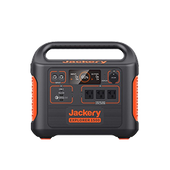
No, a single 100W solar panel might not be able to run a refrigerator. However, a 100-watt solar panel and a portable power station can help you run a refrigerator for a short or long period. For example, you can use the Jackery Explorer 1000 Plus Portable Power Station to run a refrigerator (500W) for 2H. You can then recharge the portable power station with the help of Jackery SolarSaga 200W Solar Panels to continue charging.
What size solar panel do I need to run a 12V fridge?
Solar panels rated at 100W, 200W, or higher can effectively run these 12V fridges, drawing 40 - 80 watts. You'll also need a portable power station to supply steady power to the 12V fridge even when there's no sunlight.
Final Thoughts
The refrigerator is the most demanding working household appliance. It preserves our food frozen and fresh 24/7, seven days per week. Since the refrigerator accounts for between 5 and 10 percent of your annual electricity bill, running it on solar power is highly enticing.
This detailed guide will help you to figure out how many solar panels you need to run a refrigerator, how many watts it uses, and how much solar power it requires. Jackery Solar Generators combine solar panels with power stations to power your refrigerator with high capacity. Just pick one for your home or an off-grid cabin.





600w solar panel can power how many appliances in the house
Leave a comment