
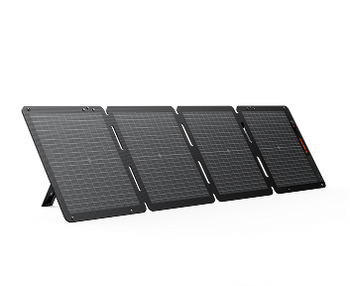
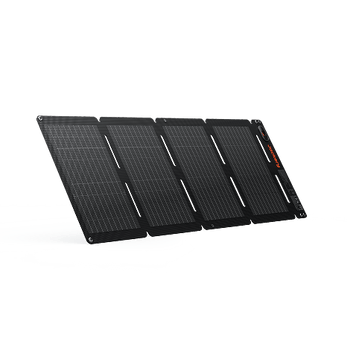





![[Add-on] Jackery SolarSaga 500 X - Jackery](http://www.jackery.com/cdn/shop/files/add-on-jackery-solarsaga-500-x-1493607.webp?v=1786503068&width=324)
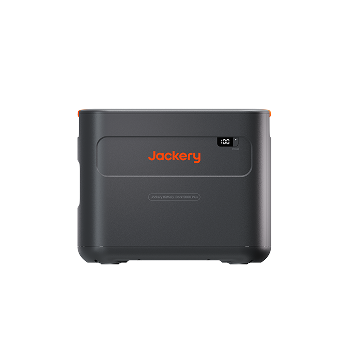
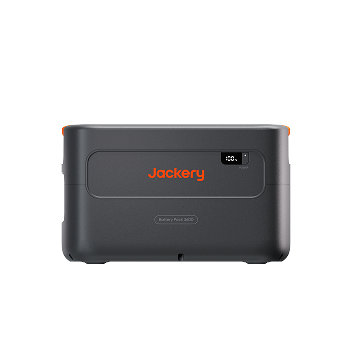
![[Add-on] Jackery Battery Pack 5000 Plus - Jackery](http://www.jackery.com/cdn/shop/files/add-on-jackery-battery-pack-5000-plus-6713401.webp?v=1786503068&width=324)







A ceiling fan uses much less energy as compared to an air conditioner. You can use it alone or in combination with the air conditioner and run the AC at a higher temperature than you usually do. How many watts a ceiling fan uses depends on the size of the fan, the brand, the quality of its wiring, etc. Generally, ceiling fans use 50 to 75 watts depending on the size, motor, and speed.
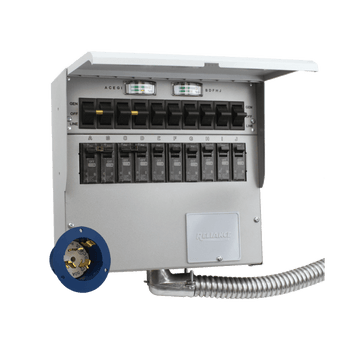
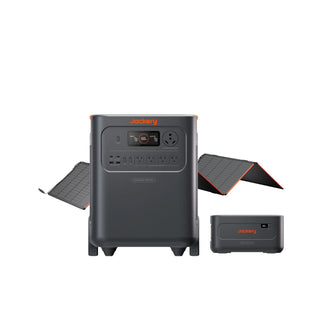
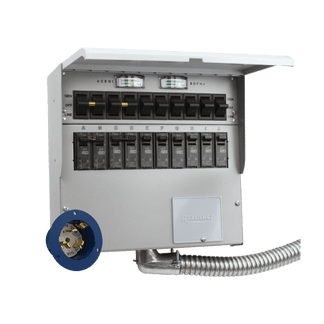
Though ceiling fans take considerably less energy than the air conditioner, they have to be used for longer. You can save on energy bills by running your fans and other appliances on solar generators. During power outages, Jackery Solar Generators can power alternative cooling options, such as portable fans and air conditioners, or by powering essential circuits when used with a proper transfer switch setup.
Takeaways
- Most ceiling fans use between 50 and 75 watts, making them suitable for long daily operation without significantly increasing electricity bills.
- Fans with modern BLDC or DC motors consume far less electricity than older AC-motor models, especially at lower speeds.
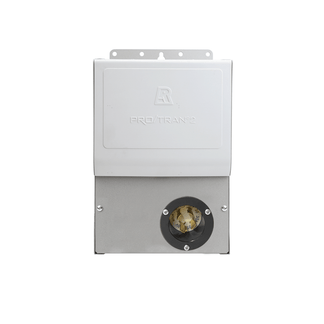
- Unlike portable fans, ceiling fans cannot be plugged directly into a solar generator and require proper home wiring to run during outages.
- During power interruptions, solar battery backup solutions like Jackery Solar Generators are better suited for powering portable fans or other household appliances without relying on the grid.
How Many Watts Does A Ceiling Fan Use?
A ceiling fan typically uses between 50 and 75 watts, depending on its size, speed setting, and motor type. The exact wattage depends on several factors, including brand, fan size, how many hours is the fan used, air delivery rate, etc.
Smaller or energy-efficient ceiling fans draw around 40W, while larger fans or older models with traditional AC motors use more electricity at higher speeds. Modern ceiling fans with BLDC or DC motors are significantly more efficient and can deliver the same airflow while consuming far less power, especially during extended use.
Following is a summary of how many watts a ceiling fan uses according to size.
|
Fan Size |
Wattage |
|
24 inch |
41 watts |
|
30 inch |
48 watts |
|
36 inch |
55 watts |
|
42 inch |
65 watts |
|
48 inch |
75 watts |
|
52 inch |
87 watts |
|
56 inch |
100 watts |
|
60 inch |
120 watts |
|
72 inch |
180 watts |
How Much Energy Does a Ceiling Fan Consume?
A ceiling fan typically consumes between 0.3 and 1.5 kWh of electricity in one day, depending on its wattage and how long it runs. Although ceiling fans run for many hours, their low wattage keeps overall energy use modest. Total consumption is driven more by runtime than by power draw, especially in warm climates where fans may stay on most of the day.
How Much Energy Does a Ceiling Fan Consume Per Day?
A ceiling fan usually consumes around 1.2 to 1.8 kWh in one day.
For example, if you are using a 60-watt ceiling fan that runs for 24 hours, the daily energy consumption will be:
60 watts × 24 hours = 1440 watt-hours or 1.44 kWh per day.
How Much Energy Does a Ceiling Fan Consume Per Month?
Over a month, a ceiling fan typically uses between 36 and 54 kWh. If the same fan (60W) runs daily for 24 hours for a month of 30 days, then its monthly energy consumption is calculated as follows:
1.44 kWh per day × 30 days = 43.2 kWh per month.
In the following table, we have summarized the power consumption of different sizes of ceiling fans hourly and monthly.
|
Ceiling Fan Size |
Hourly |
Monthly |
|
24 inch |
0.04 kWh |
28.8 kWh |
|
30 inch |
0.05 kWh |
36 kWh |
|
36 inch |
0.06 kWh |
43.2 kWh |
|
42 inch |
0.07 kWh |
50.4 kWh |
|
48 inch |
0.07 kWh |
50.4 kWh |
|
52 inch |
0.09 kWh |
64.8 kWh |
|
56 inch |
0.10 kWh |
72 kWh |
|
60 inch |
0.12 kWh |
86.4 kWh |
|
72 inch |
0.18 kWh |
129.6 kWh |
Ceiling Fan vs. Table Fan Power Consumption
Ceiling fans typically use more watts (50-75W+) for broader cooling, while table fans use less (30-60W) for localized airflow. Consequently, the cost of usage also has some differences. Here is the comparison of watts and cost.
Table Fan
|
Type |
Watts |
Cost/hr* |
Cost/month* |
|
Small (4" – 6.9") |
28.5W |
$0.005 |
$1.09 |
|
Medium (7" – 9.9") |
52.7W |
$0.008 |
$2.02 |
|
Large (10"+) |
44.3W |
$0.007 |
$1.70 |
Ceiling Fan
|
Type |
Watts |
Cost/hr* |
Cost/month* |
|
Small (36 inch) |
55W |
$0.009 |
$2.11 |
|
Medium (48 inch) |
75W |
$0.012 |
$2.88 |
|
Large (52 inch) |
90W |
$0.014 |
$3.46 |
Living in Florida, Joseph Schentrup often had to deal with brief power interruptions, but once those outages began affecting nights with his infant twins, reliability became non-negotiable. Using Jackery products, he was able to keep key household items running, especially fans that maintained steady airflow and prevented sudden wake-ups when the grid flickered. With consistent power in place, nighttime disruptions stopped becoming a routine concern. You can read more Jackery Stories to explore how others rely on portable power in everyday situations.
How Much Does It Cost to Run a Ceiling Fan?
Running a ceiling fan continuously typically costs between $5 and $10 per month, depending on the fan’s wattage and local electricity rates.
For example, a 60-watt ceiling fan running 24 hours a day uses 1.44 kWh per day. At an electricity rate of $0.18 per kWh, the cost comes to:
1.44 kWh × $0.18 = about $0.26 per day, or around $7.80 per month.
Even when left on all day and night, a ceiling fan remains one of the least expensive appliances to operate.
The following table summarizes the cost of running a ceiling fan continuously for 24 hours. The electric rate we are using is the state average in the US.
|
Ceiling Fan Size (in diameter) |
Per Hour |
Per Day (24 Hours) |
Per Week (24/7) |
|
24 inch |
$0.006 |
$0.13 |
$0.95 |
|
30 inch |
$0.007 |
$0.16 |
$1.11 |
|
36 inch |
$0.008 |
$0.18 |
$1.27 |
|
42 inch |
$0.009 |
$0.26 |
$1.51 |
|
48 inch |
$0.01 |
$0.25 |
$1.74 |
|
52 inch |
$0.012 |
$0.28 |
$2.02 |
|
56 inch |
$0.014 |
$0.33 |
$2.32 |
|
60 inch |
$0.017 |
$0.40 |
$2.79 |
|
72 inch |
$0.025 |
$0.60 |
$4.18 |
Recommended Jackery Solar Generators for Fans
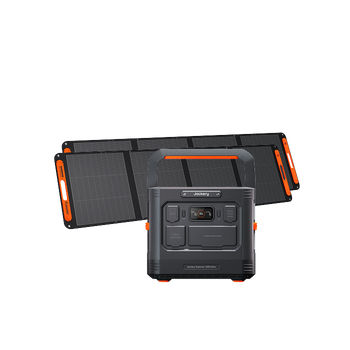
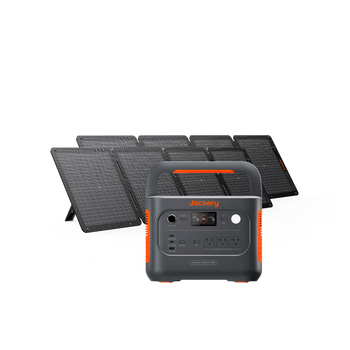
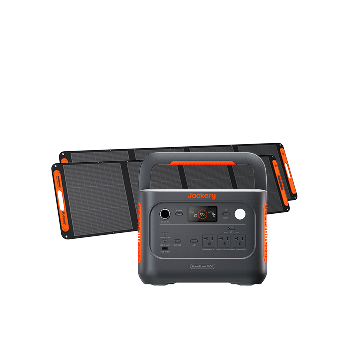
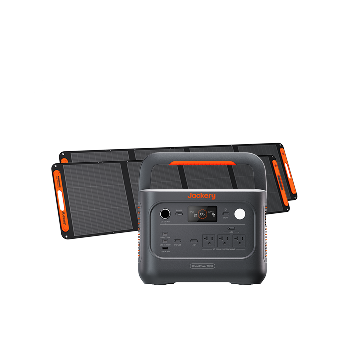
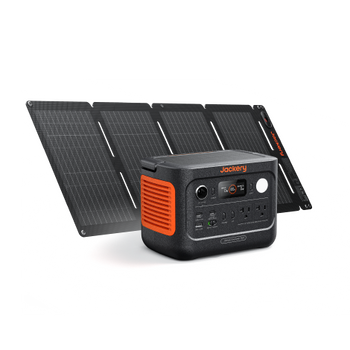
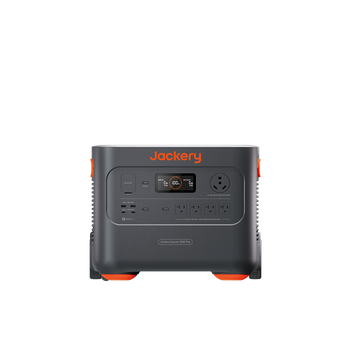
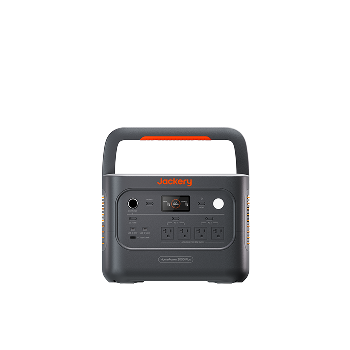
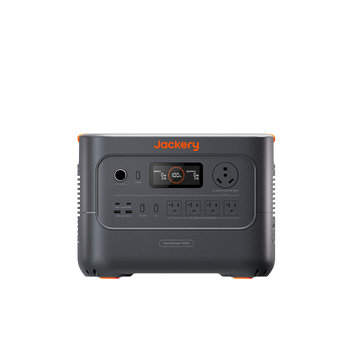
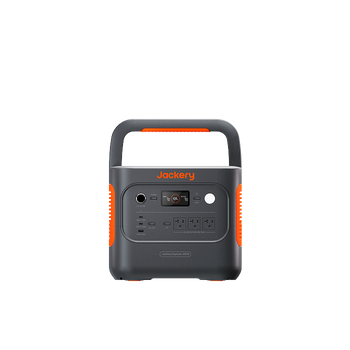
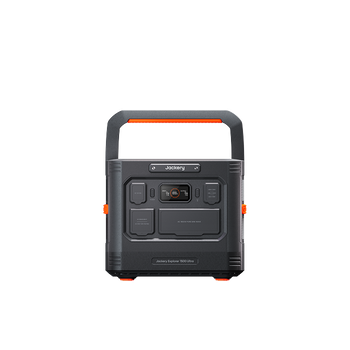
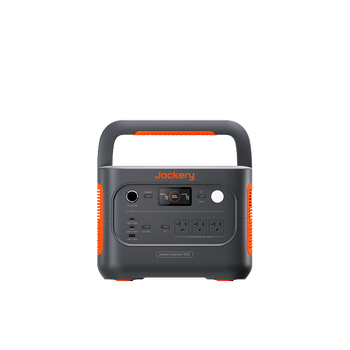
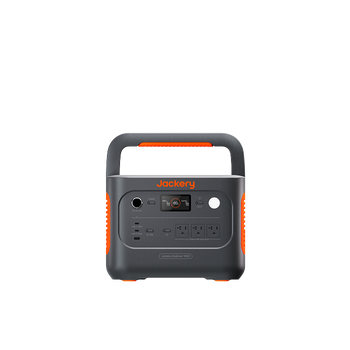
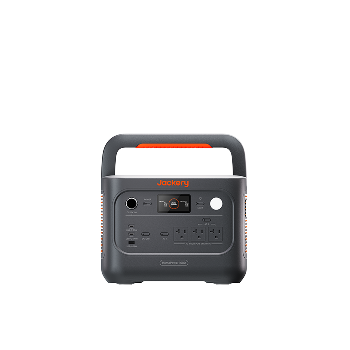
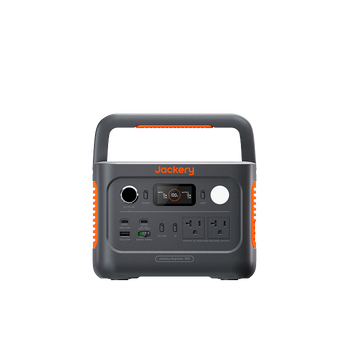
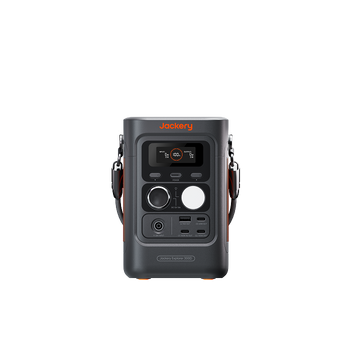
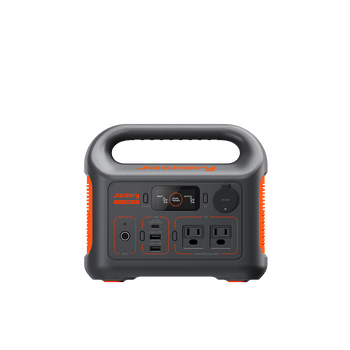
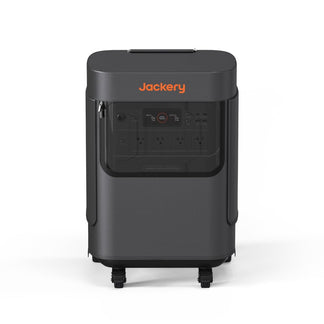
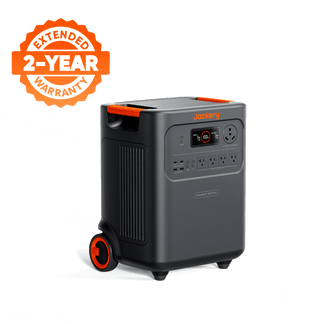
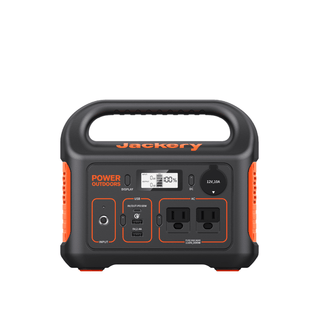
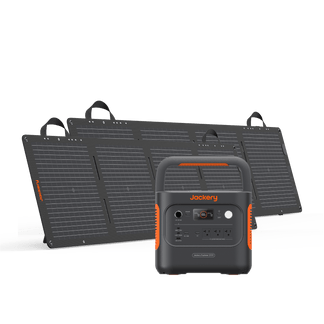
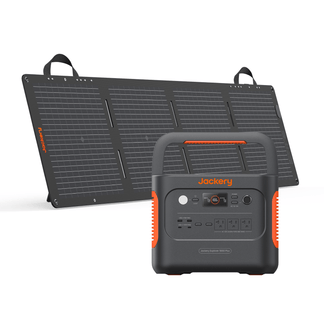
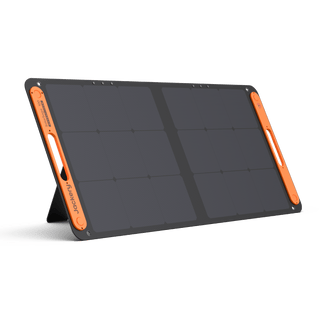
During power outages or off-grid situations, Jackery Solar Generators can help maintain airflow and comfort by powering portable fans and other cooling devices. Since fans use relatively little electricity, portable power stations or solar generators are well-suited for keeping air moving for long periods, especially in warm climates or overnight scenarios where continuous airflow matters. Here are the recommended Jackery Solar Generators for solar-powered fans and other cooling appliances:
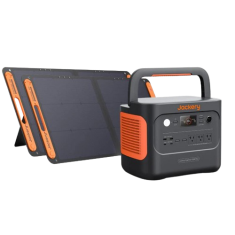
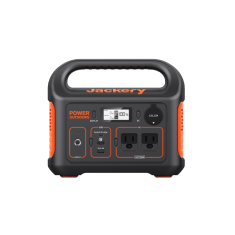
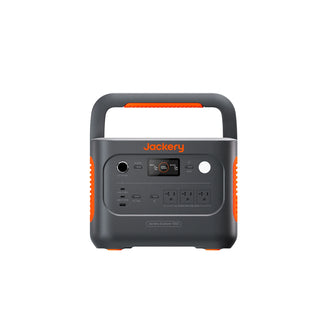
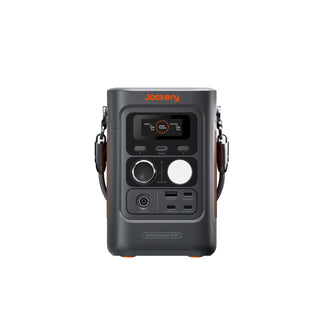
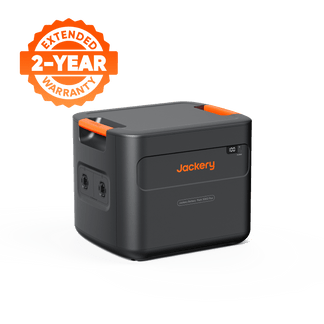
Jackery Solar Generator 240 v2
The Jackery Solar Generator 240 v2 is a small battery backup that can run portable fans for hours. Whether it’s a clip-on desk fan or a USB-powered unit, this solar battery backup solution maintains steady airflow for hours on end without demanding complex setup or monitoring. Its straightforward output makes the Jackery Solar Generator 240 v2 useful for personal cooling during short outdoor stops, quick refresh breaks, or compact spaces where only minimal ventilation is needed.
Appliances Running Time
- USB Fan (15W) = 8.4H
- Small Desk Fan (25W) = 6.0H
- Midsize AC Portable Fan (50W) = 3.5H
- Larger AC Floor Fan (100W) = 1.9H
- Outdoor Fan (150W) = 1.3H
Who Should Buy This
If you are mainly powering a single small fan or a USB-based cooling device during brief outdoor outings or in tight spaces, the Jackery Solar Generator 240 v2 is the most compact fit.

Customer Review
Used for a weekend camping trip. powered air mattresses, charged 2 phones, and powered a projector to watch a movie, all at an unpowered site. lasted the entire weekend with no recharge.
— Tyler C.
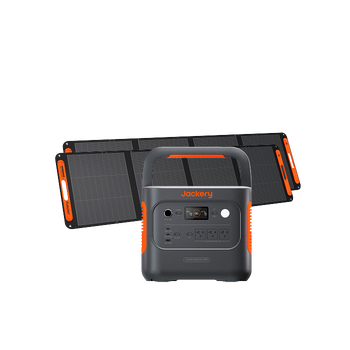
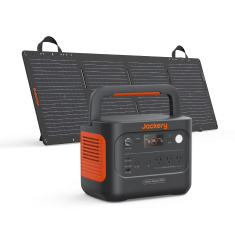
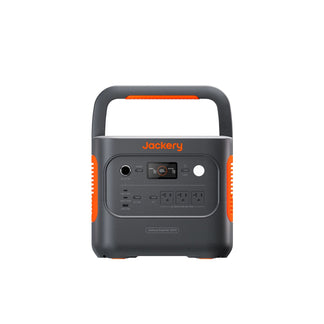
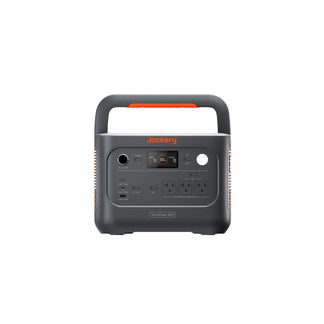
Jackery Solar Generator 600 v2
The Jackery Solar Generator 600 v2 is a compact battery backup solution that can handle portable fans of varying sizes better than the smallest units because it supports both USB and higher-wattage AC models. That means you can run a mid-size desk or clip fan comfortably while also powering essential small devices like phones and lights. Its balance of capacity and portability makes it a good choice for basic personal units and larger portable setups.
Appliances Running Time
- USB Fan (15W) = 21.0H
- Small Desk Fan (25W) = 15.0H
- Midsize AC Portable Fan (50W) = 8.7H
- Larger AC Floor Fan (100W) = 4.8H
- Outdoor Fan (150W) = 3.3H
Who Should Buy This
If you want to run one or two fans of different types (USB and AC) along with basic accessories without overcomplicating your power setup, the Jackery Solar Generator 600 v2 fits that use case.

Customer Review
Definitely a 5-star. This is our 4th jackery product. We have the 3000, 2000 plus, and the extra battery for the 2000, and now the 600 v2. We got this to power our lights, a radio, and charge our phones in our cabin. I would suggest the jackery solar generators, big or small. They arrive fast and work without fail.
— Karon O.
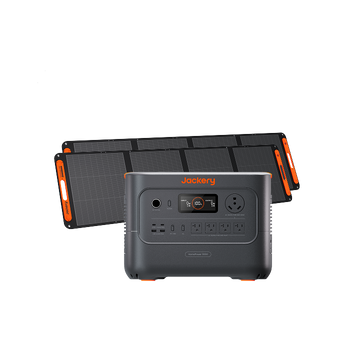
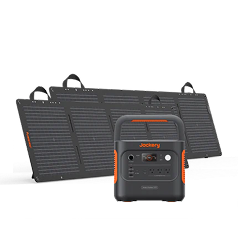
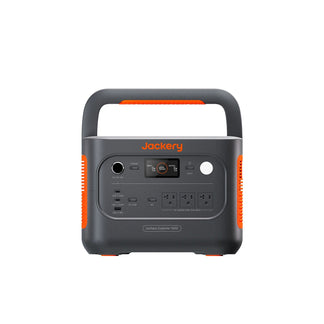
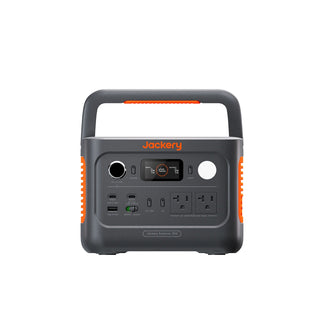
Jackery Solar Generator 1000 v2
When cooling needs extend beyond personal comfort to include multiple fans spread across a space, the Jackery Solar Generator 1000 v2 delivers the sustained output to handle that consistently. It supports higher-draw portable fans without forcing you to switch them off every time you plug in another device. In practical terms, this means you can distribute cooling around a small group area or outdoor setup without juggling usage or compromising airflow.
Appliances Running Time
- USB Fan (15W) = 29.2H
- Small Desk Fan (25W) = 21.9H
- Midsize AC Portable Fan (50W) = 13.5H
- Larger AC Floor Fan (100W) = 7.6H
- Outdoor Fan (150W) = 5.3H
Who Should Buy This
If you intend to power several portable fans simultaneously or combine fan use with additional devices (such as lighting or device charging) for extended periods, the Jackery Solar Generator 1000 v2 meets that demand.

Customer Review
The backup power supplies (Jackery 1000 v2) are doing the job well so far. Thankfully, we haven’t lost power yet, but I let them power the fridge and freezer for a handful of cycles, and they worked. When I disconnected from the grid power, the backups maintained power flawlessly.
— Anonymous.
Ceiling Fan Wattage FAQs
What size of solar generator do I need to run a ceiling fan?
A ceiling fan typically requires 50 - 75 watts, and even a small solar generator can support such small appliances. Jackery Solar Generators are more commonly used to power portable fans and other household appliances. If you want to understand what size of solar generator you need for your fan, you can use the runtime calculator available on the Jackery Buying Guide page. You can choose the Jackery model from the dropdown and then add the appliance's wattage consumption. Click Enter to get an estimated runtime.
Are there any tips for saving my electricity bills?
Many ways can save your watts, and eventually, your electricity bills are reduced.
- Check the daily consumption of all your equipment, check for the useless stuff, and turn it off.
- Use your air conditioner on a higher thermostat and supplement it with a fan.
- Adjust your fridge and freezer temperature to a higher number.
- Shorter showers can save electricity spent on heating.
- Wash clothes in warm or cold water instead of very hot.
- Adjust to warm on your water heater.
- Get energy-efficient appliances.
- Switch to LED lighting.
- Dimmer switches can also help you reduce power consumption.
Does leaving a ceiling fan turned on waste electricity?
Yes, it does. Because a fan does not cool the air in the room, even if you leave it on while you are not in the room, it won't help you when you come inside. The temperature of the room remains the same.
How many watts does a 52-inch ceiling fan use?
A standard 52-inch ceiling fan usually uses 85 to 90 watts at normal speeds. Energy-efficient models with modern motors can operate at significantly lower wattage, especially when run at medium or low speed.
Final Thoughts
Ceiling fans are among the most energy-efficient appliances in a home, typically using well under 100 watts even when run continuously. Their low power demand makes them cost-effective for daily use and practical during warm-weather conditions where long runtime matters more than high output. Jackery Solar Generators can support airflow and comfort during power outages by powering portable fans. Understanding how many watts does a ceiling fan use helps homeowners plan realistic cooling and backup strategies without overestimating power needs.


