










![[Add - on] Jackery Manual Transfer Switch for Explorer 5000 Plus - Jackery](http://www.jackery.com/cdn/shop/files/add-on-jackery-manual-transfer-switch-for-explorer-5000-plus-9017324.png?v=1754016782&width=170)












































![How Many Watts Does a Refrigerator Use? [and Mini-Fridge, Freezer]](http://www.jackery.com/cdn/shop/articles/how-many-watts-does-a-refrigerator-use-and-mini-fridge-freezer-8759355.jpg?v=1765181906)
Brief Answer: A standard refrigerator uses 300 to 800 watts, while mini-fridges draw 50 to 100 watts and freezers typically run on 150 to 400 watts. Knowing these numbers not only helps you estimate electricity costs but also reveals where you can save big on your energy bill.
No kitchen is complete without a refrigerator, and this appliance runs 24/7. Hence, it is important to know how many watts a refrigerator uses for many reasons. Suppose you live in an area that can be hit by harsh weather, and there is a chance of a power outage. Now, you need to know an estimate of power usage by appliances to arrange a power generator. Also, you should know the average power consumption to save on the power bill.
How many watts a refrigerator use is a challenging question because power consumption depends on many factors, including the type of refrigerator, size, usage, and season. Generally, a domestic fridge consumes about 300-800 watts. Jackery Solar Generators are essential home backup solutions that can run refrigerators for hours or even days. These home battery backups not only help you lower the reliance on the electricity grid but also ensure your home stays functional during power outages.
AI Takeaways
- On average, a home refrigerator uses 300-800 watts. Different types of refrigerators use different watts. For example, minifridge wattage is less than the refrigerator watts and freezer power requirements. You can check the exact power usage through the power meter.
- In an average house, a fridge (300W) uses around 2.4kWh a day or 72kWh a month, costing about $12.57 monthly.
- As electricity bills are soaring, this is high time to analyze alternate energy sources that are cost-effective and more environment-friendly. Solar generators are a great option because they have no fuel cost after the initial investment.
- How to calculate how much energy your refrigerator uses.
How Many Watts Does A Refrigerator Use?
A typical refrigerator uses 300 to 800 watts, depending on size, age, and efficiency. Mini-fridges usually run on 50 to 100 watts, while freezers need 150 to 400 watts. Actual power draw varies as fridges cycle on and off, so average consumption is lower than peak wattage.
1. Definition of Amps, volts, watts, running watts, watt-hours
Watt (W): Watt is a unit of Power indicating the rate of energy transfer. In electric terms, it is the rate at which one ampere of current flows through one volt.
Formula: W= A* V
Volt or Voltage (V): Volt is the energy measure running through an electric circuit.
Current in Ampere (A): Current is the electricity flowing through the circuit per second. The more the current, the more the ampere.
Capacity in Watt-hour (Wh): The capacity of a battery is Amps multiplied by voltage. It is the total amount of electricity generated due to electrochemical reactions in the battery.
- Running watts are the continuous watts required to keep the electronic device running. It is also called rated watts.
- Starting watts are extra watts required to start electrical devices, which are needed for a few seconds. This is the maximum watt measure required from the electric source.
2. How Many Watts Does A Mini Fridge, Freezer, and Refrigerator Use?
Mini fridges usually consume 50 - 100 watts, freezers run on about 150 - 400 watts, and standard refrigerators use around 300 - 800 watts. The exact usage depends on factors like capacity, energy rating, and usage habits. Since these appliances don’t run constantly, their average daily power consumption is lower than the listed wattage.
In order to figure out how many watts your refrigerator uses, check the sticker inside for voltage (V) and amperage (A), then multiply them:
Watts = Volts × Amps
But here is the catch: this number reflects power when the compressor is running. Since the compressor cycles on and off, the fridge does not use that full wattage all the time.
For example, if a refrigerator is rated at 120 watts:
Running 24 hours straight = 120 × 24 = 2,880 watts (or 2.88 kWh).
In reality, the compressor runs about one-third of the time. So: 2,880 ÷ 3 = 960 watts (or 0.96 kWh).
That is why actual energy use is always lower than the maximum wattage printed on the label.
How many watts does a refrigerator is not a constant because many factors contribute to power consumption, including;
- Location of the refrigerator as the ones placed in well-ventilated areas use less Power.
- If you open the fridge door frequently or left open, it will consume more watts.
- Seasons as refrigerators use more energy during summer.
- Technology also plays a role because inverter refrigerators may use less energy.
|
|
Refrigerator Wattage |
Running Wattage |
Length of Time Powered (Hours) |
Estimated Power Needed Daily (Watt-Hours) |
|
Refrigerator |
500 W |
167 |
8 |
1336 |
|
Minifridge |
65 W |
22 |
8 |
176 |
|
Freezer |
100 W |
33 |
8 |
264 |
3. How Many Amps Does A Refrigerator Use?
A typical refrigerator uses about 3 to 6 amps while operating at 120 volts, but this can vary significantly based on the model, age, and size of the appliance. We have figured out how many watts a refrigerator is and will now calculate the ampere usage of the refrigerator.
Amps = Watts/Volts.
If your refrigerator uses 960 watts and 120 Volts then we can calculate that it will use eight amps (960 watts/120 volts).
How Much Energy Your Own Refrigerator Uses?
Your refrigerator's energy usage depends on its age, size, and energy efficiency, but a standard model uses between 300 to 1,460 kWh yearly.
The first step to finding out how many watts does a refrigerator start with identifying the wattage of your refrigerator. Usually, a sticker is placed on the inside wall of your fridge or sometimes at the back of the unit. You can also find the specification in the user manual of your appliance.
You will find the volts and amperes in the specification. Suppose your refrigerator runs on 120 Volts and 5 amperes.
- Volts = 120
- Amperes = 5
- Watts = Volts * Amperes = 120 * 5 = 600
Best Solar Generator for Refrigerator
Refrigerators and freezers are among the most power-hungry appliances in any home, and keeping them running during outages or off-grid living is essential. Solar generators offer a reliable, renewable way to keep food fresh without depending on the grid or noisy fuel-based alternatives. Jackery is a global leader in manufacturing solar generators, portable power stations, and solar panels. These essential home backup solutions can keep refrigerators and other appliances running for days during long-term outages.
Below are some of the best Jackery Solar Generators that can power refrigerators of different sizes and needs.
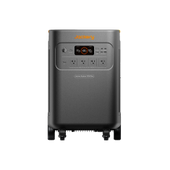
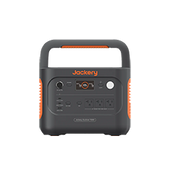
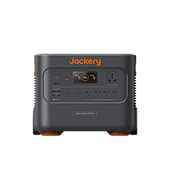
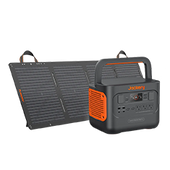
Jackery Solar Generator HomePower 3600 Plus
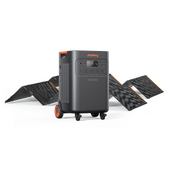
The Jackery Solar Generator HomePower 3600 Plus is a powerful and expandable essential home backup solution that can run most household appliances. With its massive battery capacity and expandable options, it can power a fridge for up to 14 days. It is the world's lightest and smallest 3.6kWh LFP solar generator with wheels and a telescoping handle, making it easy to roll around wherever you go.
Appliances Running Time
- Mini Fridges (70W) = 33.1H
- Single-Door Refrigerator (100W) = 25.0H
- Double-Door refrigerator (300W) = 9.5H
- Side-by-Side Refrigerator (400W) = 7.2H
- French Door Refrigerator (500W) = 5.8H
- Four-Door & Multi-Door Refrigerators (800W) = 3.7H
Who Should Buy This
If you need a powerful and essential home backup solution that can provide days of fridge backup, the Jackery Solar Generator HomePower 3600 Plus is a reliable choice.

Customer Review
Very easy to set up, solar charge, great support! Going to buy more batteries!
— Mike Palmer.
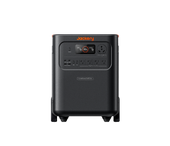
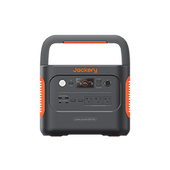
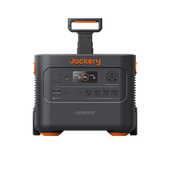
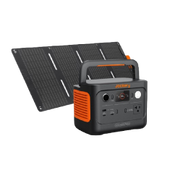
Jackery Solar Generator HomePower 3000
The Jackery Solar Generator HomePower 3000 is an advanced essential home backup solution that can keep refrigerators and mini fridges running for over a day. It has a massive battery capacity that can power most household appliances during outages. With the help of dual-sided handles, you can easily move the solar generator from one room to another. Its 20ms UPS seamless switching allows you to ensure the refrigerator remains powered during outages.
Appliances Running Time
- Mini Fridges (70W) = 28.4H
- Single-Door Refrigerator (100W) = 21.4H
- Double-Door refrigerator (300W) = 8.1H
- Side-by-Side Refrigerator (400W) = 6.2H
- French Door Refrigerator (500W) = 5.0H
- Four-Door & Multi-Door Refrigerators (800W) = 3.2H
Who Should Buy This
If your area receives frequent outages that lead to interruptions in the power supply to fridges and spoiled food, the Jackery Solar Generator HomePower 3000 is an ideal choice.

Customer Review
So far, I have only used the grid to charge the unit, but it holds a charge like nothing I have seen before. I have the Fridge, Deep Freezer, Entertainment Center, Router, Desk Top Computer, and one Lamp, and I only hafta plug it in to recharge every 38 hours.
— Michael Meeder.
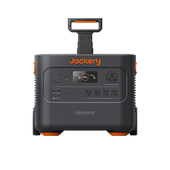
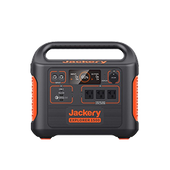
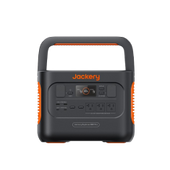
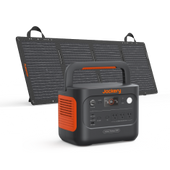
Jackery Solar Generator 2000 Plus
The Jackery Solar Generator 2000 Plus features a large battery capacity, allowing it to keep the refrigerator running for hours during a power outage or blackout. It has double wheels and a pull rod for easy movement from one room to another. If you want a home battery backup solution for long-term power outages that last for days, you can expand the battery capacity to a whopping 24kWh with the help of the additional Jackery Battery Pack 2000 Plus. There is also a mini display where you can check the output numbers and ensure the proper working of your battery-powered refrigerator. It shows input and output wattage ratings.
Appliances Running Time
- Mini Fridges (70W) = 19.0H
- Single-Door Refrigerator (100W) = 14.2H
- Double-Door refrigerator (300W) = 5.3H
- Side-by-Side Refrigerator (400W) = 4.0H
- French Door Refrigerator (500W) = 3.2H
- Four-Door & Multi-Door Refrigerators (800W) = 2.0H
Who Should Buy This
If you want an expandable home battery backup solution that can keep refrigerators running for days during the event of outages, you can consider the Jackery Solar Generator 2000 Plus.

Customer Review
I have had my 2000plus for 3 months and am so pleased with how long it keeps my refrigerator running when power is out that I have ordered 1 battery pack to see how much more running time it gives me. With my multiple 1000v2s I am confident we are fully prepared.
— Ilene Wagner.
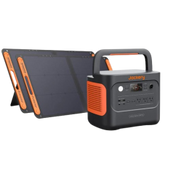
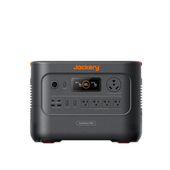
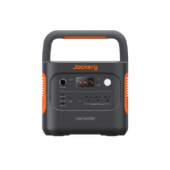
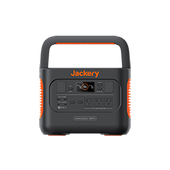
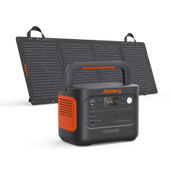
Jackery Solar Generator 1000 Plus
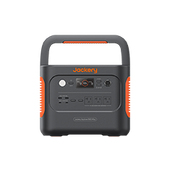
If you are looking for a solar generator that can not only charge a refrigerator during a power outage but can also double up as a camping generator, you can consider choosing the Jackery Solar Generator 1000 Plus. It can power most of your household or outdoor appliances, such as refrigerators. It also has a foldable handle that ensures easy transportation to camping or RV campgrounds. Since it emits only 30dB of noise, you don't have to worry about charging your appliances at night.
Appliances Running Time
- Mini Fridges (70W) = 11.8H
- Single-Door Refrigerator (100W) = 8.8H
- Double-Door refrigerator (300W) = 3.3H
- Side-by-Side Refrigerator (400W) = 2.5H
- French Door Refrigerator (500W) = 2.0H
- Four-Door & Multi-Door Refrigerators (800W) = 1.3H
Who Should Buy This
The Jackery Solar Generator 1000 Plus is an ideal home battery backup solution that can power most appliances, such as refrigerators and freezers, for long hours.

Customer Review
Everything arrived in good shape. On the plus side, I used the unit to power the fridge to see how long it would last, just powering the fridge. I found that it will power my fridge for 21 hours. Better than I thought. I have purchased the extra battery unit to extend the time.
— William McClellan.
In storm-prone Florida, Lynne depends on her Jackery Explorer 1000 Plus to keep essentials running through hurricanes. From powering her freezer and fridge to opening her heavy hurricane shutters, Jackery gave her both comfort and independence when her neighborhood went dark for days. See how Lynne prepared her home on Jackery Stories.
How to Reduce Refrigerator Power Consumption?
You can reduce refrigerator power consumption by keeping it full but not overcrowded, setting the temperature to 37 - 40°F (2.7 - 4.4°C), cleaning condenser coils regularly, sealing door gaskets tightly, and placing the fridge away from heat sources. Choosing an Energy Star–rated model also cuts long-term electricity use significantly. Here is how to reduce refrigerator power consumption:
Invest In An Energy-Efficient Appliance
Old refrigerators use older technology, and they are not very energy efficient. So, investing in a new energy-efficient appliance greatly reduces the watts required to run your refrigerator. You have the energy usage information on the sticker on your refrigerator. The more + signs you have after A, the more energy-efficient your refrigerator is.
Select A Well Ventilated Location
It is important to place your refrigerator where it gets enough ventilation, and the compressor does not have to run continuously to maintain the temperature. The location must be away from an oven or hub and must avoid direct sunlight.
Maintain Optimum Temperature
Always set your temperature between 37-40°F (2.7 - 4.4°C) for the fridge and 0°F (- 17°C) for the freezer. It ensures that your refrigerator uses only the required watts and keeps the food safe for consumption. Every additional degree of temperature costs around 6% more electricity.
Do Not Frequently Open The Refrigerator Door Or Keep It Open
It is obvious that whenever you open the refrigerator door, you let the cool and warm air inside. Consequently, your refrigerator uses more energy to again come to the optimal temperature. It increases how many watts your refrigerator uses during the day. So, you might want to fight the urge to open the fridge door just to check what is inside.
Defrost Food In The Refrigerator
This is a really interesting tip when you place the frozen food inside the refrigerator to defrost; it serves like an ice pack. Since it keeps the refrigerator temperature down, you save on the energy consumption of your refrigerator because the frozen food is doing its work instead of the compressor.
Do Not Place Warm Items In The Refrigerator
The flip side of the above tip is never to place warm or hot food inside the refrigerator. Because it heats the refrigerator, the compressor must do more work to return it to the optimal temperature. The more work it does, the more watts it eats.
Defrost Your Freezer
Regularly defrosting your freezer also makes your refrigerator energy efficient because the thick ice layer insulates, and the appliance has to use more energy to maintain the temperature. However, it is even better if you have a no-frost technology appliance.
Check Door Seals
A loose rubber seal means your refrigerator door is not properly insulated, and the cool air is escaping from it continuously. Also, keep the items in the fridge properly, so they do not hinder complete door insulation.
FAQ about refrigerator wattage
1. What size generator do I need to run a refrigerator?
The size of generator needed to run the refrigerator will depend on the wattage consumption of the appliance and its running time. If you are powering any appliance with the Jackery Solar Generator, you can easily calculate the working hours by using the Running Time Calculator. Let's take an example: On the product page of the Jackery Solar Generator HomePower 3000, scroll down to visit the calculator and enter the refrigerator's wattage consumption. The Jackery Solar Generator HomePower 3000 can power your refrigerator (100W - 300W) for over a day on a single charge.
2. Will a 1500-watt generator run a refrigerator?
Yes, a 1500-watt generator is enough for running a refrigerator. However, there are a few factors to keep in mind. For example, you need to check the rated and surge wattage of the refrigerator and ensure the generator can handle them for safe charging.
3. Can I run a full-size refrigerator using a solar generator?
Yes, if your solar generator is big and smooth enough, you can run a full-size refrigerator without any problem. Jackery Solar Generator HomePower 3600 Plus can run a refrigerator for days, so you don't have to worry about outages.
4. Can a generator damage a refrigerator?
No. A quality generator does not damage a refrigerator. For instance, Jackery has a built-in BMS system that provides 12 layers of charging safe guarantees and monitors energy use.
5. What Jackery model would I need to power a stand alone deep freezer?
A standalone deep freezer uses anywhere around 100 - 400 watts. The exact Jackery Solar Generator you choose will depend on how long you would want to power the freezer. For instance, the Jackery Solar Generator HomePower 3600 Plus can run a deep freezer (100 - 400 watts) for 1-2 days on a single charge.
Conclusion
A refrigerator is an essential electric appliance for any household and it runs 24 hours a day. Therefore it is important to know how many watts a refrigerator uses and how to make it energy efficient. This helps in saving on power costs. Also, when you expect a power outage or planning to spend some time off-grid, you need to know how big a power generator you need to support the essentials. We have discussed the power consumption of refrigerators, minifridges, and freezers and how you can calculate your refrigerator's wattage requirement.





What Jackery model would I need to power a stand alone deep freezer?
Leave a comment