













![[Add - on] Jackery Manual Transfer Switch for Explorer 5000 Plus - Jackery](http://www.jackery.com/cdn/shop/files/add-on-jackery-manual-transfer-switch-for-explorer-5000-plus-9017324.png?v=1754016782&width=170)





































































If you want to convert VA to watts, check out the below formula:
For DC circuits: VA = Watts
This is because the volt-ampere and watts are in phase. If the volt-ampere is 15VA, the watts will also equal 15W.
For AC circuits: VA × PF = Watts
The power factor is introduced because volts and amps are not always in phase. If the volt-ampere is 20VA with a power factor of 0.8, the watts value equals 20VA × 0.8 = 16W.
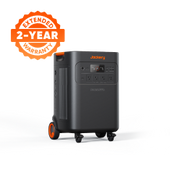
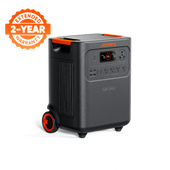
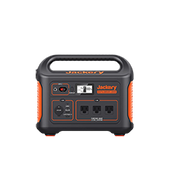
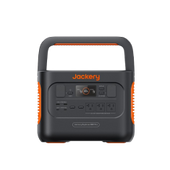
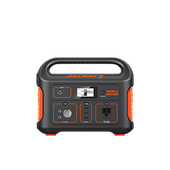
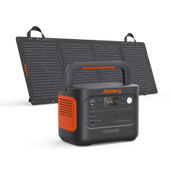
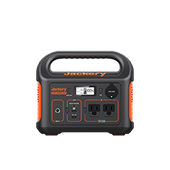
Jackery Portable Power Stations are robust and reliable battery backup solutions with high capacities for various indoor or outdoor appliances. These power stations can run essential appliances during home power outages or blackouts and can also be carried to outdoor locations or remote locations. They are light in weight and have a compact design, making these power stations ideal for various usage scenarios.
AI Takeaways
- The VA (volt-amperes) is equal to watts in direct current systems because the voltage and current are in phase.
- In AC circuits or when there's a reactive (non-resistive load), volts and amps are no longer in phase, and watts are equal to the multiplication of volt-amperes and power factor.
- Watts is the real power that generates heat or performs work, whereas volt-amperes are the apparent power used to simplify power ratings.
- Watts can be used to evaluate heat generated or dissipated and calculate the energy cost. Volt amperes, on the other hand, help you correctly size wires, fuses, and circuit breakers.
- What is the power factor.
What are Units of Power?
VA (volt-amperes) measures apparent power, while watts (W) measure real power or the actual energy consumed by devices. Before understanding how to convert VA to watts, it is essential to look at different power units. Let's explain them briefly:
Volt: It is defined as the difference in electrical potential energy between any two points for every charge unit. When you have a 10V battery, the difference between the positive and negative terminals is rated at 10 volts. The potential energy measured in the battery acts as the electromagnetic force or the attractive and repulsive forces between electrically charged particles.
Amp: If the volts refer to the motion or pressure of electron flow in a circuit, amps denote the number of electrons flowing per second. One amp is equal to one coulomb per second.
Watt: Whether you are trying to figure out the power consumption of an appliance or the entire home, you'll need to keep watts in mind. They are the measure of power or energy flow. Understanding amps, volts, and watts will help you calculate whether or not you've enough power in your circuits to charge household appliances.
Watt's Law: Now that you know the different power units, it's essential to understand Watt's Law, which tells the relationship between these units: voltage, watts, and amps. The relationship between these units can be understood using Watt's triangle, which represents all three units.

If you want to calculate the power and have only voltage and current, all you need to do is use the formula from the triangle. To use the triangle, you need to cover the unit you want to calculate. If the two remaining units are next to each other, multiply them. On the other hand, if the remaining units are one above the other, you'll need to divide the top unit by the bottom.
VA: A volt-ampere is typically used in direct current circuits to measure electric power. It determines how much energy an appliance uses and the current drawn from the circuit. You can calculate the volt-ampere value by multiplying volts and amps together.
How to Convert VA to Watts
Converting VA to watts is simple and direct. It is essential because VA and watts represent different aspects of electrical power. While the VA represents the apparent power, watts determine the actual power consumed or used by an appliance.
The VA to watts conversion will help you make decisions about electrical equipment, ensure efficient energy usage, and prevent potential safety hazards. If you have VA values for a DC circuit, they will generally be equal to watts. On the other hand, if it's an AC circuit, the concept involves a new factor called PF (power factor).
Let's explain how to convert VA to watts briefly:
How to Convert VA to Watts for DC current?
In DC circuits, the volts and amps are in phase, and the volt amp is equal to watts.
VA = Watts
For example, if the value of VA is 15, the watts will also be equal to 15.
How to Convert VA to Watts for AC current?
In AC circuits, if the volts and amps are in phase, such as in a resistive load, the value of the volt-amp will be equal to watts.
VA = Watts
Where V is the RMS voltage, and A is the RMS amperage.
Generally, in AC circuits, the volts and amps are not always (or precisely) in phase. If you want to convert apparent power in a volt amp to real power in watts, you'll need to consider the power factor. The PF is the ratio between VA (RMS Voltage × RMS Amperage) and watts.
VA × PF = Watts (for any load)
Computer power supplies and other supplies have a power factor of 90%, whereas power motors under heavy load have a PF of 35%.
Example: If your battery is measured at 50V at 5A per hour, the volt amp value will be 50V × 5A = 250VA. If we assume the power factor to be 85%, the value of watts will be:
Watts = 250VA × 85% = 212.5W.

Here's a table where we will convert VA to watts:
|
Volt Ampere [VA] |
Watt [W] |
|
0.01VA |
0.01W |
|
0.1VA |
0.1W |
|
1VA |
1W |
|
2VA |
2W |
|
3VA |
3W |
|
5VA |
5W |
|
10VA |
10W |
|
20VA |
20W |
|
50VA |
50W |
|
100VA |
100W |
|
1000VA |
1000W |
How to Convert Watts to VA
Watts and volt-amperes are both units of measurement for electrical power and represent different aspects of power. The difference between the two units is due to some phase differences between voltage and current in AC circuits. For this reason, the conversion from watts to VA depends on the power factor.
The apparent power in volt-ampere (VA) is equal to watts divided by the power factor.
Here's the mathematical representation:
VA = W ÷ PF
Where VA is the apparent power
W is the real power
PF is the power factor between 0 and 1

For example, if the real power is 2000W and the power factor is 0.5, the apparent power in volt-ampere will be equal to:
VA = 2000W ÷ 0.5 = 4000VA
If the power factor is unity, the values of watts and volt-amperes will be equal. Here's a table revealing common watts-to-VA conversions when PF is 1.
|
Watt [W] |
Volt Ampere [VA] |
|
0.01W |
0.01VA |
|
0.1W |
0.1VA |
|
1W |
1VA |
|
2W |
2VA |
|
3W |
3VA |
|
5W |
5VA |
|
10W |
10VA |
|
20W |
20VA |
|
50W |
50VA |
|
100W |
100VA |
|
1000W |
1000VA |
VA Vs. Watts: What's the Difference
Volt-amperes (VA) and watts (W) are units of electrical power measurement. The difference between these two units is that watts represent real power, whereas the volt-amperes represent apparent power. Here's a table that compares these units briefly:
|
|
VA |
Watts |
|
Type of Power |
Real Power |
Apparent Power |
|
Abbreviation |
W |
VA |
|
Calculation |
For DC: Vdc × Idc For AC: v(t) × i(t) dt |
For DC: Vdc × Idc For AC: VRMS × IRMS |
|
Used for |
It is used to evaluate heat generated or dissipated and calculate the cost of energy. |
It is used to properly size wires, fuses, and circuit breakers. |
|
Add multiple ratings together |
You can add the W ratings linearly. |
There is no straightforward method to add VA. However, if you add VA linearly, the result will be equal to or greater than the actual total. |
|
Instrument needed for measurement |
Wattmeter (Note: A typical multimeter cannot measure watts unless both V and I are in DC.) |
A typical multimeter can measure VRMS and IRMS, which can then be multiplied to get VA. |
What is the Power Factor?
The power factor represents the energy efficiency and is expressed as a percentage. The PF is the ratio of working power (measured in kilowatts) to apparent power (measured in kilovolt ampere). The apparent power or demand measures the amount of power used to run an appliance for a certain period. You can calculate the apparent power by multiplying V and A. Power factor (PF) increases the overall cost of a power distribution system. This is because lower PF requires a higher current to supply the loads.
Here's how power factor, volt-ampere, and watts are related:
PF = kW ÷ kVA or PF = W ÷ VA
Let's take an example to understand:
An appliance runs at 100kW (working power) and 125kVA (apparent power). You can use the power factor formula:
PF = 100kW ÷ 125kVA = 80%
This means only 80% of the incoming current does useful work, and 20% is wasted heating the conductors. The higher the PF, the more efficient the distribution system.
Jackery Portable Power Stations Explained
Jackery is a renowned manufacturer of solar generators, portable power stations, and solar panels that power various appliances such as fridges, CPAP machines, heaters, sump pumps, and electric grills. Whether you're planning to travel to remote locations, looking for a reliable power backup, or wishing to practice off-grid living, the Jackery Portable Power Stations are excellent power sources.
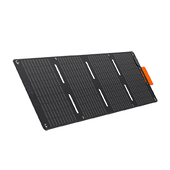
When placed under direct sunlight, the Jackery SolarSaga Solar Panels absorb the sun's rays and then convert the solar energy to DC electricity. The pure sine wave inverter then converts the DC to AC electricity and charges household or outdoor appliances. These portable power stations feature LiFePO4 or NMC batteries that can safely charge appliances whenever and wherever required.
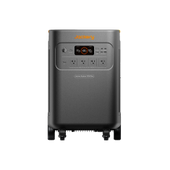
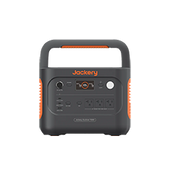
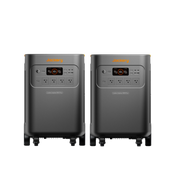
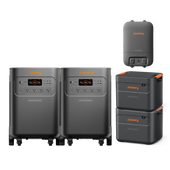
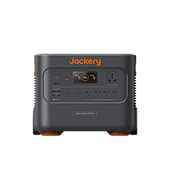
Jackery HomePower 3600 Plus
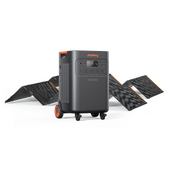
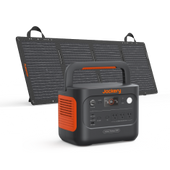
The Jackery HomePower 3600 Plus is a powerful and essential home backup solution that's ideal for keeping the home functional when the grid fails. Its luggage-style design with a telescoping handle and wheels ensures easy transportation from one room to another. It is expandable with the help of add-on battery packs to keep the fridge powered for up to 14 days. You can also connect this home battery backup to the home's electricity panel to ensure essential circuits remain powered when the grid goes down unexpectedly.
Appliances Running Time
- Microwave (950W) = 3.1H
- Electric Grill (1000W) = 3.0H
- Refrigerator (300W) = 9.5H
- AC (1200W) = 2.5H
- TV (100W) = 25.0H
Who Should Buy This
If you want an essential home backup solution that can be expanded to meet the power needs during long-term outages, you can consider going ahead with the Jackery HomePower 3600 Plus.

Customer Review
Very easy to set up, solar charge, great support! Going to buy more batteries!
— Mike Palmer.
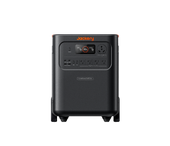
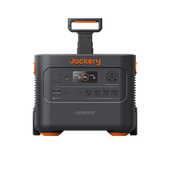
Jackery HomePower 3000
The Jackery HomePower 3000 is the world's lightest and smallest 3kWh LFP power station that can be easily moved from one room to another. It has a massive battery capacity and can run fridges, fans, and lights for days. This essential home backup solution features dual-sided handles for easy transportation and handling. You can connect this battery backup solution to the home's electricity panel via the Jackery Manual Transfer Switch and keep essential circuits powered during outages.
Appliances Running Time
- Microwave (950W) = 2.7H
- Electric Grill (1000W) = 2.6H
- Refrigerator (300W) = 8.1H
- AC (1200W) = 2.1H
- TV (100W) = 21.4H
Who Should Buy This
The Jackery HomePower 3000 is the essential home backup solution that can keep critical appliances during outages or blackouts.

Customer Review
I lost power, and since I had the solar generator, I decided to plug it in. WOW, no noise. I plugged in the hookup from my home panel that runs just my refrigerator, freezer, a few lights, recliner, C-pap, well. Had to throw the breaker and then had to restart the generator. It finally recognized I needed power and started to work. LOVE MY JACKERY.
— Ann Pella.
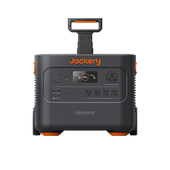
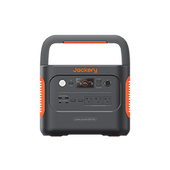
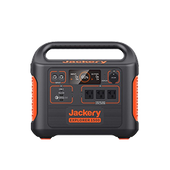
Jackery Explorer 2000 Plus Portable Power Station
The Jackery Explorer 2000 Plus Portable Power Station is a stylish and powerful charging solution ideal for home outages or off-grid living. The 20ms EPS ensures essential appliances like refrigerators or CPAP machines stay powered when a power outage hits the area. It operates by emitting less than 30dB of noise, which is less than library-level noise, making the portable power station ideal for indoor use. With the additional Jackery Battery Pack 2000 Plus, the battery can quickly expand from 2kWh to 24kWh.
Appliances Running Time
- Microwave (950W) = 1.7H
- Electric Grill (1000W) = 1.6H
- Refrigerator (300W) = 5.2H
- AC (1200W) = 1.4H
- TV (100W) = 14.2H
Who Should Buy This
The Jackery Explorer 2000 Plus Portable Power Station is an expandable home battery backup solution that can keep critical devices powered and can also be expanded as your power needs grow.

Customer Review
Bought this unit to tide me over during hurricane power outages. I tested it on the fridge and microwave, & it worked fine. Hope I rarely have to use it, but it's good to know it's ready when needed.
— Julia.
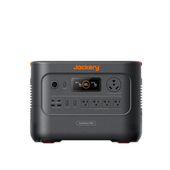
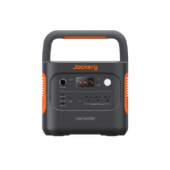
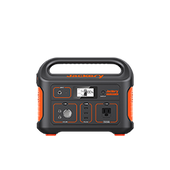
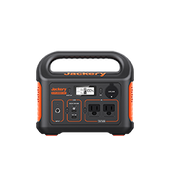
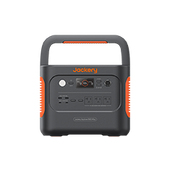
Jackery Explorer 1000 Plus Portable Power Station
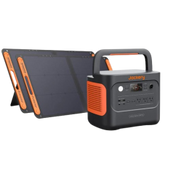
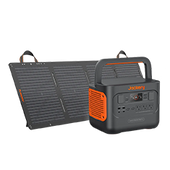
If you're looking for a charging solution that's ideal for indoor and outdoor usage scenarios, then the Jackery Explorer 1000 Plus Portable Power Station might be an excellent solution. It has more power in smaller sizes and supports 99% of household or outdoor appliances. You can carry the portable power station to camping, overlanding, RVing, or other adventure trips. The LiFePO4 provides a constant voltage and pure sine wave to ensure safety for the electrical appliances. There's an innovative ChargeShield technology to offer protection against equipment damage.
Appliances Running Time
- Microwave (950W) = 1.1H
- Electric Grill (1000W) = 1.0H
- Refrigerator (300W) = 3.3H
- AC (1200W) = 54 minutes
- TV (100W) = 8.8H
Who Should Buy This
The Jackery Explorer 1000 Plus Portable Power Station is a battery backup solution that can keep critical devices powered at home during outages and can also be carried to outdoor locations.

Customer Review
Went on a 4-day camping trip, and the 1000 Plus was more than enough to last the entire time. It was mostly used for rechargeable lanterns, LED dog collars, and small gadgets. It's great to have for emergencies as well. Highly recommend it!
— Mitch Rulloda.
Common Questions About VA to Watts Conversion
How big of a portable power station do I need?
The right size of a portable power station will directly depend on the total appliance's wattage you would like to charge and the number of hours you want to power them. Let's take an example to understand:
Suppose there's a brief power outage in your area, and you want to run a refrigerator (300W) and a portable fan (50W) simultaneously. If you are powering these appliances with the Jackery HomePower 3600 Plus, the working hours can be calculated with the help of the Running Time Calculator available on the product page.
On the product page, scroll down to find the calculator and enter the total appliance wattage to get an estimated runtime. In this case, the Jackery Solar Generator HomePower 3600 Plus will run these appliances (350W) for 8.2 hours.
How much is 600 VA in watts?
600 VA is equal to 600W at the power factor of unity or 1. However, if the PF reduces to 0.8, 600VA will be equal to 480W.
Is VA higher than watts?
Watts and VA ratings can differ significantly. However, VA is always larger or equal to the watt rating.
How many watts is a VA rating?
The VA (volt-ampere) rating is always equal to or larger than the W (Watt) rating. The ratio of the watt-to-volt-ampere rating is called PF and is expressed either as a number (0.8) or a percentage (80%).
How to calculate VA?
The apparent power or VA equals the voltage times the current flow in an electrical circuit.
Apparent Power (VA) = Voltage (V) × Current (A)
Convert VA to Watts With Simple Formula
In DC circuits, the amps and volts are always in phase, and the value of VA is equal to watts. However, in AC circuits, the volts and amps are not always in phase, and you'll need to keep the PF in mind when converting VA to watts. Understanding the power units and conversion formulas will help you size the solar systems and ensure they can power appliances effectively.
If you're looking for a solar generator that can power household or outdoor appliances for long hours, the Jackery Solar Generators seems like a reliable solution. They are portable, powerful, and efficient battery backup solutions that keep appliances powered and reduce high electricity bills. You can use these portable power stations indoors or carry them to outdoor locations to charge outdoor appliances with ease.







Leave a comment