









![[Add - on] Jackery Manual Transfer Switch for Explorer 5000 Plus - Jackery](http://www.jackery.com/cdn/shop/files/add-on-jackery-manual-transfer-switch-for-explorer-5000-plus-9017324.png?v=1754016782&width=170)





























What Is A 5500W Generator?
A 5500-watt generator is a powerful tool for emergency backup power outages or for use in remote locations. Such portable power sources can produce up to 5500 watts of electrical power when needed. With a maximum supply of 5500 watts of power, these power stations are enough to run several household appliances, like portable refrigerators, air conditioners, medical ventilator units, and even mid-range powering tools at construction sites.
There are three types of 5500-watt generators currently available in the market:
5500-Watt Portable Generator: A 5500-watt portable generator is a portable unit mostly run using diesel or propane. These portable generators are traditionally bulky and come with wheels and handles to move from one place to another. With a 5500-watt generator, one can run appliances like freezers, electric kettles, air conditioners, and more.
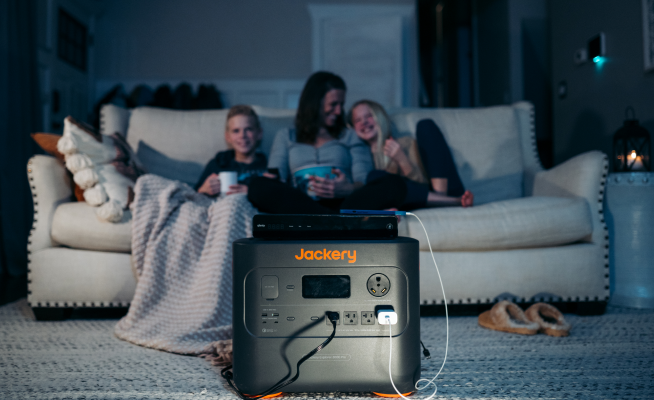
5500-watt Inverter Generator: If you do not like the loud sound of a portable generator, go ahead with a battery-powered 5500-watt inverter generator. These generators are ideal for charging household and outdoor appliances and sensitive appliances like laptops, large-screen TVs, smartphones, and more.
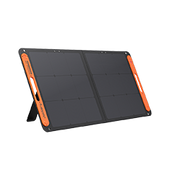
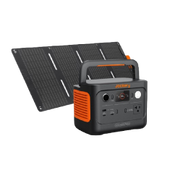
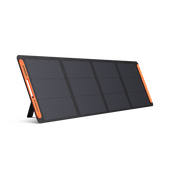
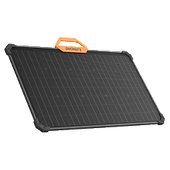
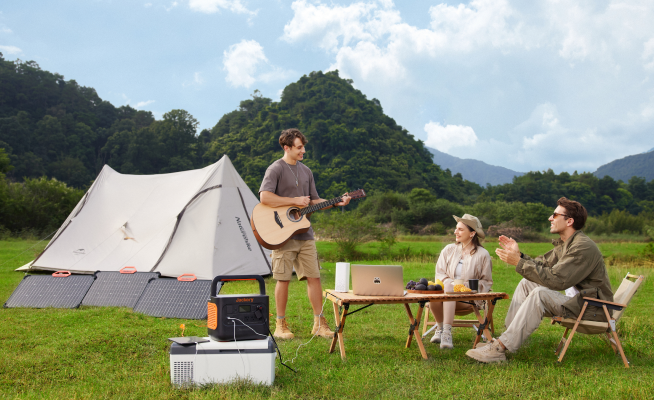
5500-Watt Solar Generator: If you do not want to depend on any form of on-grid power outlet and are looking for an environmentally friendly solution for your emergency usage, you can check out 5500-watt solar generators. These portable, easy-to-move units have solar panels, a battery storage system, and a built-in inverter that converts the harnessed solar energy into usable AC power. You can take a 5500-watt generator to remote places to charge your mid-range powering tools, like saws, drills, sump pumps, and more.
Before we discuss more about the 5500-watt generator and understand your monthly requirements, let us first discuss a couple of important electronics terms that will help you understand the requirement and usage part a little better:
Starting Wattage: Starting wattage is the inrush power required by electrical appliances at the very start of their operation. It is typically higher than the running wattage because some appliances need energy to get started. For instance, an air conditioner might require only 1500W to stay in operation, but the initial surge requirement can be close to 2000W.
Running Wattage: The continuous wattage is the amount of power an appliance needs to run under normal conditions. In the above example, the running wattage of an air conditioner is 1500W. This means that the generator or any portable power unit should provide a continuous 1500W of power to ensure that this appliance will remain operational.
Surge Wattage: Surge wattage is the maximum power that a generator can produce for a short period, helping accommodate the initial power needed by certain appliances for a brief moment. For instance, a table saw might need 2400 watts to start but only 1600 watts to keep running. So, with a 5500-watt generator, you will get the required 2400 watts to handle the initial power surge.
Watt-hours: Watt-hours measure the total amount of energy used over time. For instance, if you have a microwave that uses 1000 watts and you run it for 2 hours, it will consume 2000 watt-hours (Wh) of energy (1000 watts x 2 hours = 2000 Wh) during its operational hour.
What Can a 5500-Watt Generator Run?
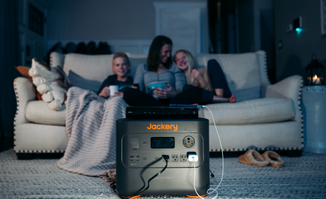
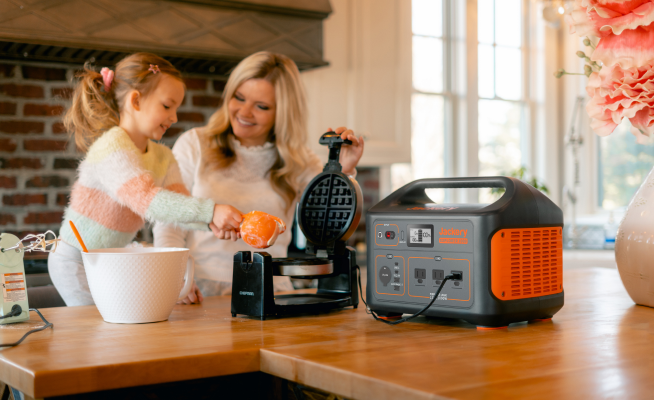
A 5500-watt generator can comfortably power essential household appliances and tools, making it ideal for backup power during outages or even for taking along during events or outdoor adventures. It can run a combination of items such as a computer, sump pump, medical ventilator, and small kitchen appliances, like a toaster and even a coffee maker. With this much power, one can easily use such generators to handle multiple devices simultaneously without worrying about overload.
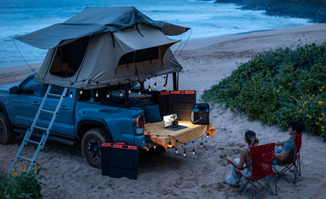
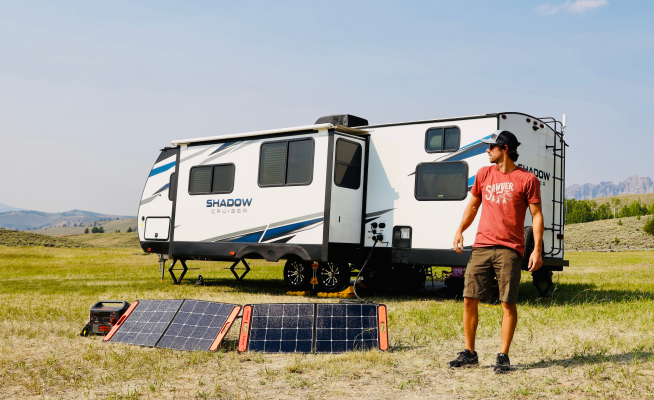
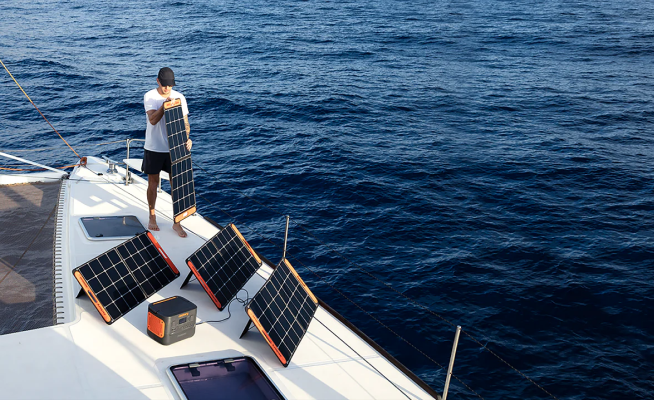
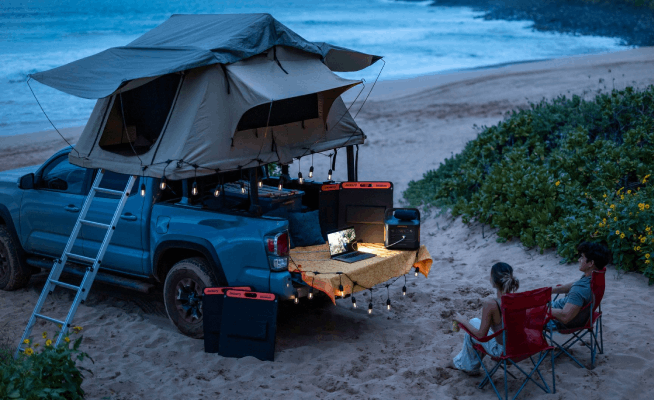
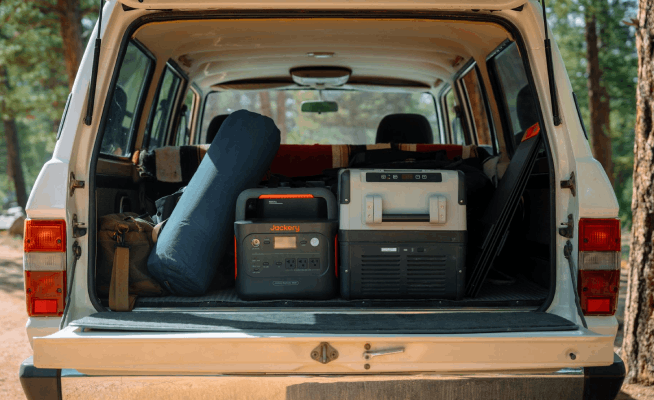
You can use a 5500-watt generator for emergencies, construction sites, RV, and even off-grid living. Here are some of the scenarios where such a generator is ideal:
Will a 5500-watt Generator Run a House?
Yes, you can easily use a 5500-watt generator to run a house. It can power critical items such as a microwave oven (1000W), sump pump (1050W running), washing machine (500W), and several LED lights (10W each). However, if you have large appliances and even your working hours exceed the time a 5500-watt generator can run, then you can check out large capacity generators, like a 10000-watt generator or a 15000-watt generator.
Can a 5500-watt Generator Be Used For Construction Sites?
Yes, you can carry a 5500-watt generator during your remote working sites where you need to power construction-site tools. For example, this portable generator can run a circular saw (1200W), a power drill (600W), and a compressor (1400W) simultaneously, with additional capacity for lights and other small tools, like a jigsaw (300W).
Is 5500 Watt Generator Enough for RV or Campers?
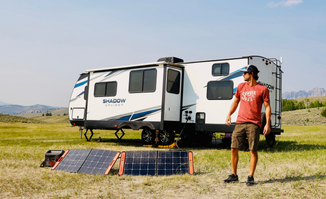
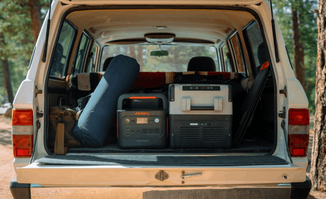
A 5500-watt generator is sufficient for a popup camper, hybrid trailers, and even Class A/B RVs. When fully charged, these generators can easily handle an air conditioner (1500W), refrigerator (200W running), microwave oven (1000W), and various smaller devices like a TV (50W) and laptop (50W). With such high-capacity generators, you can relax in the outdoors while having all the comforts of your home.
Can You Live Off-Grid With a 5500W Generator?
Yes, when the daily power needs are correctly managed, you can live off-grid with a 5500-watt generator. Such a generator can support essential appliances like a well pump (1000W), water heater (4500W, if used intermittently), lights, and basic electronics. However, you must periodically consider checking the fuel and may require supplementation with alternative energy sources, like solar panels, to ensure a reliable and continuous power supply.
Jackery 5500W Portable Solar Generators
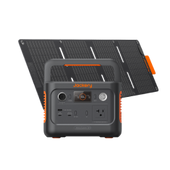
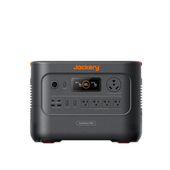
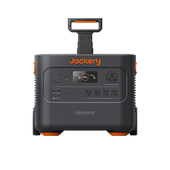
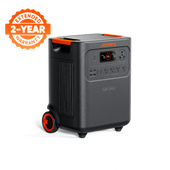
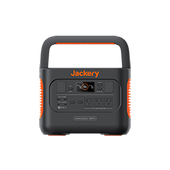
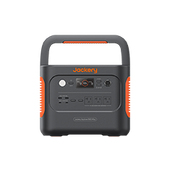
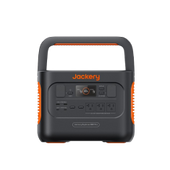
If you are looking for a high-capacity solar generator, you can consider investing in the Jackery Solar Generator 5000 Plus or Jackery Solar Generator 2000 Plus Kit (6kWh). The powerful battery capacities allow you to run most of your household and outdoor appliances simultaneously for extended periods.
Here are three Jackery Solar Generators that you can use to power different appliances:
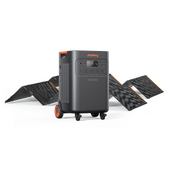
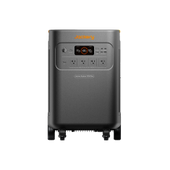
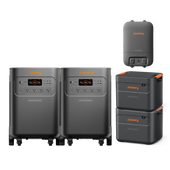
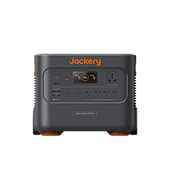
Jackery Solar Generator HomePower 3600 Plus
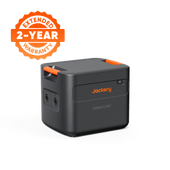
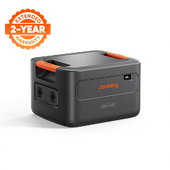
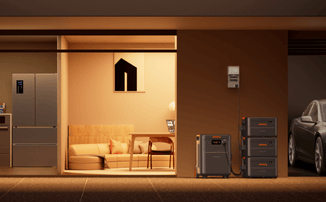
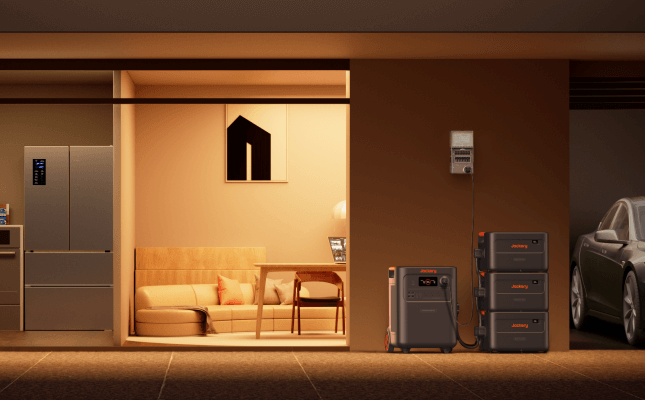
The Jackery Solar Generator HomePower 3600 Plus is ideal for households that want a dependable home battery backup solution for critical appliances, such as refrigerators. Its modular design lets you attach extra battery packs, giving you more hours of support when outages stretch longer than expected. It handles essentials smoothly, stays quiet, and avoids the fumes and upkeep that come with fuel generators. With the help of a pull rod and double wheels, you can easily move this essential battery backup solution from one place to another.
Who Should Buy This
The Jackery Solar Generator HomePower 3600 Plus is ideal for homeowners who want a backup solution that can extend its runtime through add-on batteries and is easy to move.

Customer Review
I connected my garage refrigerator to the generator to see how long it would power it. I left it connected for 24 hours and found that the refrigerator under normal usage consumed less than 50% of the generator’s storage. Plus it was easy to set up and use.
— Anonymous
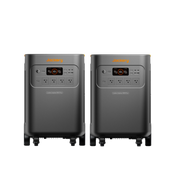
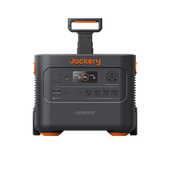
Jackery Solar Generator 5000 Plus
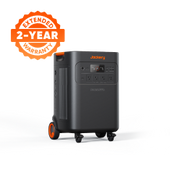
The Jackery Solar Generator 5000 Plus is a reliable home backup power solution with a large capacity and a high power output. It supports dual voltage, which means you can charge a refrigerator working at 120V or a clothes dryer working at 240V. The solar-powered generator can be connected to the home's electrical system with the Jackery Smart Transfer Switch. The UPS 0ms switchover ensures uninterrupted supply to essential appliances, such as refrigerators, hard drives, computers, etc., during a power outage.
Who Should Buy This
If you need a powerful home battery backup solution that can run appliances working at 120V or 240V, you can consider going ahead with the Jackery Solar Generator 5000 Plus.

Customer Review
This works well for backup power. I keep my security system plugged in to it, as well as the internet router. I do not have to worry about power outages leaving me with no internet or no security.
— Terri
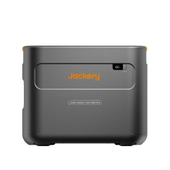
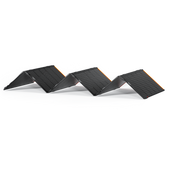
Jackery Solar Generator 2000 Plus Kit (3000W/120V/6kWh + 2*SolarSaga 200W Solar Panels)
The Jackery Solar Generator 2000 Plus Kit (6kWh) is ideal for those planning to reduce their monthly electric bill and looking for an environmentally friendly option to power their household and outdoor appliances. This kit's powerful battery capacity can easily power large appliances, such as an electric boiler, hot tubs, and more.
Who Should Buy This
The Jackery Solar Generator 2000 Plus Kit (6kWh) is suitable for those who want a clean, plug-and-play solution that can power essential appliances for long hours.

Customer Review
I purchased the 2000 Plus 4kWh kit, and added an additional battery for a total of 6kWh. It is able to power all the essentials in my home including refrigerator, chest freezer, lights, internet routers, and home office for about 24 hours.
— Larry H.
|
Product |
Output Rated / Surge Watts |
Capacity |
Appliances Running Time |
|
Jackery Solar Generator HomePower 3600 Plus |
3600W / 7200W Surge Peak |
3584Wh |
Heater Fan (3000W): 1.0H Leaf Blower (2500W): 1.2H Electric Stove (2000W): 1.5H Gaming PC (600W): 4.9H Food Blender (400W): 7.2H |
|
Jackery Solar Generator 5000 Plus |
7200W / 14400W Surge Peak |
5040Wh |
Heater Fan (3000W): 1.3H Leaf Blower (2500W): 1.6H Electric Stove (2000W): 2.0H Gaming PC (600W): 6.7H Food Blender (400W): 10.0H |
|
Jackery Solar Generator 2000 Plus Kit (6kWh) |
3000W /6000W Surge Peak |
6128.4Wh |
Heater Fan (3000W): 1.6H Leaf Blower (2500W): 1.9H Electric Stove (2000W): 2.4H Gaming PC (600W): 8.1H Food Blender (400W): 12.2H |
Kindly note that all calculations are for references and may not exactly match the actual values.
What Is the Quietest 5500-Watt Generator?
A 5500-watt solar generator and a 5500-watt inverter generator are considered the quietest generators. Compared to diesel-operated generators, these generators are known for their lower noise levels. Several solar generators offer operation and the advantage of being eco-friendly with no fuel or emissions. Such inverters and solar generators are ideal for residential areas, RVs, or any setting where noise reduction is crucial.
What Is the Price of a 5500-Watt Generator?
The average price of a 5500-watt generator ranges from $500 - $5000. The price varies according to brand and type. On a marketplace like Amazon, a gas or propane powered electric generator of 5500-watt capacity may come around $500 - $1000. Similarly, an ultra-quiet inverter generator would come around $1500 - $1800. A 5500-watt solar generator would come around $4000 - $8000, as it also includes the cost of solar panels, solar racking, and other components.
How Many Amps Does a 5500-Watt Generator Produce?
A 5500-watt generator that operates at 120V will produce 45.82 amps; when it is operated at 240V, it will produce 22.91 amps. If you want to prevent overloading and ensure compatibility with appliances, it is mandatory to understand the amps a generator will produce, which can be calculated using the following formula:
Amps = Watts ÷ Volts = 5500W ÷ 240V = 22.91 amps
If you reduce the voltage and bring it down to 120V, you will get the following:
Amps = Watts ÷ Volts = 5500W ÷ 120V = 45.82 amps
Let's consider the Jackery Solar Generator 5000 Plus to demonstrate this solar generator's capacity when operated at a specific voltage.
Amp-hour = Watt-hour ÷ Volts = 5040Wh ÷ 112V = 45Ah.
This means that if you operate a Jackery Solar Generator 5000 Plus at 112V to power your household or outdoor appliances, it will produce 45 amp-hours.
What Size Generator Do I Need?
The size of the generator that you require depends on the number of appliances and their wattage (both starting and running). For example, if your daily consumption exceeds the normal usage, you can go ahead with a 15,000-watt generator. However, if you only intend to use the generator to power several small-power devices, you can go ahead with a 1000-watt generator.
Here are a few simple steps to demonstrate how to choose the generator size for your requirements:
Step 1: Always start by gathering the information of all the household appliances.
Step 2: Note down the running and starting wattage of each appliance. You can even check the manufacturer's page or user manual to learn the exact wattage.
Step 3: Add all the running watts of the selected appliances and then add the highest starting wattage from the list. Adding starting wattage will ensure your generator can handle the surges.
Here's a graphical illustration to depict how to choose the generator for your personal or professional work:

FAQs
What size generator to run a fridge and air conditioner?
A typical refrigerator requires about 1200 starting watts and 200 running watts. Similarly, a medium-sized air conditioner needs around 2200 starting and 1500 running watts. So, to run a fridge and an air conditioner, you will require a generator with at least 4000 - 5500 watts capacity.
What happens if you run a generator for too long?
If you run a generator for too long, it can lead to overheating, excessive wear and tear, and potential engine failure. Furthermore, prolonged usage of high-capacity generators can also increase the risk of clogging or gum building, which can impair performance.
Will a 5500-watt generator run a 3-ton AC unit?
No, a 5,500-watt generator cannot run a 3-ton air conditioning unit, which requires 36,000 BTU, or around 6,500 - 8,500 watts. If you want to run a 3-ton air conditioner, you can go ahead with a 10,000- or 15000-watt generator.
Conclusion
A 5500-watt generator is ideal for different scenarios, including household power-related emergencies or even taking it along in an RV or outdoors. However, a typical 5500-watt generator will take up a lot of space in the RV, making it difficult to carry them from the house to the RV. If you are looking for something economical yet sturdy and compact that you can easily move around and that powers most of your house and construction site appliances, you can always go ahead with a Jackery Solar Generator HomePower 3600 Plus, which can be expanded to the power capacity from 3.6kWh to 21kWh.




Leave a comment