









![[Add - on] Jackery Manual Transfer Switch for Explorer 5000 Plus - Jackery](http://www.jackery.com/cdn/shop/files/add-on-jackery-manual-transfer-switch-for-explorer-5000-plus-9017324.png?v=1754016782&width=170)
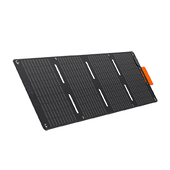
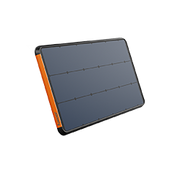
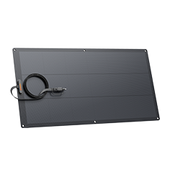
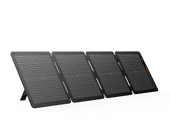





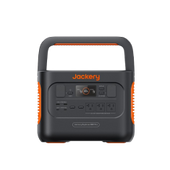
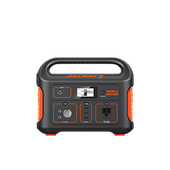

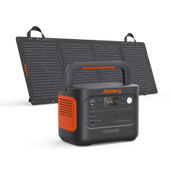
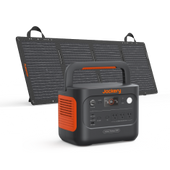







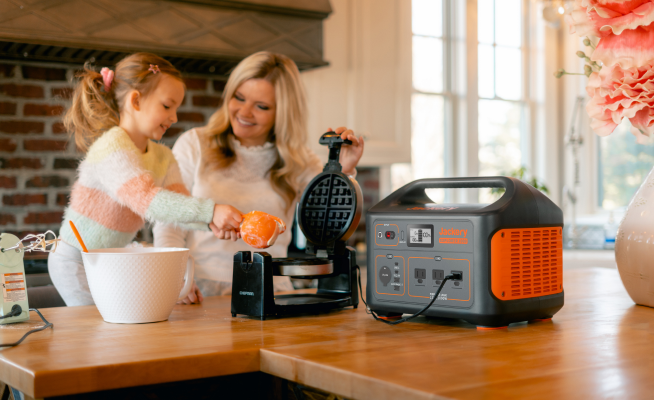
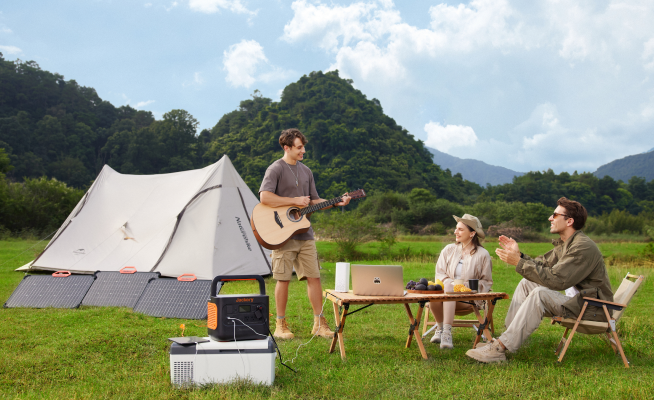
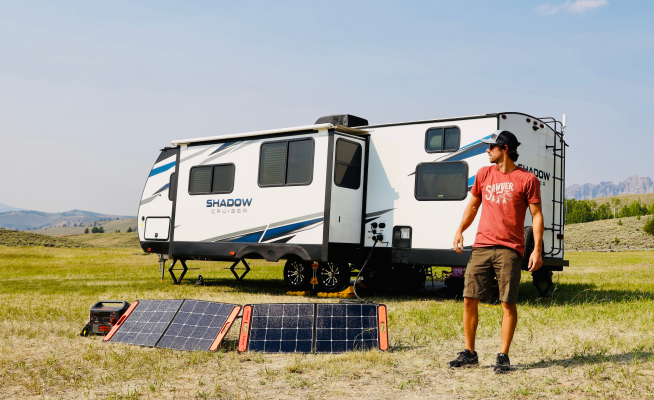

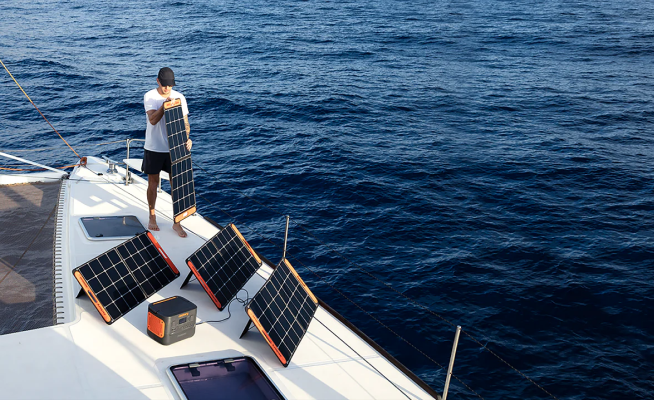
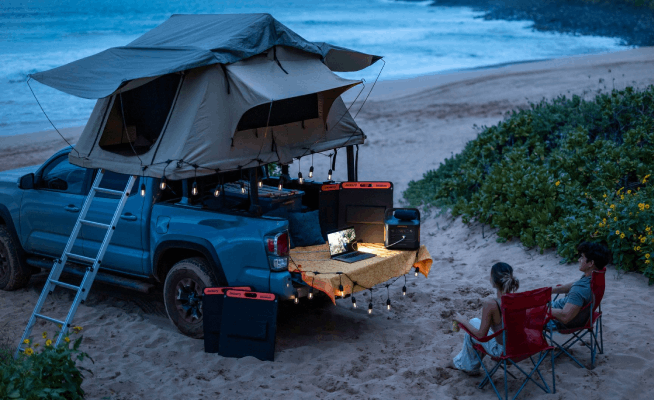
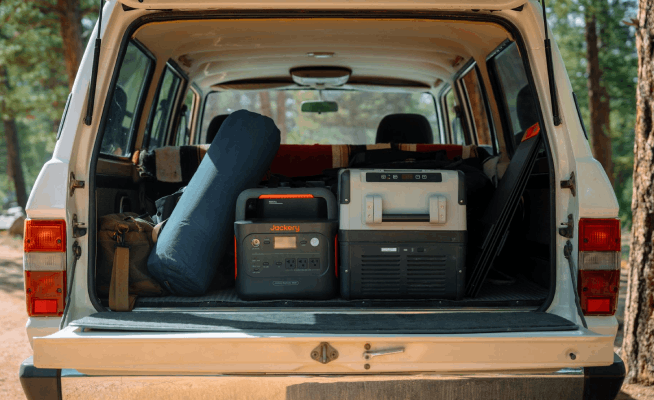
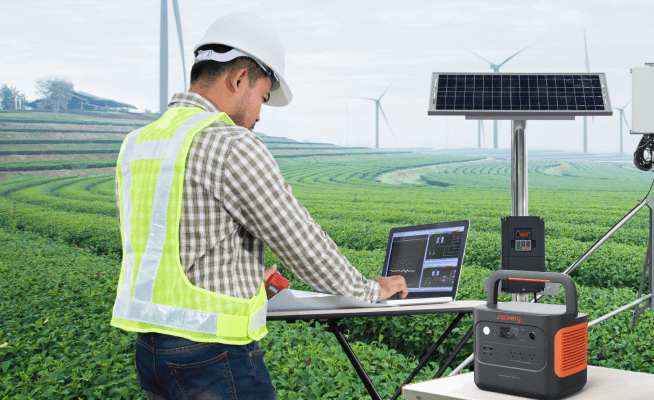
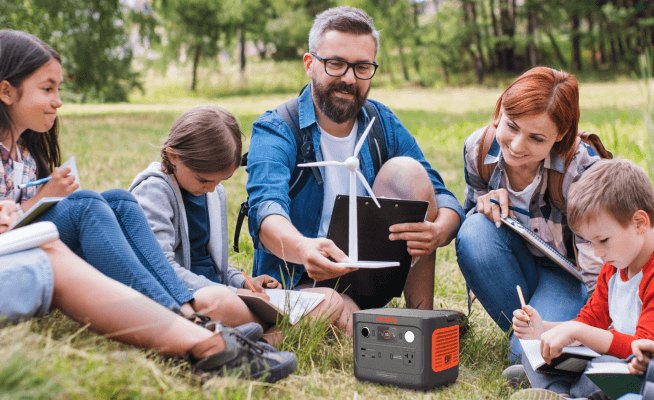






Yes, solar generators can run almost all appliances in a tiny house. Depending on the power requirements of the appliances in the tiny house, you can consider choosing the right size of solar generator.
Many US people are now moving into tiny homes to reduce environmental impact and practice sustainable living. However, when it comes to fulfilling the dream of living in small homes, it's vital to understand how to power it. Solar-powered tiny houses are eco-friendly and cost-efficient solutions to eliminate high power bills and reduce carbon footprint.
However, it is critical to choose the right power solution. Generally, solar-powered tiny houses consume only 7% of the energy consumed in an average traditional home. A small home with essential appliances will consume around 3-4kWh or more, depending on what you are using. Jackery Solar Generators with a large battery capacity are designed to support the power needs of tiny homes.
Depending on your specific needs, you can choose the right size solar generator. In this guide, we will uncover what a solar-powered tiny house is and which solar generator is suitable to charge it.
AI Takeaways
- A solar-powered tiny house is a small, energy-efficient home that runs primarily on solar panels instead of the grid.
- While a solar-powered tiny house has a permanent solar panel and battery setup installed on or near the house, a solar generator combines a portable power station with solar panels.
- On average, a tiny house uses between 1,000 and 5,000 watts, depending on appliances and heating/cooling needs.
- How much does it cost to run a tiny house.
- How much solar power does a tiny house need.
What Is A Solar Powered Tiny House?

A solar-powered tiny house is a small dwelling (typically 100-400 sq ft) that uses solar panels to generate its own electricity, often combined with a battery storage system for power during the night or cloudy days. Instead of being connected to the electricity grid, the tiny home is powered using a solar system. The solar panels convert electricity into solar energy, whereas the battery attached helps store the unused power for later use. Below are a few benefits of living in a tiny home charged with solar power.
- Using solar energy to run a tiny home helps you to save high on electricity costs.
- As tiny homes require fewer resources and less space, it helps you to reduce your carbon footprint.
- Many tiny homes are mobile, so you can keep traveling with your home, similar to RV trips, without worrying about electricity.
- As tiny solar houses are not dependent on the utility company, you can eliminate the stress of blackouts or power outages.
The Types Of Solar-Powered Tiny Houses
Generally, there are two types of solar-powered systems for tiny houses — off-grid and grid-tied. Let us briefly discuss the two kinds of systems for a tiny solar house.
Off-Grid Solar-Powered Tiny House
An off-grid system means complete independence from the electric grid. In this type, you generate power from a solar system or other energy alternatives.
Many people prefer off-the-grid living, as it helps them reduce reliance on the electricity grid and reduces soaring electricity bills. An off-grid solar power system consists of solar panels that convert sunlight into electricity and batteries to store extra energy.
An efficient and powerful off-grid generator can provide electricity to charge all home appliances for long hours.
Grid-Tied Solar-Powered Tiny House
Unlike off-grid systems, a grid-tied solar system is connected to the utility company network. One main difference between the off-grid and grid-tied systems is that the latter does not require a battery.
When solar panels do not produce enough electricity, it starts drawing power from the grid. The main disadvantage of choosing a grid-tied system is that it does not work during power outages.
You must invest in an additional battery system to keep your home powered during blackouts and brownouts.
Solar Powered Tiny House Vs. Solar Generator For Tiny House
When it comes to going solar, the two popular options are solar-powered tiny houses and solar generators for tiny houses. A solar-powered tiny house means connecting multiple solar panels that can convert sunlight to electricity and charge appliances.
For instance, if your tiny home consumes around 3000 watts of electricity, you'll have to connect multiple solar panels of 100 or 200 watts to meet the power needs.
Fortunately, that's not the case if you choose a solar generator for your solar tiny home. You can consider investing in the Jackery Solar Generator HomePower 3000 to power most of your tiny home appliances for long hours. This essential home backup solution can power almost all of your household appliances, such as fridges, TVs, etc., for long hours.

Below we compare solar-powered tiny homes and solar generators.
|
Types |
Features |
Pros |
Cons |
|
Solar Powered Tiny House |
Clean, renewable energy source. Easy to customize as per your needs. Reduce energy dependence. Electric bill savings. |
Energy-efficient solution. Reduction in high electricity bills. Affordable solution. |
Space constraints. Expensive compared to other solar solutions. Most solar tiny house systems do not come with batteries for power backup. |
|
Solar Generator For Tiny House |
Portable in design and lightweight. Highly efficient solar panels for maximum electricity conversion. High average life expectancy. |
Noiseless operation due to no moving parts. Easier to install and can power multiple appliances at once. Unlike fossil-fuel generators, solar generators are more convenient for outdoor trips. |
May produce less electricity during cloudy days. |
Solar-Powered Tiny House
Off-grid and grid-tied solar systems are the two main types of solar-powered tiny houses. Powering the home with solar energy saves costs and lowers the environmental impact.
Pros
- Tiny homes have low-power-consuming appliances, and installing solar panels enables you to eliminate most, or even all, of your utility bills.
- Solar panels offer clean and green energy, allowing you to minimize environmental impact and reduce your carbon footprint.
- Unlike hydroelectricity or wind power, solar panels have low upfront costs.
Cons
- Tiny houses are generally small. Therefore, installing multiple solar panels to meet energy needs can be challenging.
- Solar inverters are the additional component responsible for converting DC power into AC electricity. Placing an inverter in your tiny solar home, along with all other parts, can be tricky.
- Solar systems that do not have batteries make your home prone to blackouts and power outages.
Solar Generator For Tiny House
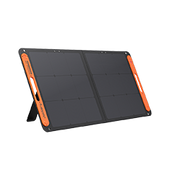
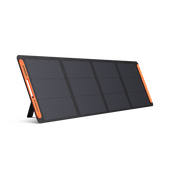
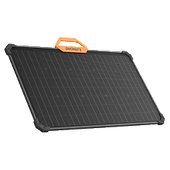
A solar generator is an ideal solution whether you want to charge one appliance, a tiny home, or a traditional house. It is a system that runs on solar power and uses a combination of solar panels and a power station.
The solar power panels convert sunlight into electricity which is then passed through the charge controller in the power station. The inverter in the solar power station converts DC into AC current to charge all electrical appliances.
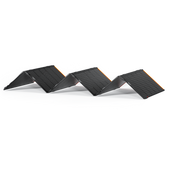
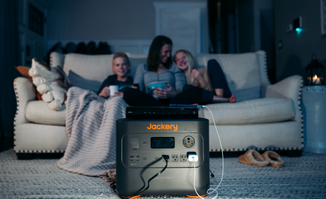
Jackery Solar Generators are essential home backup solutions that can run core household appliances for long hours. The multiple USB ports, AC outlets, and carports allow you to power numerous devices simultaneously.

In addition, the pass-through charging feature allows you to power appliances while keeping the solar panels plugged into the generator. Depending on the power needs of your solar tiny house, you can choose the Jackery Solar Generators including Jackery Solar Generator HomePower 3600 Plus or Jackery Solar Generator 5000 Plus.
Pros
- Unlike traditional gas generators, solar generators use free fuel from the sun.
- As solar generators entirely rely on renewable energy, you don't have to worry about the environmental impact or the fossil fuel costs.
- Solar generators do not have any moving parts, making them noise-free.
- They are easy to use, efficient, and require minimal maintenance to work efficiently.
- Highly efficient solar panels can convert solar energy into electricity and store the energy into portable power stations.
Cons
- Though solar generators have low operating costs, they require a much higher initial investment.
How Many Watts Does A Tiny House Use?
A tiny house can use anywhere from under 1,000 watts for minimal setups to over 5,000 watts for full-feature homes, with total daily consumption depending on lifestyle and appliances.
Simply put, a watt is a measure of energy that determines how much power a device consumes in a specific period. On the other hand, watt-hour is the energy consumed by the appliance in one hour.
Formula: Watts = Volts * Amps
If you want to power only the basic appliances in your tiny home, you need at least a 1000-watt solar generator. However, if you want to power almost all household appliances, you would need a 5000-watt generator. The best way to determine the total watts of a tiny house is to calculate the power requirement of each device and then add them.
Note: You can find the wattage of each appliance on its label.
How Much Does It Cost To Run A Tiny House?
The cost to run a solar tiny house will depend on the solar system you are using. For instance, if you use a solar panel system, you will have to pay for an inverter, charge controller, solar panels, PV wire, and other crucial components. Here is the rough breakdown of costs for a solar-powered tiny house system.
|
Component of the solar panel system |
Costs |
|
Inverter |
$4500 |
|
Charge controller |
$1200 |
|
Control panel |
$300 |
|
Batteries |
$4000 |
|
Solar panels |
$4000 |
|
Breakers and boxes |
$800 |
|
Battery cabling |
$300 |
|
PV wire, house tether, and romex |
$500 |
|
Electrician (labor) |
$2000 |
The total cost of solar-powered solar panels will cost around $15,000-17,000. On the other hand, purchasing a solar generator will cost you nearly $3000-4000. Jackery Solar Generators are portable and cost significantly less than multiple solar panels. Not only is it powerful enough to power almost all home appliances efficiently, but it is also a cost-effective choice.
How Much Solar Power Does A Tiny House Need?
The solar power needs of the tiny house will depend on the number of appliances you want to charge, their power requirements, and the time you run them. To help you understand better, we have listed some common home appliances and their estimated daily energy consumption.
|
Appliance |
Power (watts) |
Running Hours |
Energy (watt-hour) |
|
LED lights |
6W |
4 |
24Wh |
|
Incandescent light |
60W |
8 |
240Wh |
|
Laptop |
Charging: 42W Running: 14W |
4 |
168Wh |
|
Cell phone |
5W |
3 |
15Wh |
|
Full-size fridge |
83W |
8 |
664Wh |
|
Internet router |
6W |
12 |
72Wh |
|
Solar booster pump |
100W |
0.5 |
50Wh |
|
Space heater |
1000W |
6 |
6kWh |
|
Blender - powerful |
1500W |
0.5 |
750Wh |
|
Radio |
1W |
6 |
6Wh |
|
Well pump (1HP) |
750W |
1 |
750Wh |
|
Window AC |
1500W |
5 |
7500Wh |
Jackery Solar Generator For Tiny House
If you're considering using clean solar energy to power your tiny home appliances, the Jackery Solar Generator is a trustworthy option. It has highly efficient solar panels that can convert maximum sunlight into electricity.

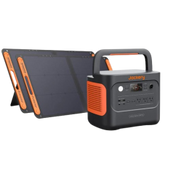
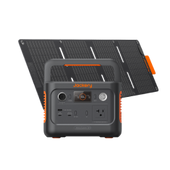
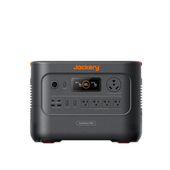
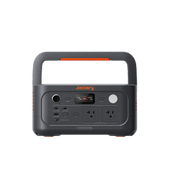
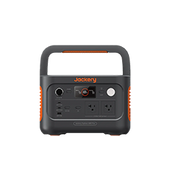
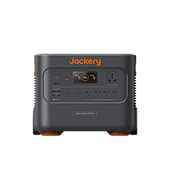
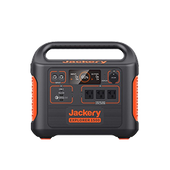
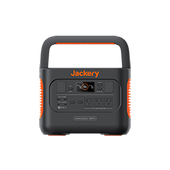
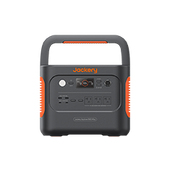
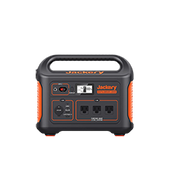
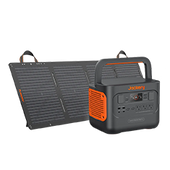
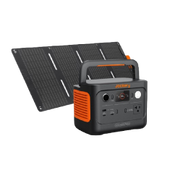
The Jackery Explorer Portable Power Stations are specifically designed to store the energy produced by solar panels and power multiple appliances for extended periods. For smaller homes, the Jackery Solar Generator 1000 v2 would suffice and power appliances for several hours.
However, if you're looking for an essential home backup solution that can power most household appliances in a tiny home, you may want to opt for the Jackery Solar Generator HomePower 3600 Plus or Jackery Solar Generator 5000 Plus. Here, we will briefly explain the solar generators for houses:
Jackery Solar Generator 1000 v2 + Explorer 1000 v2
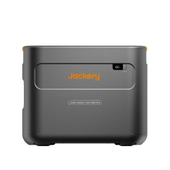
The Jackery Solar Generator 1000 v2 offers essential home backup for your kitchen. It can power core household appliances, such as fridges, for up to 1 day during the event of outages. It can also supply stable electricity to other kitchen appliances, such as coffee makers, microwaves, lights, etc. It's the lightest and smallest 1kWh LFP solar generator that features a foldable handle for easier transportation. With one extra Jackery Explorer 1000 v2 Portable Power Station, you can also keep your home office powered.
Appliances Running Time
- Mini Fridge (100W) = 7.6H
- Coffee Maker (600W) = 1.4H
- TV (150W) = 5.3H
- Fan (50W) = 13.5H
- Lights (50W) = 13.5H
Note: The running times mentioned are only when powered by one Jackery Explorer 1000 v2.
Who Should Buy This
If you are looking for a portable home battery backup solution that can keep basic appliances powered and can also be easily carried to outdoor adventures, you can consider the Jackery Solar Generator 1000 v2.

Customer Review
This Jackery Solar Generator 1000 v2 not only met my needs but surpassed my expectations. My first test was to power my pellet smoker for a 6-hour cook. Barely even put a dent into the 100% charge.
— Peter S.
Jackery Solar Generator HomePower 3000
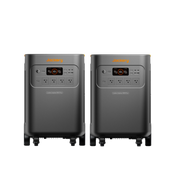
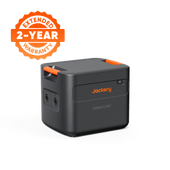
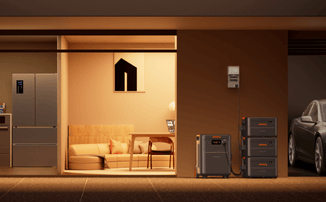
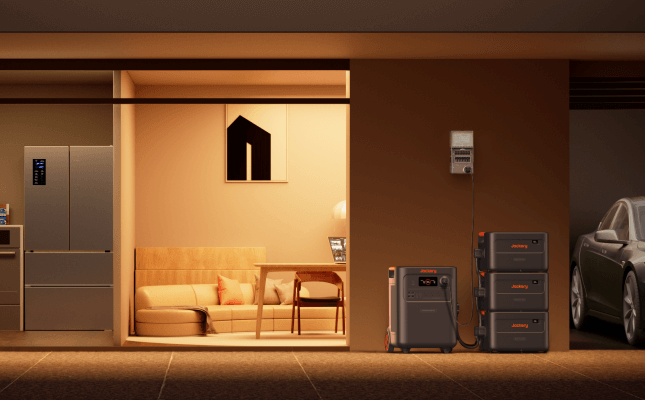
If you need an essential home backup solution that can keep core appliances like fridges powered for 2 days, the Jackery Solar Generator HomePower 3000 is an ideal choice. It is the lightest and smallest 3kWh LFP solar generator that can be easily moved from one room to another and even to the garage. It also features dual side handles for easy transportation. With the UPS switching, you can rest assured that critical appliances like desktops stay powered in less than 20ms during a sudden outage.
Appliances Running Time
- Mini Fridge (100W) = 21.4H
- Coffee Maker (600W) = 4.2H
- TV (150W) = 15.2H
- Fan (50W) = 36.3H
- Lights (50W) = 36.3H
Who Should Buy This
If you want an essential home backup solution that keeps lights, a fridge, and a fan powered for days, the Jackery Solar Generator HomePower 3000 has got your back.

Customer Review
So far, have only used it for a few days to make sure a mini-fridge works for our grandson to take to college. We bought the 3000 in the event of a storm power outage that would prevent us from running our portable generator.
— Michael Brooks.
Jackery Solar Generator HomePower 3600 Plus
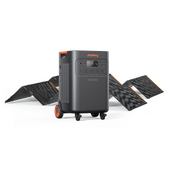
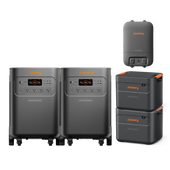
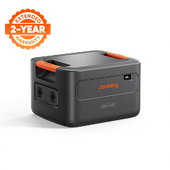
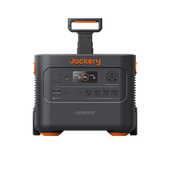
For a tiny home, the Jackery Solar Generator HomePower 3600 Plus is a dependable, high-capacity home backup solution. Its expandable battery system can keep essential loads, such as lights, a fridge, an induction cooktop, a fan, and more, running smoothly, and it can keep a refrigerator powered for up to 14 days. The pull-rod handle and dual wheels actually matter in tiny homes because they let you easily reposition the battery backup solution, rather than dedicating a fixed corner to heavy gear. Despite its compact footprint, it has the output to cover most household appliances.
Appliances Running Time
- Mini Fridge (100W) = 25.0H
- Coffee Maker (600W) = 4.9H
- TV (150W) = 17.6H
- Fan (50W) = 42.3H
- Lights (50W) = 42.3H
Who Should Buy This
If you live in a tiny home and want an essential home backup solution that can cover daily essentials plus heavier loads without cluttering your space, the Jackery Solar Generator HomePower 3600 Plus is the practical choice.

Customer Review
The Jackery 3600 Plus has completely changed the way I think about backup power. It easily keeps my household essentials going — refrigerator, coffee maker, microwave, Starlink, and even the dryer — without breaking a sweat. We recently had an outage, and it kept everything running seamlessly. Getting it started couldn’t have been easier: plug it in, hit the power button, and you’re good to go.
— Crystal S.
Jackery Solar Generator 5000 Plus
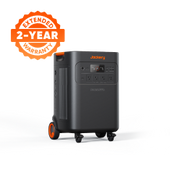
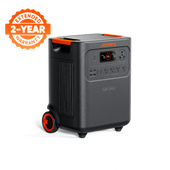
If you are looking to live without the dependence on the electrical grid and power almost all core household appliances for hours or even days, you can consider going ahead with the Jackery Solar Generator 5000 Plus. It has a massive battery capacity and supports dual voltage (120V and 240V) to power most household appliances. It features a foldable handle and a pull rod, so you can easily move the solar generator from one room to another.
Appliances Running Time
- Mini Fridge (100W) = 28.6H
- Coffee Maker (600W) = 6.6H
- TV (150W) = 21.4H
- Fan (50W) = 42.8H
- Lights (50W) = 42.8H
Who Should Buy This
The Jackery Solar Generator 5000 Plus is the most powerful essential home backup solution, ideal for powering almost all household appliances for hours.

Customer Review
Exactly what we needed to power our home. Especially nice to have a 240-volt option to run the well pump. Also nice to be able to "accessorize" as finances allow.
— Richard Wamsley.
Just like Kent, who powers his Texas home with the Jackery Solar Generator, you can keep essentials like the fridge, lights, and even a window AC running in your tiny home during outages. He chose Jackery over costly whole-home systems for a reliable, quiet, and portable solution. Read Jackery stories to learn how Jackery has become a dependable power source for many users.
Solar Powered Tiny House FAQs
What size of solar generator do I need to run a tiny house?
The solar generator's size depends on the appliance's wattage requirements and how long you want to power it. Suppose you choose the Jackery Solar Generator 5000 Plus with a battery capacity of 5040Wh for your tiny home. If your refrigerator consumes 200 watts, the working time can be calculated with the Running Time Calculator available on the product page. Simply add the wattage consumption of the appliance in the calculator and click Enter to get an estimated runtime. In this case, the Jackery Solar Generator 5000 Plus can run a refrigerator (300W) for 12.2 hours. Similarly, you can calculate the working time of other applications depending on their watt requirements.
Note: Jackery Solar Generators have a pass-through charging feature. That means you can power the generator and the appliance simultaneously.
How many solar panels do I need for my tiny house?
The average solar-powered tiny home consumes 4kW or 4000 watts. If your area receives around 6 hours of sunlight, you will need 7-8 solar panels with a capacity of around 100 watts to generate enough power for your house. Here we assume that one 100-watts solar panel produces 600Wh in 6 hours. However, that's not the case if you choose a solar generator.
Jackery Solar Generator 5000 Plus can run almost all the small and large appliances in your tiny home. The essential home backup solution will ensure you never run out of power. It also supports dual voltage so you can power appliances working at 120V and 240V. You can also expand the capacity up to 60kWh to provide reliable power for days.
What are the top considerations when powering a tiny house with solar power?
Before you choose any solar power for your home, you must analyze your energy requirements. A few essential points to include:
- Insulation: A fully insulated home consumes less electricity.
- Appliances: Calculate the number of small and large devices you wish to power.
- Weather Condition: The weather in your area has a more significant influence on the energy consumption of your home. You must consider the time you use AC or a heating device to determine the correct size solar system.
Final Thoughts
Solar power is a form of clean and renewable energy source that is cost-effective and practical for tiny homes. Buying a highly efficient solar generator is an excellent idea compared to a solar-powered tiny house with only solar panels. In addition, the solar generator is portable, making it suitable for mobile homes.
Additionally, it features a large-capacity battery to ensure you get enough electricity when sunlight is not shining. Jackery Solar Generators are robust powering solutions available in different sizes and capacities to meet your requirements.
You can choose Jackery Solar Generator HomePower 3000 to power essential home appliances in tiny homes, while Jackery Solar Generator 5000 Plus offers a higher power range to power almost all small and larger appliances for long hours.




Leave a comment