





















![[Add-on] Jackery Battery Pack 5000 Plus - Jackery](http://www.jackery.com/cdn/shop/files/add-on-jackery-battery-pack-5000-plus-6713401.webp?v=1786503068&width=324)






















Most electric space heaters use between 750 and 1,500 watts, depending on their size, heat setting, and design. If you are wondering how many watts a space heater uses, the answer usually falls within this range. Smaller personal heaters typically consume around 750W, while standard household space heaters running on high can easily reach 1,500 watts.
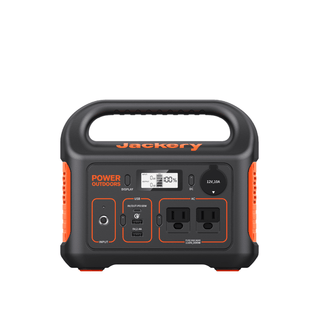
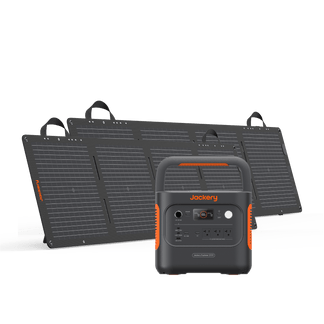
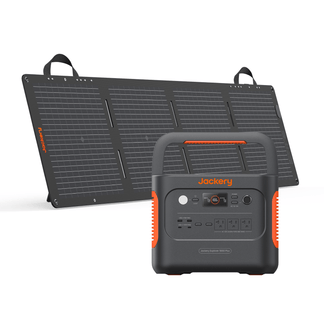
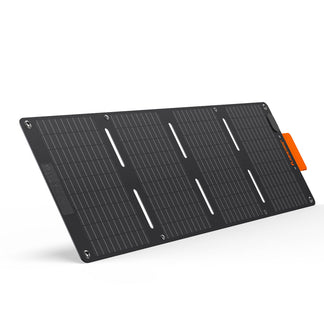
Understanding a space heater’s wattage matters because it directly affects electricity costs and determines whether the heater can run on alternative power sources during outages. For short-term heating or emergency use, portable solar generators such as a Jackery Solar Generator can help support a space heater for limited periods, as long as the heater’s wattage and runtime are carefully calculated.
Takeaways
- On average, portable space heaters consume about 750 to 1500 watts.
- If you use a space heater (1000W) for 4 hours daily, it will use about 4kWh daily and 28kWh weekly.
- Using the same space heater (1000W) for 6 hours will add up to 6kWh a day and 42kWh a week.
- When a typical 1,500-watt space heater runs for 8 hours a day at an electricity rate of 17.98 cents per kWh, it can cost around $64.70 per month, assuming daily use.
- Jackery Solar Generators can power a heater as they work with zero fuel cost and very minimal maintenance.
How Many Watts Does A Space Heater Use?
An average space heater consumes about 750 to 1500 watts, which adds up quickly and makes it expensive. However, using them smartly and at the right time helps you to make them economical. Let us see the average use numbers and how many watts a space heater uses daily and monthly.
|
Watts |
Duration Of Use |
Energy Consumption |
|
1,500 W |
1 hour |
1.5 kWh |
|
1,500 W |
1 day(8 hours a day) |
12 kWh |
|
1,500 W |
1 week(8 hours a day) |
84 kWh |
|
1,500 W |
1 month |
360 kWh |
|
1,500 W |
1 year(5 Months a year) |
1,820 kWh |
The following table summarizes how many watts space heaters use based on their size and duration of use.
|
Space Heater Wattage |
Hours Per Year |
Yearly Energy Consumption |
|
1,200 W |
1,213 |
1,456 kWh |
|
1,300 W |
1,213 |
1,577 kWh |
|
1,400 W |
1,213 |
1,698 kWh |
|
1,500 W |
1,213 |
1,820 kWh |
|
1,600 W |
1,213 |
1,941 kWh |
|
1,700 W |
1,213 |
2,062 kWh |
|
1,800 W |
1,213 |
2,183 kWh |
How Much Does It Cost To Power A Space Heater?
Running a space heater typically costs between $1.50 and $2.50 per day for a standard 1,500-watt model, depending on electricity rates and how long it runs. Here's how much does it cost to run a space heater with an example:
To calculate the cost of running a space heater, you need three things: the heater’s wattage, daily runtime, and your electricity rate.
For example, a 1,500-watt space heater running for 8 hours a day uses 12kWh (1.5 kW × 8 hours). At an average electricity rate of 17.98 cents per kWh, this comes out to about $2.16 per day, or around $64.70 per month if used daily.
However, the actual costs to run a space heater will vary based on heater size, heat setting, local electricity prices, and how often the heater is turned on.
|
Types of Space Heaters |
Watts |
Cost/Hr |
Cost/Month |
|
Electric Space Heater |
750 W |
$0.120 |
$18.00 |
|
1000 W |
$0.160 |
$24.00 |
|
|
1250 W |
$0.200 |
$30.00 |
|
|
1500 W |
$0.240 |
$36.00 |
|
|
2000 W |
$0.320 |
$48.00 |
|
|
2500 W |
$0.400 |
$60.00 |
|
|
3000 W |
$0.480 |
$72.00 |
|
|
Coil Heater |
600 W |
$0.096 |
$14.40 |
|
750 W |
$0.120 |
$18.00 |
|
|
1000 W |
$0.160 |
$24.00 |
|
|
1500 W |
$0.240 |
$36.00 |
|
|
Infrared Radiation Space Heater |
600 W |
$0.096 |
$14.40 |
|
750 W |
$0.120 |
$18.00 |
|
|
1000 W |
$0.160 |
$24.00 |
|
|
1500 W |
$0.240 |
$36.00 |
Do Space Heaters Use a Lot of Electricity?
Yes, space heaters can use a lot of electricity, especially compared to smaller household devices, because most electric models are designed to draw 750 to 1,500 watts while running. Unlike appliances that cycle on and off, many space heaters pull close to their rated wattage the entire time they are operating.
When used for several hours a day, this steady power draw can noticeably increase monthly electricity bills. However, usage time, heat settings, room size, and insulation all play a major role in how much electricity a space heater consumes. When used occasionally to heat a small area, a space heater’s electricity use may be manageable. If you use the space heater for long hours as a primary heat source, it becomes one of the higher energy-consuming devices in a home.
James Cale, a locomotive engineer living off-grid in northern Canada, uses Jackery Solar Generators to run essential household appliances in extreme winter conditions, including a space heater, refrigerator, freezer, lights, Wi-Fi, and electronics. With temperatures dropping well below freezing, his setup keeps the cabin warm and fully functional without grid power, relying on Jackery products to support daily living needs across long outages and remote conditions. To see how others use Jackery Solar Generators to power real appliances in real environments, you can read more Jackery Stories.
Jackery Solar Generators for Space Heaters
Running a space heater on a power station requires careful planning because space heaters draw a relatively high and continuous electrical load. Unlike small electronics that charge intermittently, most space heaters pull close to their rated wattage for as long as they are switched on. This makes battery capacity and rated output critical factors when choosing a portable power source.
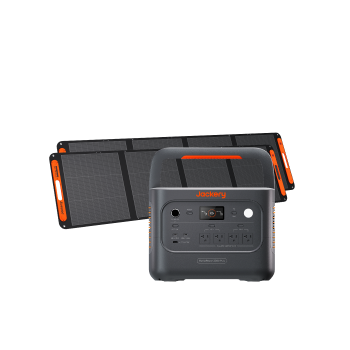
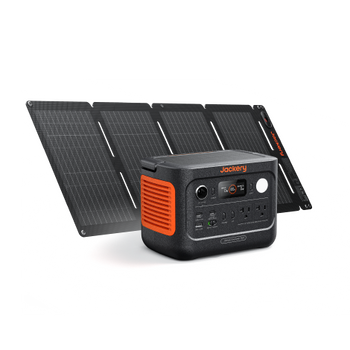
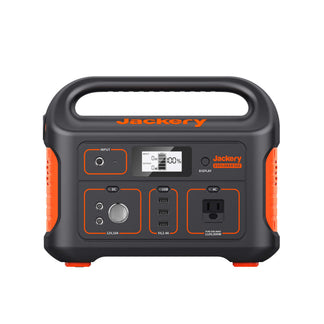
Jackery Solar Generator can support a space heater for long periods, provided the heater’s wattage stays within the generator’s output limits. Higher-capacity solar generators may handle a standard 1,500-watt heater briefly, while lower-watt space heaters or reduced heat settings are generally more practical for portable power use. Here are reliable solar generators that you can use to run space heaters:
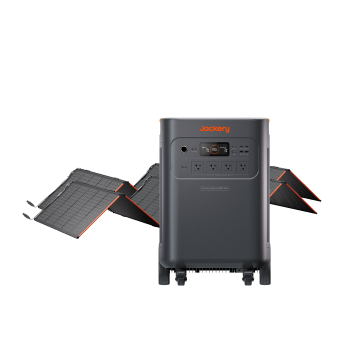
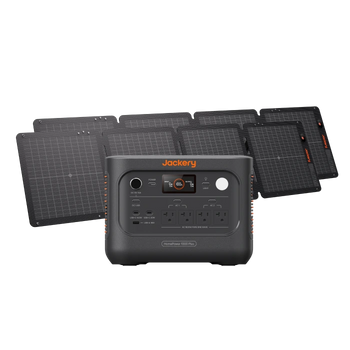
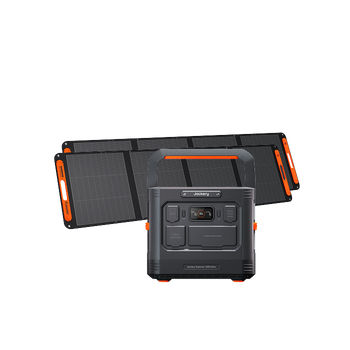
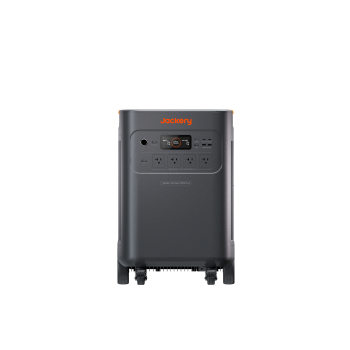
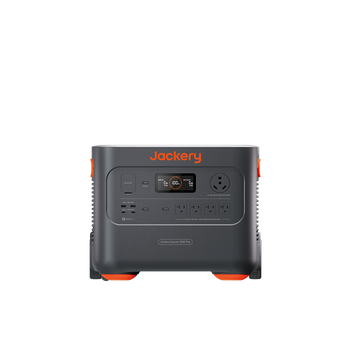
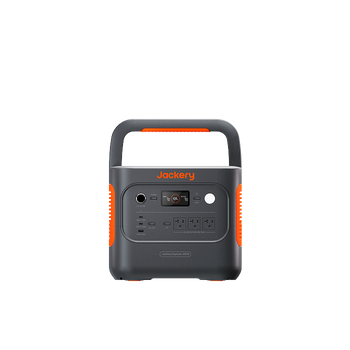
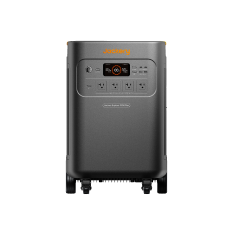
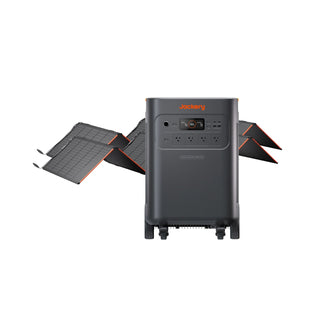
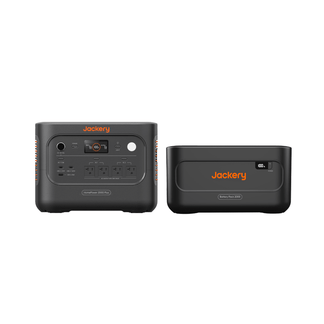
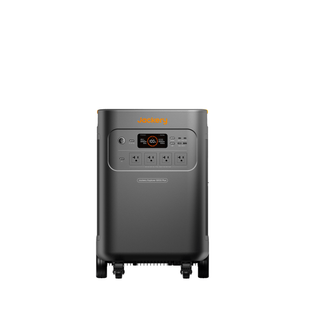
Jackery Solar Generator HomePower 3600 Plus
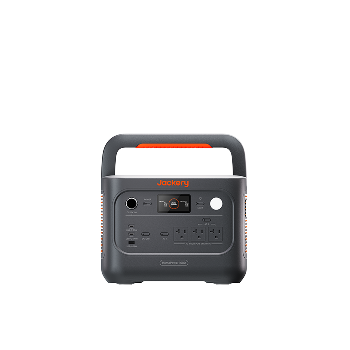
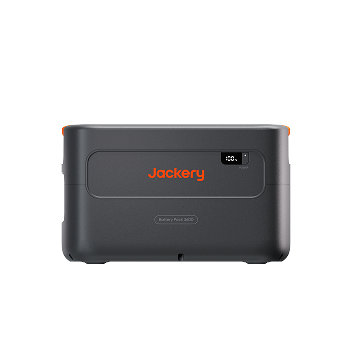
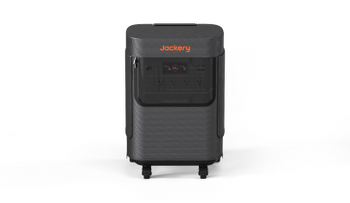
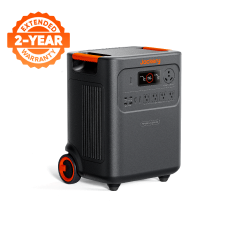
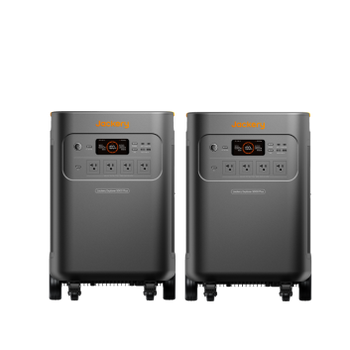
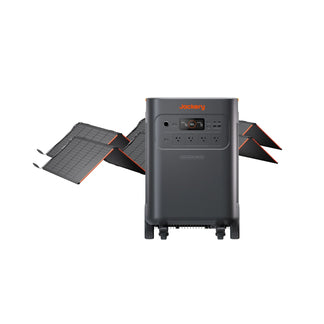
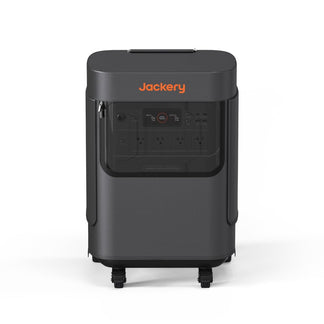
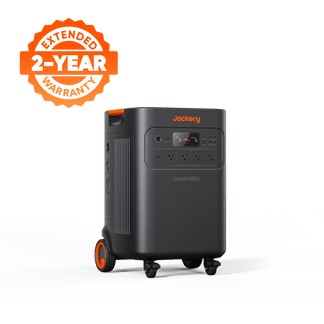
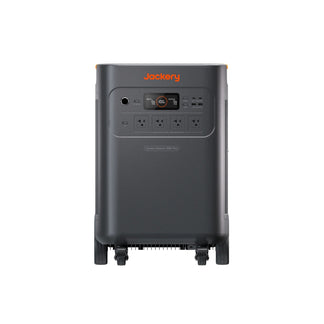
The Jackery Solar Generator HomePower 3600 Plus is designed to handle high-wattage appliances like electric space heaters without strain. With a powerful continuous output suitable for 1,500W space heaters, this essential home backup solution supports long heating sessions during winter outages. It runs at under 30 dB, which matters when a heater is operating overnight in bedrooms. The built-in UPS with <10 ms switchover keeps heaters running uninterrupted during sudden outages. Its wheeled, suitcase-style design makes indoor movement practical despite the larger capacity.
Appliances Running Time
- Ceramic Space Heater (750W) = 3.9H
- Oil-Filled Radiator Heater (1000W) = 3.0H
- Infrared (Quartz) Heater (1200W) = 2.5H
- Fan-Forced Electric Heater (1500W) = 2.0H
- Propane Space Heater for RV/Camping (100W) = 25.0H
Who Should Buy This
If you are someone who wants a quiet but essential home backup to run space heaters through long winter nights, the Jackery Solar Generator HomePower 3600 Plus is a strong option.

Customer Review
I now have peace of mind because I have experienced a power shut off due to high winds here in Colorado for a period of 52 hours without power. This unit was bought to keep my refrigerator and food.
— Jeffrey L.
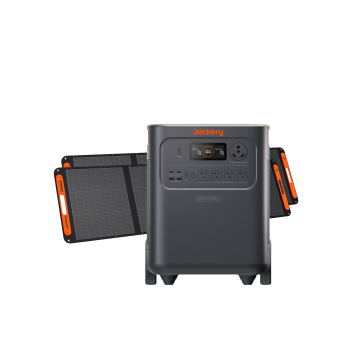
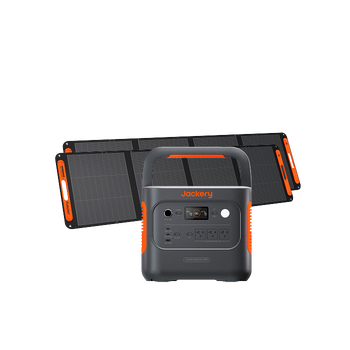
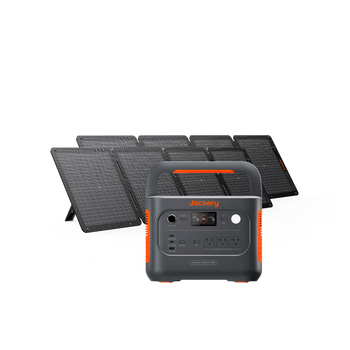
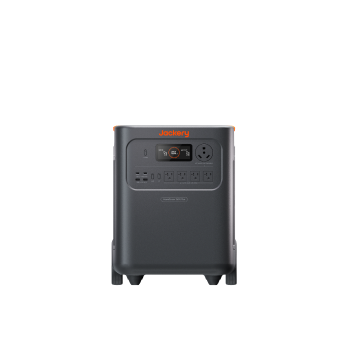
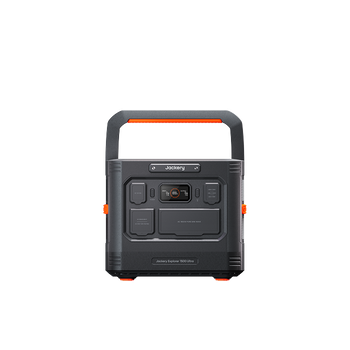
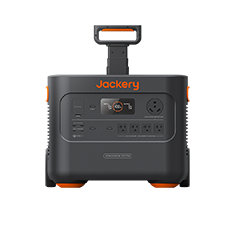
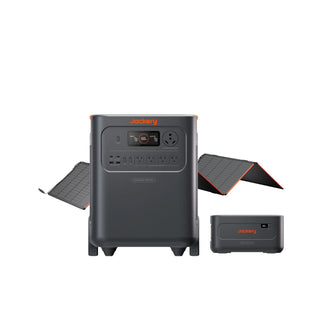
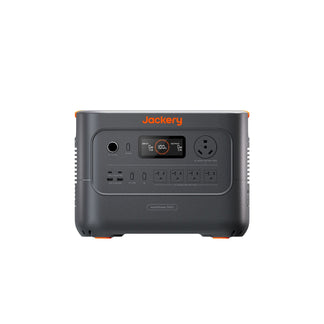
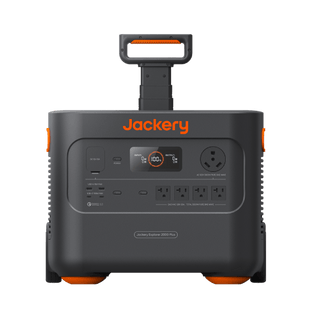
Jackery Solar Generator HomePower 3000
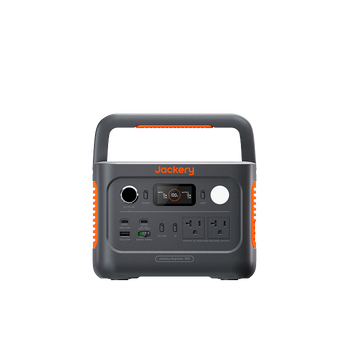
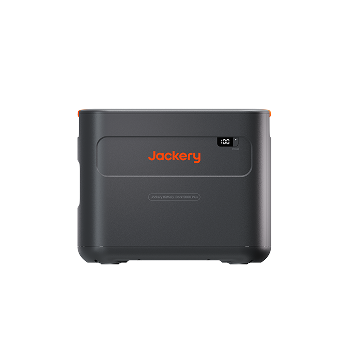
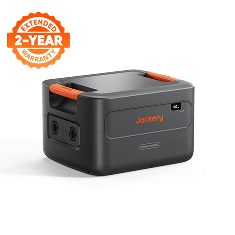
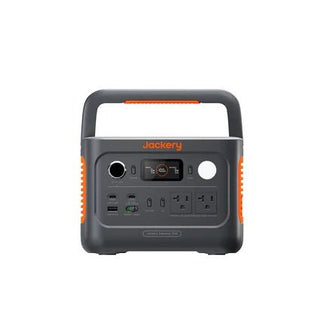
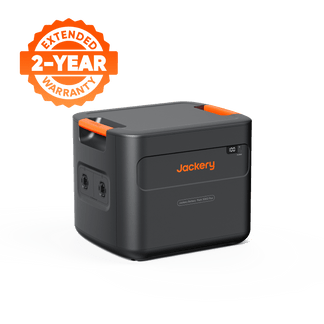
The Jackery Solar Generator HomePower 3000 offers a more compact approach to powering space heaters indoors while still delivering stable, high output. It can comfortably support bedroom or office heaters during power outages. Noise levels stay around 30 dB, so heater use doesn’t disrupt sleep or work. The compact, box-style design ensures that the power station can fit easily into living spaces, and the dual-sided handles ensure easy transportation wherever required.
Appliances Running Time
- Ceramic Space Heater (750W) = 3.4H
- Oil-Filled Radiator Heater (1000W) = 2.6H
- Infrared (Quartz) Heater (1200W) = 2.1H
- Fan-Forced Electric Heater (1500W) = 1.7H
- Propane Space Heater for RV/Camping (100W) = 21.4H
Who Should Buy This
If you are someone looking for a compact, indoor-friendly battery backup solution to support space heaters during outages or cold evenings, the Jackery Solar Generator HomePower 3000 is an ideal option.

Customer Review
Powerful, can run two 1500 watt space heaters at one time. Charges quickly with four SolarSaga 200W solar panels, about 4.5 hours if done mid-day in complete sun.
— Dan G.
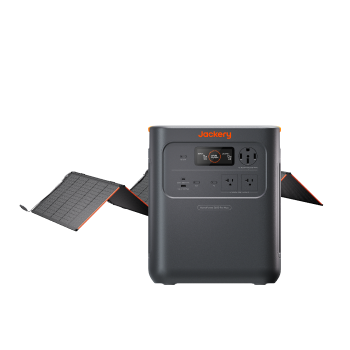
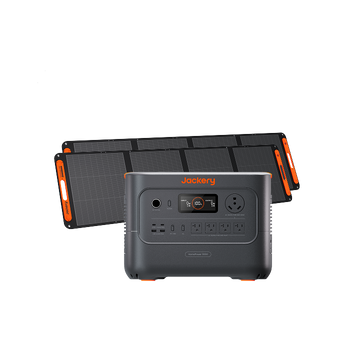
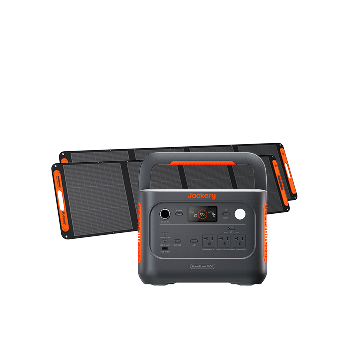
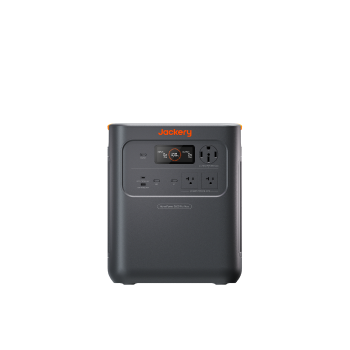
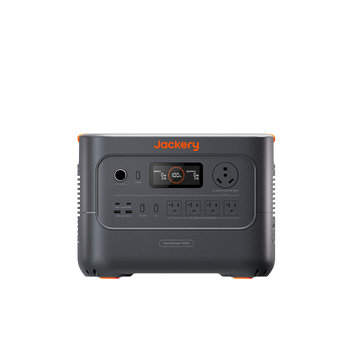
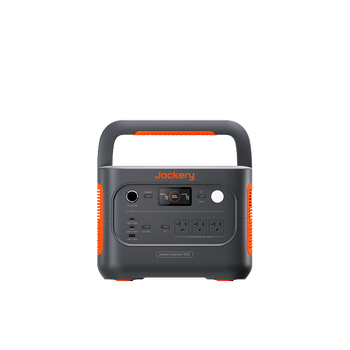
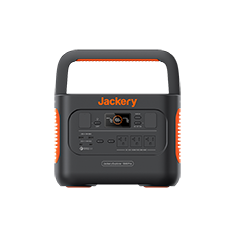
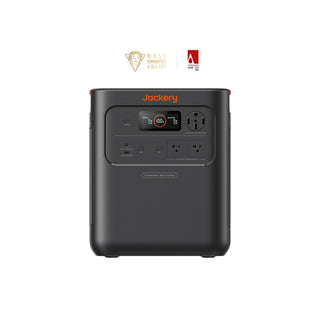
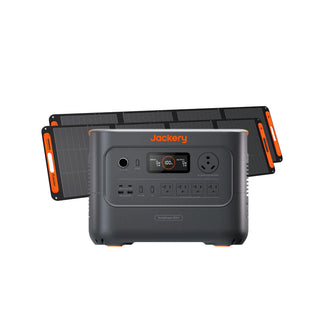
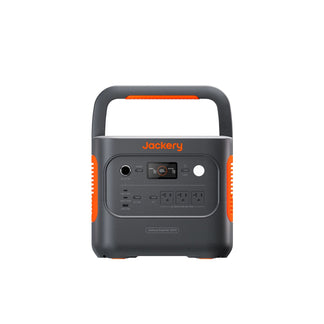
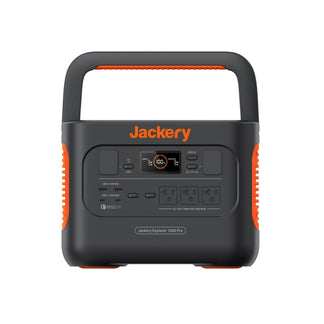
Jackery Solar Generator 2000 v2
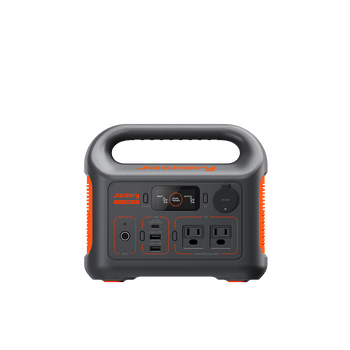
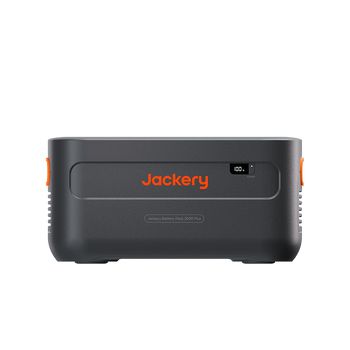
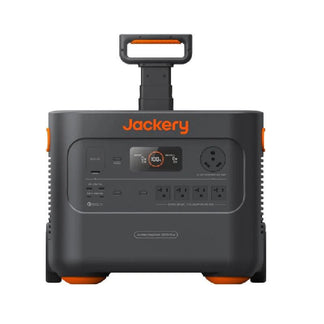
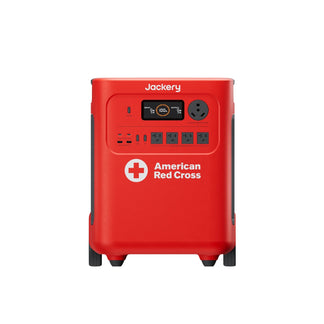
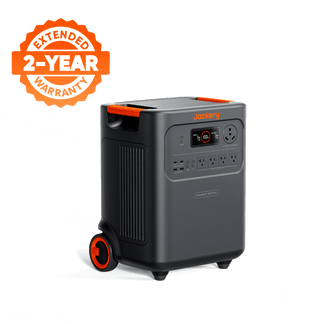
The Jackery Solar Generator 2000 v2 is better suited for controlled, portable space heater use rather than all-night heating. It can run small to mid-size heaters for short durations in RVs, cabins, or emergency setups. The Jackery Solar Generator 2000 v2 operates at around 30dB (which is less than a refrigerator's hum), keeping enclosed spaces comfortable and quiet. The lighter body with a foldable handle makes the battery backup solution easy to move between rooms or load into vehicles, so you can enjoy power during outdoor adventures.
Appliances Running Time
- Ceramic Space Heater (750W) = 2.2H
- Oil-Filled Radiator Heater (1000W) = 1.6H
- Infrared (Quartz) Heater (1200W) = 1.4H
- Fan-Forced Electric Heater (1500W) = 1.1H
- Propane Space Heater for RV/Camping (100W) = 14.2H
Who Should Buy This
If you want portable power for space heaters in RVs, cabins, or emergency situations, the Jackery Solar Generator 2000 v2 is the more practical choice.

Customer Review
I found this generator to be well built and extremely reliable with the power and long-lasting energy it provides…Awesome, simply awesome!!!
— Paul T.
Space Heater Wattage FAQs
What's the best time to run a space heater?
If you are enrolled in a TOU or time-of-use rate plan, your energy cost varies throughout the day. So, using a space heater during off-peak hours is the best time to run a space heater.
What size of solar generator do I need to run a space heater?
The size of a solar generator to run a space heater depends on the wattage of the appliance and how long it runs. Typically, you will need a solar generator with at least 2,000 watts of continuous output and enough battery capacity to match your desired runtime. You can use the calculator on the Jackery Buying Guide page to estimate how long a specific solar generator can power a space heater, based on its wattage and capacity. Visit the page and scroll down to the calculator. There, you can choose the Jackery model from the dropdown and enter the space heater's wattage to understand the runtime.
How much does running a 1500-watt heater cost for 24 hours?
The cost to run a space heater (1500W) for 24 hours depends on the rate of electricity in your area. If the average rate is $0.16 per kilowatt hour, then the cost of running a 1500W space heater is:
Running Cost = [Power (W) * Time * Price Of Electricity] ÷ 1,000 = [1500W × 24H × $0.16/kWh] ÷ 1000 = $5.76
Does a space heater use electricity when turned off?
Yes, a space heater uses a tiny bit of electricity (phantom load) when plugged in but "off" due to digital displays or standby circuits, typically under 1-2 watts. Therefore, it's best to unplug the space heater or use a power strip to cut power completely when not in use to avoid any draw and potential hazards.
How long does the space heater run per day?
Space heaters are used for 5-8 hours daily in a typical household.
How do you reduce the space heater cost?
You can save the cost of running your space heater by following some tips.
- Space heaters are more efficient than central heating because they target the heating resources to specific areas. You can compare the cost of central and space heating and choose the best option.
- Always cover yourself with warm clothing and blankets, so you need less heating time and thus can save on power, especially at night. Similarly, keep doors closed so that the heat doesn't escape.
- Proper insulation of attics, windows, and the basement can save about 15% on how much a space heater use
- Use highly efficient and safe Jackery Solar Generators to save on electricity bills and even run the appliances when there is an unexpected power outage.
Final Thoughts
Most electric space heaters use between 750 and 1,500 watts, which makes them one of the more power-hungry household appliances. Their actual cost and energy use depend on heater wattage, daily runtime, and local electricity rates. For situations where grid power isn’t available, a Jackery Solar Generator can support space heater use for short, calculated periods, as long as the heater’s power draw and runtime expectations are realistic. Understanding these limits is key to avoiding overloads or disappointing performance.


