











![[Add - on] Jackery Manual Transfer Switch for Explorer 5000 Plus - Jackery](http://www.jackery.com/cdn/shop/files/add-on-jackery-manual-transfer-switch-for-explorer-5000-plus-9017324.png?v=1754016782&width=170)
























































![How to Convert Watts to Amps [With Examples]](http://www.jackery.com/cdn/shop/articles/how-to-convert-watts-to-amps-with-examples-1543493.jpg?v=1765227497)
In order to convert watts to amps, here is simple formula:
Amps = Watts ÷ Volts
Let's take an example:
A 360W appliance running on 120V would draw around 3 amps. This is calculated by putting the values in the above formula:
Amps = 360W ÷ 120V = 3 amps
Amps and watts are two different units used to measure electrical power. Watts measure the energy consumed by electrical appliances, while amps measure the amount of current flowing through the electrical circuit.
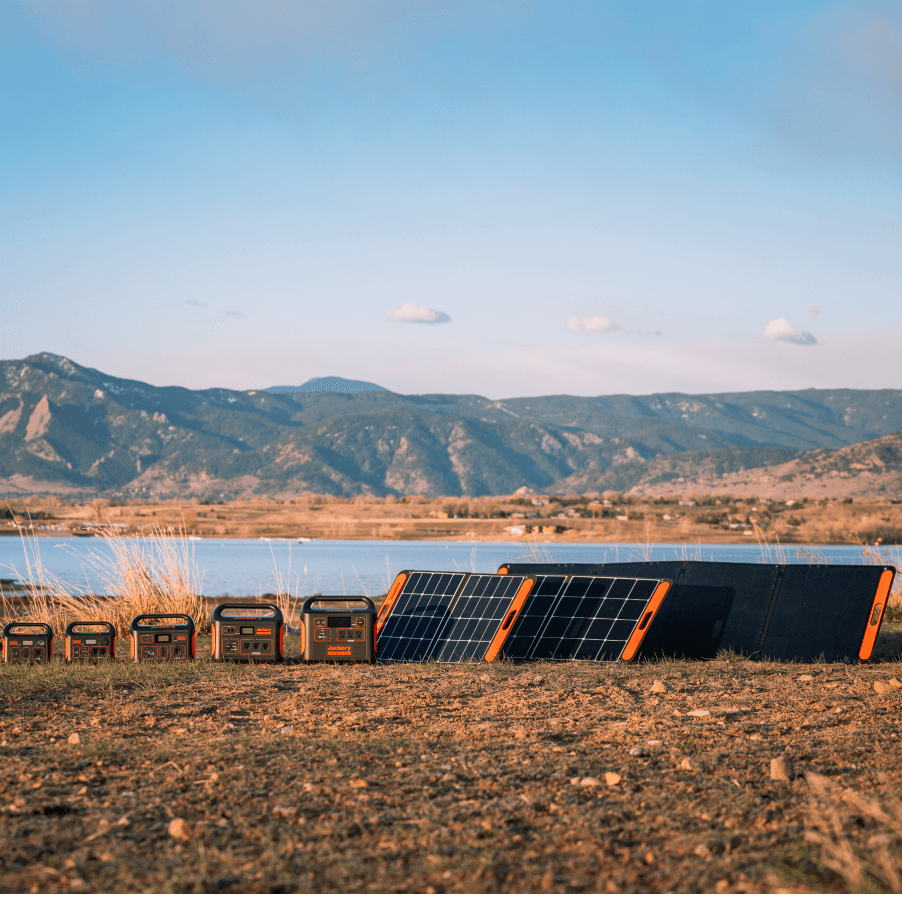
Jackery Portable Power Stations have a higher wattage and amperage rating. The higher amp rating ensures you can power multiple devices simultaneously. Similarly, the higher wattage ensures the power station or solar generator can run appliances for long hours.
AI Takeaways
- Watts to amps is a way of showing how much electrical current (amps) is drawn by a device when you know its power use (watts) and voltage.
- In order to convert watts to amps, you need to divide the power (watts) by the voltage (volts). Formula: Amps = Watts ÷ Volts.
- If you want to convert amps to watts, you need to multiply the current (amps) by the voltage (volts). Formula: Watts = Amps × Volts.
- How to convert watts to amps and amps to watts with different methods.
What Is Watts to Amps
Watts to amps means converting electrical power (watts) into current (amps) using voltage. For example, a 100-watt device on a 120-volt outlet uses about 0.83 amps.
Also called volt-amps, this unit of electrical measurement is generally used in AC power circuits. For instance, if a microwave has more wattage, it will cook food faster.
Amps, also known as amperes, measure the number of electrons flowing past a certain point per second. A common analogy that describes amps working is a garden hose.
The more gallons of water flow through the hose per minute, the stronger the current. Amps are also used to measure the capacity of electric batteries. For instance, if a battery has higher amps, more electrons flow through the circuit and charge appliances faster.
The amps and watts are related to each other as follows:
Formula: Watts = Amps × Volts
AC Power System: Alternating current is the flow of charge that changes direction periodically. Homes and offices usually have AC power, as the electricity can easily flow long distances. An example of AC is the wall charger of your electronic devices.
DC Power System: DC or direct current is the electric current that flows only in a single direction. Some examples of DC power systems include fuel cells, photovoltaic (solar) cells, and batteries.
In the three-phase supply system, the lower voltage or voltage between a phase and neutral is generally referred to as the line to neutral voltage. In contrast, the higher voltage or voltage between two phases is the line-to-line voltage.
How to Convert Watts to Amps
Converting watts to amps becomes more critical when choosing any solar-powered system for your home. Below are the four methods to quickly convert ampere to wattage.
Method 1: Fixed Voltage
In this method, the voltage value is generally fixed to 120V or 240V. The simple formula to convert watts to amps is:
Amps = Watts ÷ Voltage
Example: If a device has a power rating of 1000W and is operating at a fixed voltage of 120V, then the current will be:
Amps = 1000W ÷ 120V = 8.33A
Similarly, if the device's power rating is 1000W, but it is operating at 240V, the current drawn will be:
Amps = 1000W ÷ 240V = 4.16V
Method 2: DC Voltage
If the voltage changes from fixed to DC, the formula to convert watts to amps remains the same. The current in amps equals the power in watts divided by voltage.
Amps = Watts ÷ Voltage
Example: Suppose you want to calculate the current drawn by a microwave that consumes 1000W of electricity at 50V.
Amps = 1000W ÷ 50V = 20A
Method 3: Single-Phase AC Voltage
The phase current in amps is equivalent to power in watts, divided by the power factor times the RMS voltage.
I (A) = P (W) ÷ [PF × V (V)]
The power factor of resistive impedance load is equivalent to 1.
Example:
P = 3000W, V = 110V, PF = 0.8
I (A) = P (W) ÷ [PF × V (V)] = 3000W ÷ [0.8 × 110V] = 34A.
Method 4: Three-Phase AC Voltage
There are two methods to calculate the amps in a three-phase AC voltage system: line-to-line and line-to-neutral.
Line-to-Line Voltage: The phase current equals power divided by the square of three times the power factor times the line-to-line RMS voltage.
I (A) = P (W) ÷ [√3 × PF × V (V)]
Example: If you want to calculate the amps with 1000W, 0.8 PF, and a line-to-line RMS voltage of 20V.
I (A) = 1000W ÷ [√3 × 0.8 × 20V] = 36.1A
Line-to-Neutral Voltage: The phase current equals power divided by 3 times the power factor times the line-to-neutral RMS voltage.
I (A) = P (W) ÷ 3 × PF × V (V)
Example: Let's say you want to calculate the amps of a three-phase electric system with 1000W of power, 0.8 PF, and a voltage of 5V.
I (A) = 1000W ÷ [3 × 0.8 × 5V] = 83.3A
Typical Power Factor
The typical power factor is the ratio of useful energy to supplied energy and depends on the type of electrical load. Generally, a power factor of 1 is ideal as all the power is converted to useful work. However, achieving a power factor of 1 is less practical.
|
Device |
Typical power factor |
|
Resistive load |
1 |
|
Fluorescent lamp |
0.95 |
|
Incandescent lamp |
1 |
|
Induction motor full load |
0.85 |
|
Induction motor no load |
0.35 |
|
Resistive oven |
1 |
|
Synchronous motor |
0.9 |
Why Convert Watts to Amps?
Watts and amps measure the electric power, but they are different. While watts measure how much electric energy is consumed, the amps measure its flow.
Understanding the relationship between watts and amps can help you determine the size of wire required to connect an electrical appliance to a power source. In addition, it lets you determine the maximum current a particular circuit can handle.
Watts to Amps Conversion Table
|
Watts |
Amps @ 12V |
Amps @ 24V |
Amps @ 48V |
|
10W |
0.83A |
0.42A |
0.21A |
|
20W |
1.67A |
0.83A |
0.42A |
|
30W |
2.5A |
1.25A |
0.63A |
|
40W |
3.33A |
1.67A |
0.83A |
|
50W |
4.17A |
2.08A |
1.04A |
|
60W |
5A |
2.5A |
1.25A |
|
70W |
5.83A |
2.92A |
1.46A |
|
80W |
6.67A |
3.33A |
1.67A |
|
90W |
7.5A |
3.75A |
1.88A |
|
100W |
8.33A |
4.17A |
2.08A |
|
Watts |
Amps @ 120V |
Amps @ 220V |
Amps @ 240V |
|
100W |
0.83A |
0.45V |
0.42A |
|
200W |
1.67A |
0.91V |
0.83A |
|
300W |
2.5A |
1.36V |
1.25A |
|
400W |
3.33A |
1.82V |
1.67A |
|
500W |
4.17A |
2.27V |
2.08A |
|
600W |
5A |
2.73V |
2.5A |
|
700W |
5.83A |
3.18V |
2.92A |
|
800W |
6.67A |
3.64V |
3.33A |
|
900W |
7.5A |
4.09V |
3.75A |
|
1000W |
8.33A |
4.55V |
4.17A |
How to Convert Amps to Watts
Converting amps to watts is easy whether you're dealing with alternating or direct current. Let's see how to convert amps to watts with some common examples.
Method 1: Fixed Voltage
If you want to convert amperage to wattage at a fixed voltage, follow the formula below.
The power in watts is equal to the current in amps multiplied by voltage in volts.
P (W) = I (A) × V (V)
Example: Let's say you want to convert 12 amperes to wattage at a fixed voltage of 120V.
P = 12A × 120V = 1440W
Method 2: DC Voltage
The formula to convert amps to watts for DC circuits is:
P (W) = I (A) × V (V)
Example: Let's say you want to calculate the DC power required to charge your laptop with a charger with an output rating of 16.5V and 3.65A.
P (W) = 3.65A × 16.5V = 60.2W
Method 3: AC Voltage
In the AC three-phase system, there are two ways to convert amps to watts.
Line-to-Line Voltage: The power is equal to current times the square root of 3 times the power factor times the line-to-line RMS voltage.
P (W) = √3 × PF × I (A) × V
Line-to-Neutral Voltage: The power is equal to current times the square root of 3 times the power factor times the line-to-neutral RMS voltage.
P (W) = √3 × PF × I (A) × V
Example: Let's say you want to know the wattage requirement of a system that draws a current of 20A at a voltage of 15V. In this case, the PF is 0.8.
P (W) = √3 × 0.8 × 20A × 15V = 415W
Why Convert Amps to Watts?
When dealing with a solar-powered system, you must convert amps to watts. This conversion will help you understand how much watts your appliances are consuming. In addition, it reveals whether your solar generator – especially the power station with built-in inverter – can handle the total expected wattage.
Amps to Watts Conversion Tables
|
Amps |
Watts @ 12 V |
Watts @ 24 V |
Watts @ 48 V |
|
1A |
12W |
24W |
48W |
|
2A |
24W |
48W |
96W |
|
3A |
36W |
72W |
144W |
|
4A |
48W |
96W |
192W |
|
5A |
60W |
120W |
240W |
|
6A |
72W |
144W |
288W |
|
7A |
84W |
168W |
336W |
|
8A |
96W |
192W |
384W |
|
9A |
108W |
216W |
432W |
|
10A |
120W |
240W |
480W |
|
Amps |
Watts @ 120 V |
Watts @ 220 V |
Watts @ 240 V |
|
1A |
120W |
220W |
240W |
|
2A |
240W |
440W |
480W |
|
3A |
360W |
660W |
720W |
|
4A |
480W |
880W |
960W |
|
5A |
600W |
1100W |
1200W |
|
6A |
720W |
1320W |
1440W |
|
7A |
840W |
1540W |
1680W |
|
8A |
960W |
1760W |
1920W |
|
9A |
1080W |
1980W |
2160W |
|
10A |
1200W |
2200W |
2400W |
Jackery Power Stations Explained
Identifying the watts and amps of a power station lets you confirm the battery's compatibility with the home or outdoor appliances. The higher the watts of the power station, the longer it can supply electricity to the devices.
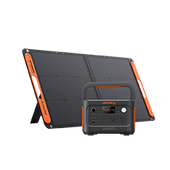
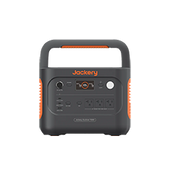
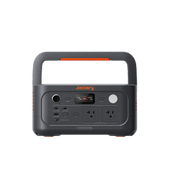
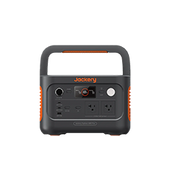
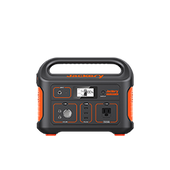
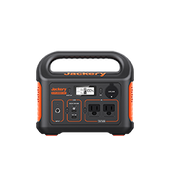
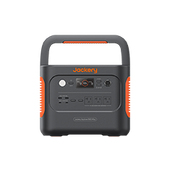
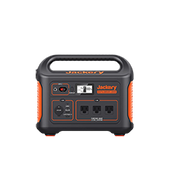
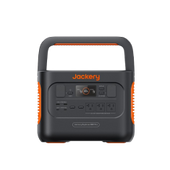
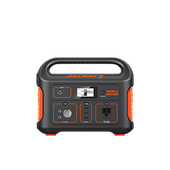
Jackery Portable Power Stations are battery backup solutions that can power various appliances during power outages or outdoor adventures. You can recharge these power stations with the solar panels, wall outlets, or car chargers. Here are some of the best portable power stations from Jackery:
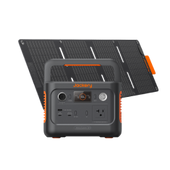
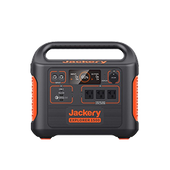
Jackery Explorer 300 Plus Portable Power Station
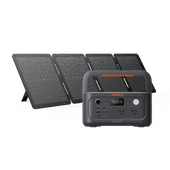
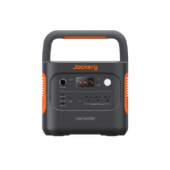
If you are looking for a power station that can charge outdoor appliances during hiking, fishing, backpacking, or camping, the Jackery Explorer 300 Plus Portable Power Station sounds like a reliable option. It has a lightweight and compact design to ensure easy movement to outdoor locations. What's more, there are multiple output ports available that will help you run various appliances, such as mini-freezers, lights, lamps, projectors, etc., simultaneously.
Appliances Running Time
- Light (5W): 15.7H
- Camera (10W): 11.8H
- Bluetooth Speaker (10W): 11.8H
- Fan (40W): 4.7H
- Electric blanket (55W): 3.6H
Who Should Buy This
If you are looking for a portable battery backup that can run small appliances, such as fans, lights, and cameras, in the outdoors, the Jackery Explorer 300 Plus Portable Power Station is an ideal solution.

Customer Review
I bought this to charge my laptop and phone while I'm working from a boat. So far, I'm impressed with the charging capacity. After charging my 15" Pro once, my phone twice, and running a fan for 45 minutes, it was still at 60%. I'm recharging it with the solar panels today, so I'll have to see how well that works. Overall, good purchase.
— Devin.
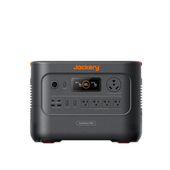
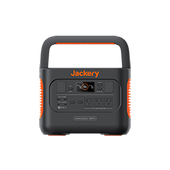
Jackery Explorer 1000 Plus Portable Power Station
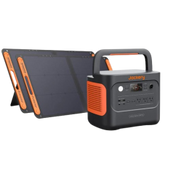
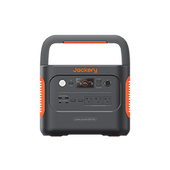
The Jackery Explorer 1000 Plus Portable Power Station has a large battery capacity that can power most household or outdoor appliances for hours. Its foldable and suitcase-style design makes it easy to carry to outdoor locations and charge appliances anytime, anywhere. The power station is easy to expand and supports multiple add-on battery packs, ensuring expansion from 1.2kWh to 5kWh.
Appliances Running Time
- Blender (300W): 3.3H
- Space Heater (350W): 2.8H
- Ice Maker (700W): 1.4H
- Coffee Maker (550W): 1.8H
- Toaster (650W): 1.6H
Who Should Buy This
If you want more power in a smaller size and wish to power most small to midsize appliances during short outdoor trips or outages, you can consider the Jackery Explorer 1000 Plus Portable Power Station, which has got your back.

Customer Review
When I got this, I thought I'd put it to the test and plug in my refrigerator at 350W. At this wattage, Jackery's estimation was just under three hours. Plugged in my refrigerator at 7:30 a.m., pulled the plug at 7:30 p.m. with 59% battery life left........and I can add 2 more battery packs to this system. Incredibly happy with my purchase.
— Dan R.
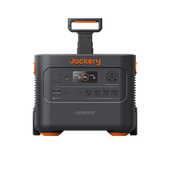
Jackery Explorer 2000 Plus Portable Power Station
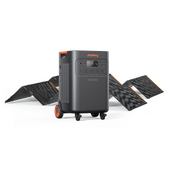
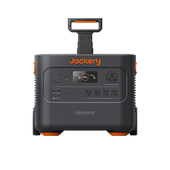
If you are looking for a powerful solar-powered generator that can run almost all household appliances in the event of a power outage or off-grid living, the Jackery Explorer 2000 Plus Portable Power Station seems like a great option. It features a pull rod and double wheels, so you can drag the power station anywhere you go. Whether you prefer living in an RV or wish to stay protected during long-term power outages, the robust power station is the way to go!
Appliances Running Time
- Toaster (650W): 2.5H
- Microwave (700W): 2.3H
- Kettle (850W): 1.9H
- Ice Shaver (700W): 2.3H
- Space Heater (350W): 4.6H
Who Should Buy This
If you want an expandable home battery backup solution that can run most appliances without relying on the grid, you can consider going ahead with the Jackery Explorer 2000 Plus Portable Power Station.

Customer Review
I have had my 2000 Plus for 3 months and am so pleased with how long it keeps my refrigerator running when power is out that I have ordered 1 battery pack to see how much more running time it gives me. With my multiple 1000v2s I am confident we are fully prepared.
— Ilene Wagner.
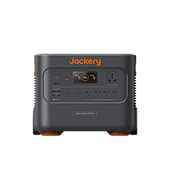
Jackery HomePower 3000
If unexpected storms or other weather disruptions suddenly cut power, you will need a dependable home backup solution like the Jackery HomePower 3000. Instead of rushing to save the food in your fridge or scrambling for candles, the Jackery HomePower 3000 quietly keeps core appliances running. Your fridge stays cold, your WiFi stays online, and you can still brew coffee or charge devices. It is ideal for families who want essential home backup that is simple, quiet, and always ready to step in when the grid goes down.
Appliances Running Time
- Refrigerator (300W) = 8.1H
- Cooker (300W) = 8.1H
- Electric Oven (1000W) = 2.6H
- Heater (500W) = 5.0H
- Fan (40W) = 42.1H
Who Should Buy This
The Jackery HomePower 3000 is ideal for families who want a dependable backup to keep daily essentials like the fridge, WiFi, and small appliances running during short power cuts.

Customer Review
I love my new Jackery 3000. I hooked my RV up to it and was able to run the A/C to keep cool during the heat. I highly recommend it.
— Kelli Robbins.
Jackery HomePower 3600 Plus
If your area deals with longer outages that last for two or three days, the Jackery HomePower 3600 Plus is a powerful and essential home backup solution for your needs. It powers your refrigerator, freezer, lights, and even medical essentials, helping your household stay safe and comfortable. It is ideal for families who need peace of mind when storms, blackouts, or emergencies stretch beyond just a few hours. With the expandable options and massive battery capacity, you can run your refrigerator for up to 14 days.
Appliances Running Time
- Refrigerator (300W) = 9.5H
- Cooker (300W) = 9.5H
- Electric Oven (1000W) = 3.0H
- Heater (500W) = 5.8H
- Fan (40W) = 49.1H
Who Should Buy This
The Jackery HomePower 3600 Plus is ideal for households that need stronger backup power to handle longer outages, keeping larger appliances, lighting, and critical devices running without worry.

Customer Review
Very easy to set up, solar charge, great support! Going to buy more batteries!
— Mike Palmer.
Watts to Amps FAQs
How many amps are 4000 watts at 120V?
If you have watts and volts of an electrical circuit, you can easily calculate the amps.
Amps = Watts ÷ Volts = 4000W ÷ 120V = 33.33A
That means 4000 watts, when operating at a voltage of 120 volts, is generally equal to 33.33 amperes.
How to convert watts to volts?
Volt is the measurement of force or pressure required to ensure the electric current can easily flow through the wire.
Smaller home appliances like light bulbs, computers, etc., operate at 120V, whereas larger appliances like refrigerators, washing machines, etc., operate at 240V.
You'll need to know the amperage value to convert watts to volts or volts to watts.
Formula: Volts = Watts ÷ Amps
Here are a few common watts-to-volts conversions with a fixed current of 1 amp.
|
Watts (W) |
Amps (A) |
Volts (V) |
|
How many volts in 1 watt? |
1A |
1 volt |
|
How many volts in 2 watts? |
1A |
2 volts |
|
How many volts in 10 watts? |
1A |
10 volts |
|
How many volts in 20 watts? |
1A |
20 volts |
|
How many volts in 50 watts? |
1A |
50 volts |
|
How many volts in 100 watts? |
1A |
100 volts |
|
How many volts in 200 watts? |
1A |
200 volts |
|
How many volts in 500 watts? |
1A |
500 volts |
|
How many volts in 1000 watts? |
1A |
1000 volts |
What are the relations of amps, watts, and volts?
Ohm's Wheel Law is one of the simplest ways to understand the relation of amps, watts, and volts. Let's say you want to install a 2000 watts window air conditioner at your home. Since the AC is a large and power-sensitive home appliance, it generally requires 240 volts. Now that we have the watts and volts, you can calculate the current using the formula:
Amps (I) = Watts (W) ÷ Volts (V) = 2000W ÷ 240V = 8.33A.
Final Thoughts
Understanding how to convert watts to amps and vice versa may seem complex at first glance. However, it's pretty simple once you clear the basics and understand their relationship.
Basic knowledge of watts, amps, and volts will help you choose the best power station or solar generator to charge your home or outdoor appliances.
Understanding how to convert watts to amps and vice versa may seem complex at first glance. However, it's pretty simple once you clear the basics and understand their relationship.
Basic knowledge of watts, amps, and volts will help you choose the best power station or solar generator to charge your home or outdoor appliances.
Jackery Portable Power Stations feature large battery capacities ranging from 99Wh to 5040Wh. Depending on how many appliances you want to charge or for how long, you can invest in the right size power station.






These are the best explanations I have seen for the calculations. Every thing is very clear
Leave a comment